India’s industrial growth slowed to 4.8% in January 2026, a three-month low, as manufacturing, mining, and electricity weakened. NSO data shows rural demand stress and softer capital goods output. Despite infrastructure spending, global pressures, tight monetary policy, and structural bottlenecks call for reviving consumption and private investment.
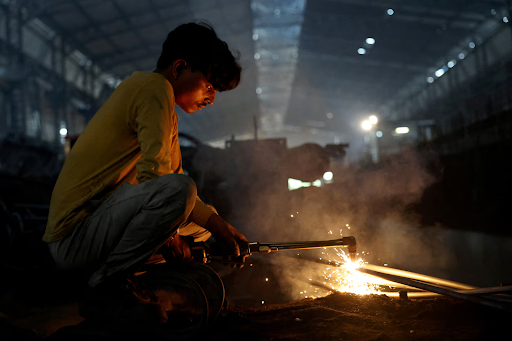
Copyright infringement not intended
Picture Courtesy: reuters
Context
The Index of Industrial Production (IIP) has hit a three-month low, signaling a cooling in manufacturing, mining, and electricity.
What is Index of Industrial Production (IIP)?
It is a key macroeconomic indicator that measures short-term changes in the volume of production in a selected basket of industrial products over a given period.
Key Components and Classification
The IIP is a composite indicator that tracks growth across two main classification types:
The "Eight Core Industries"
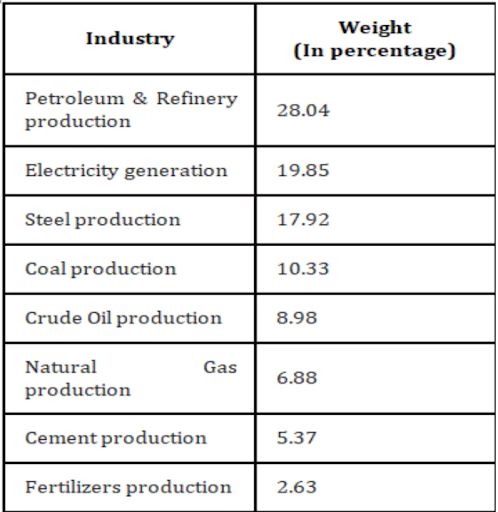
A significant part of the IIP (about 40.27%) is driven by eight core industries. These are considered the backbone of the industrial sector:
Compilation and Release
Agency: It is compiled and published monthly by the National Statistical Office (NSO) (formerly the Central Statistics Office or CSO) under the Ministry of Statistics and Programme Implementation (MoSPI).
Timeline: The 28th of every month (or the next working day if the 28th is a holiday).
Base Year: The current base year is 2011–12, which is assigned a value of 100. There are plans to update the base year to 2022–23 in 2026.
Significance
Policy Making: Used by the Reserve Bank of India (RBI) and the Ministry of Finance to adjust monetary and fiscal policies.
GDP Estimation: It is a vital input for calculating quarterly and advance Gross Domestic Product (GDP) estimates.
Investment: Financial analysts and private industries monitor IIP to identify growth trends and make investment decisions.
What are the Key Takeaways from the January 2026 Data?
In January 2026, industrial growth slowed to a three-month low of 4.8%, indicating weaknesses across multiple segments of the industrial economy.
Broad-Based Slowdown: All major sectors witnessed slower growth. Manufacturing grew at 4.8%, Mining at 4.3%, and Electricity at 5.1%.
Weak Consumption Signals:
Faltering Investment: The Capital Goods sector saw growth slow to 4.3%. This suggests a potential hesitation in private sector capital expenditure.
Infrastructure as a Bright Spot: Infrastructure and Construction goods sector was the only segment to accelerate, growing at a robust 13.7%, driven by sustained government spending.
Why is India's Industrial Sector Slowing Down?
Demand-Side Pressures
Global Headwinds: A slowing global economy and geopolitical tensions reduce export demand for Indian manufactured products.
Tight Monetary Policy: Lagged effect of high interest rates maintained by the RBI to control inflation increases borrowing costs, which hamper both investment and consumer spending.
Weak Rural Demand: Contraction in non-durable goods confirms that a full recovery in rural spending has not yet materialized, due to food inflation or erratic weather patterns.
Supply-Side & Structural Issues
Infrastructure Gaps: Despite recent progress, deficiencies in logistics and power supply continue to raise operational costs for industries.
Regulatory Hurdles: Complex compliance requirements, especially for Micro, Small, and Medium Enterprises (MSMEs), act as a barrier to growth.
Skill Mismatch: A gap between the skills of the available workforce and the needs of modern industry impacts overall productivity and competitiveness.
What Measures Has the Government Taken to Boost Industrial Growth?
Production Linked Incentive (PLI) Scheme
This scheme, with an outlay of ₹1.97 lakh crore across 14 key sectors, aims to boost domestic manufacturing and attract investment in strategic areas.
Sustained Infrastructure Push
The budget proposes a ₹12.2 lakh crore capital expenditure for FY 2026–27. This investment is channeled through programs like the National Infrastructure Pipeline (NIP) and PM Gati Shakti.
'Make in India' & Ease of Doing Business
These initiatives focus on continuous regulatory reforms to create a more attractive and competitive environment for domestic and foreign investors.
Way Forward
Revive Consumption Demand
Boost consumption, especially in rural areas, by strengthening rural employment schemes, managing food inflation, and providing timely support to the agriculture sector.
Accelerate Private Investment
Boosting private sector investment requires a predictable policy framework, streamlined regulations, and easy access to credit for MSMEs.
Focus on Structural Reforms: Long-term competitiveness depends on resolving core issues. This involves:
Learn from Global Best Practices
India can adopt lessons from successful industrial models, such as Germany's "Mittelstand" for supporting specialized SMEs and South Korea's focus on building an export-oriented manufacturing ecosystem.
Conclusion
Moderation in the IIP reflects the dual challenges of cyclical demand weakness and structural bottlenecks, requiring a multi-pronged approach that combines government capital expenditure with revived consumption and private investment to achieve sustainable industrial growth.
Source: THEHINDU
|
PRACTICE QUESTION Q. Consider the following statements regarding the Index of Industrial Production (IIP) in India: 1. The IIP is a composite indicator that measures the short-term changes in the volume of production of a basket of industrial products during a given period with respect to a chosen base year. 2. Within the IIP, the 'Manufacturing' sector holds the highest weightage, followed by 'Mining' and 'Electricity'. 3. The eight core industries comprise nearly 40% of the total weight of items included in the IIP. Which of the statements given above are correct? A) 1 and 2 only B) 2 and 3 only C) 1 and 3 only D) 1, 2, and 3 Answer: D Explanation: Statement 1 is correct: It is a composite indicator measuring volume changes of industrial products relative to a base year (currently 2011-12). Statement 2 is correct: Within the IIP's sectoral classification, Manufacturing has the highest weight (approx. 77.63%), followed by Mining (14.37%) and Electricity (87.99%). Statement 3 is correct: The eight core industries (Refinery Products, Electricity, Steel, Coal, Crude Oil, Natural Gas, Cement, Fertilizers) have a combined weight of 40.27% in the IIP. |
The IIP is a composite indicator released monthly by the National Statistical Office (NSO) that measures the short-term changes in the volume of production of a basket of industrial products. It serves as a key macroeconomic indicator for industrial activity.
The slowdown is attributed to a combination of factors, including global economic headwinds dampening exports, the lagged impact of tight monetary policy, weak rural demand, and persistent structural issues like infrastructure gaps and regulatory hurdles.
The PLI scheme is a flagship government initiative with an outlay of ₹1.97 lakh crore across 14 key sectors. It aims to boost domestic manufacturing, attract investments, reduce import dependence, and create jobs by offering incentives on incremental sales of products manufactured in India.


© 2026 iasgyan. All right reserved