Description
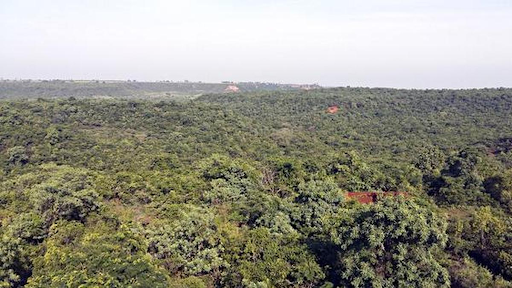
Recent research suggests that with targeted conservation and systematic reforestation, India’s forests can increase their carbon stock from the current levels to much higher benchmarks by 2100.
Why in News?
Recent research suggests that with targeted conservation and systematic reforestation, India’s forests can increase their carbon stock from the current levels to much higher benchmarks by 2100.
Key Findings of the Study
- Projected Growth: The study indicates that if existing forests are allowed to reach their natural maturity and degraded lands are restored, the total carbon sequestered could increase by nearly 100%.
- Potential Sink: India’s forests currently act as a significant carbon sink, but the research suggests that the saturation point is far from being reached, especially in the Himalayan and Western Ghats regions.
- Biomass vs. Soil Carbon: While tree biomass is a visible storage unit, the study emphasizes the untapped potential of soil organic carbon, which remains stable for longer periods if the forest floor is left undisturbed.
Factors Driving Carbon Sequestration
- Climate Stability: Favorable temperature and rainfall patterns in tropical and subtropical zones of India promote rapid tree growth, leading to faster carbon absorption.
- Species Diversity: Mixed forests consisting of indigenous species are found to be more resilient and efficient at storing carbon compared to monoculture plantations.
- Restoration of Degraded Land: Over 25 million hectares of degraded land in India offer a massive opportunity for afforestation, which could serve as fresh carbon sponges.
Strategic Importance for India
- Paris Agreement Commitments: India has committed to creating an additional carbon sink of 2.5 to 3 billion tonnes of $CO_2$ equivalent through additional forest and tree cover by 2030.
- Ecosystem Services: Beyond carbon storage, expanded forests improve groundwater recharge, prevent soil erosion, and protect biodiversity.
- Climate Resilience: Enhanced forest cover acts as a buffer against extreme weather events, such as heatwaves and floods, which are becoming more frequent.
Challenges to Realizing this Potential
- Deforestation Pressures: Diversion of forest land for mining, infrastructure, and urban expansion continues to be a major threat to existing carbon stocks.
- Climate Change Impacts: Rising global temperatures and shifting rainfall patterns could lead to forest dieback or increased frequency of forest fires, releasing stored carbon back into the atmosphere.
- Invasive Species: The spread of non-native species like Lantana camara can suppress the growth of native trees, reducing the overall carbon sequestration efficiency of the forest.
Way Forward
- Scientific Forest Management: Moving away from traditional timber-centric management to a carbon-centric approach that prioritizes long-lived tree species.
- Community Participation: Engaging local and tribal communities through Joint Forest Management (JFM) ensures the protection of forests while providing sustainable livelihoods.
- Technological Integration: Utilizing satellite imagery and LiDAR technology to monitor forest growth and carbon stock changes in real-time.
- Agroforestry: Encouraging farmers to plant trees on farmland can expand the green cover outside traditional forest boundaries without competing for food production land.
Conclusion
The revelation that India can double its forest carbon storage by 2100 provides a roadmap for long-term environmental planning. While the potential is vast, the journey requires a delicate balance between industrial development and ecological preservation.
Source: The Hindu
|
PRACTICE QUESTION
Q. "India’s forests are not just biodiversity hotspots but also critical carbon warehouses." In light of the recent study, discuss the potential of Indian forests to contribute to the 'Net Zero' target by 2070. (150 Words)
|
|
Key insights
India has committed to achieving net zero emissions by 2070, a long-term goal announced at COP26 and formalized through its updated Nationally Determined Contributions (NDC). This transition is anchored by the Panchamrit framework, which includes reaching 500 GW of non-fossil energy capacity and meeting 50% of energy requirements from renewables by 2030. To maintain this momentum, India recently enhanced its 2035 targets to include a 47% reduction in emissions intensity of GDP and a 60% share of non-fossil power capacity. Success relies on balancing economic growth with decarbonization through initiatives like the National Green Hydrogen Mission and expanded carbon sinks, while advocating for global climate justice and adequate financial support for developing nations.
|