India’s Seventh National Report to the Convention on Biological Diversity shows mixed progress toward the Kunming-Montreal Global Biodiversity Framework. Gains include ecosystem restoration and biodiversity mainstreaming, but challenges remain from land degradation, data gaps, and difficulty meeting the “30×30” conservation target, requiring stronger implementation, monitoring, and whole-of-society action by 2030.
Copyright infringement not intended
Picture Courtesy: DOWNTOEARTH
Context
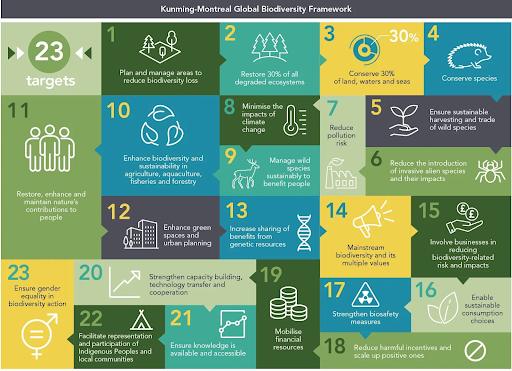
India submitted its Seventh National Report (NR7) to the Convention on Biological Diversity (CBD) as a self-assessment of its progress towards the Kunming-Montreal Global Biodiversity Framework (KMGBF) targets for 2030.
What is the Kunming-Montreal Global Biodiversity Framework (KMGBF)?
The KMGBF is a global agreement adopted at COP15 of the CBD in 2022. Its primary mission is to halt and reverse biodiversity loss, aiming to put nature on a path to recovery by 2030.
Performance of India
India has progressed in policy alignment but faces significant implementation challenges, with only a few of the 23 National Biodiversity Targets (NBTs) clearly on track.
|
Areas of Success |
Areas of Concern |
|
|
Key National Biodiversity Targets (NBTs)
Success Stories: Where India is Making Progress
Challenges and Mixed Signals
Major Hurdles to Biodiversity Conservation in India
Persistent Land Degradation
While India is restoring land, degradation continues elsewhere. About 29.77% of India's geographical area (97 million hectares) is currently degraded. (Source: Desertification and Land Degradation Atlas)
Data Fragmentation
Biodiversity data is scattered across different ministries and collected using non-standard methods. This prevents accurate long-term trend analysis and effective policy-making.
Human-Wildlife Conflict
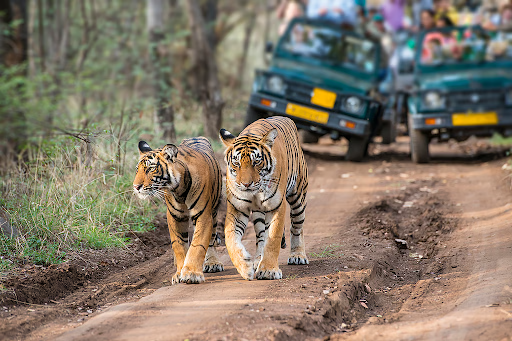
Habitat degradation drives conflict. For example, the invasive species Lantana camara has suppressed native grasses, forcing tigers to prey on cattle and increasing conflict with humans near forests.
Threat of Climate Change
Increasing frequency of floods, droughts, and forest fires puts immense stress on ecosystems and accelerates biodiversity loss.
Way Forward: A Strategy for 2030
Adopt a 'Whole-of-Society' Approach
Conservation must be a shared responsibility. This requires empowering local communities and private entities, as highlighted in judicial observations like the T.N. Godavarman Thirumulpad case.
Strengthen Data and Monitoring
An integrated national biodiversity data framework is essential. Technologies like satellite imagery, AI-based monitoring (used in the tiger census), and e-DNA sampling can provide real-time insights.
Learn from Global Best Practices
India can adapt successful international models. For example, Costa Rica's "Payments for Ecosystem Services (PES)" program incentivizes private landowners to conserve forests, which can be a model for promoting conservation outside protected areas.
Focus on Landscape-Level Conservation
The approach must move beyond isolated protected areas to integrate OECMs and community reserves to create connected ecological corridors, as recommended by the Madhav Gadgil Committee Report for the Western Ghats.
Mainstream Biodiversity into All Sectors
Biodiversity conservation must be integrated into the core planning of agriculture, infrastructure, finance, and industry to address the root causes of biodiversity loss.
Conclusion
India's 7th National Report shows strong conservation policies and successes, but meeting the 2030 targets requires better data, community involvement, and landscape-based implementation.
Source: DOWNTOEARTH
|
PRACTICE QUESTION Q. With reference to the Kunming-Montreal Global Biodiversity Framework (KMGBF), what does the "30x30" target primarily aim for? A) Reducing global greenhouse gas emissions by 30% by the year 2030. B) Ensuring that 30% of global GDP is derived from green industries by 2030. C) Conserving at least 30% of the world's land, inland waters, coastal areas, and oceans by 2030. D) Pledging $30 billion from developed nations for biodiversity conservation in developing nations by 2030. Answer: C Explanation: The "30x30" target is the commitment of the Kunming-Montreal Global Biodiversity Framework (KMGBF), officially categorized as Target 3. It aims to ensure that at least 30% of the world's terrestrial, inland water, and coastal and marine areas are effectively conserved and managed through protected areas and other effective area-based conservation measures (OECM) by the year 2030. |
The KMGBF is a global agreement adopted in 2022 under the Convention on Biological Diversity (CBD). Its primary mission is to halt and reverse biodiversity loss, aiming to put nature on a path to recovery by 2030. It includes 4 long-term goals for 2050 and 23 action-oriented targets for 2030.
OECMs are areas that are not formally designated as Protected Areas (like National Parks) but are governed and managed in ways that achieve positive and sustained long-term outcomes for the in-situ conservation of biodiversity. They can include community-conserved areas, sacred groves, and privately managed lands. They are crucial for helping India reach its '30x30' target.
This invasive plant suppresses native grasses, which are the primary food for the prey of tigers. This forces tigers to venture out of forests in search of food (like cattle), leading to increased human-tiger conflict on the peripheries of protected areas.



© 2026 iasgyan. All right reserved