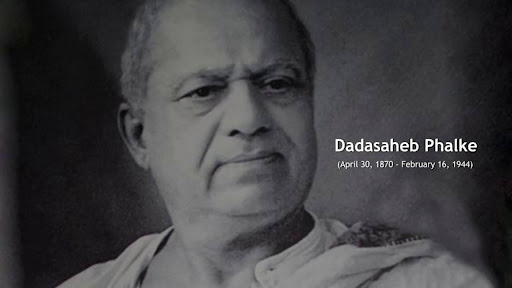
Dadasaheb Phalke, regarded as the Father of Indian Cinema, is remembered on his death anniversary on February 16 for pioneering India’s film industry with the country’s first full-length feature film, Raja Harishchandra (1913). Over his lifetime, he produced around 125 films and laid the technical and creative foundations of Indian filmmaking. In his honour, the Government of India instituted the Dadasaheb Phalke Award in 1969, the highest recognition for lifetime contribution to Indian cinema, symbolizing his enduring legacy in India’s cultural and creative landscape.
Copyright infringement not intended
Picture Courtesy: PIB
Context:
Every year on February 16, India commemorates the death anniversary of Dadasaheb Phalke, the pioneer who laid the foundation of the Indian film industry. His life and work transformed cinema from a novelty into a powerful medium of storytelling, earning him the title “Father of Indian Cinema.”
|
Must Read: DADASAHEB PHALKE LIFETIME ACHIEVEMENT AWARD | |
Father of Indian cinema Dadasaheb Phalke:
Dadasaheb Phalke is widely regarded as the pioneer of Indian filmmaking for laying the foundation of the country’s film industry. In his honour, the Government of India instituted the Dadasaheb Phalke Award in 1969, marking his birth centenary. It is the highest recognition in Indian cinema, conferred for lifetime contribution and presented as part of the National Film Awards.
Background:
Birth and family: Dhundiraj Govind Phalke was born on April 30, 1870, at Trimbakeshwar near Nashik, Maharashtra. He belonged to a Marathi Brahmin family, and his father was a respected Sanskrit scholar, which exposed him to a strong intellectual and cultural environment from an early age.
Artistic inclination and education: Phalke showed a deep interest in drawing and visual arts during childhood. At the age of 15, he joined the Sir J.J. School of Art, Bombay. Later, he pursued further training at Kala Bhavan in Baroda, where he studied photography, painting, architecture, and other visual techniques that later shaped his filmmaking career.
Personal tragedy and turning point: After completing his training, he worked as a photographer. However, the loss of his wife and child during a plague epidemic deeply affected him, leading him to leave his job and eventually seek new creative avenues.
Career milestones:
Early professional work: Phalke worked for the Archaeological Survey of India for a brief period, gaining exposure to documentation and visual preservation.
Printing and publishing ventures: He later established a printing press using machinery imported from Germany and also ran a monthly publication. His experience in printing, design, and visual composition helped him understand storytelling through images.
Entry into cinema: Combining his artistic skills, technical knowledge, and entrepreneurial spirit, Phalke went on to produce India’s first full-length feature film, laying the groundwork for a new entertainment industry. Over his lifetime, he created around 125 films, contributing significantly to the growth of Indian cinema.
Key features of Dadasaheb Phalke award:
First recipient: The award was instituted in 1969, with actress Devika Rani as the first recipient.
Nature of the award: It includes a Swarna Kamal (Golden Lotus), a shawl, and a cash prize of ₹10 lakh, and is presented annually by the Government of India for lifetime achievement.
Judicial developments: In 2006, a legal dispute arose regarding eligibility criteria related to uncensored films. The matter reached the Supreme Court, which ruled in favour of the Directorate of Film Festivals. Due to the litigation, the award for that year was announced later than usual.
Notable recognition: Cinematographer V.K. Murthy became the first cinematographer to receive the honour in 2008, highlighting the award’s inclusiveness across film professions.
Legacy:
Dadasaheb Phalke passed away on February 16, 1944, but his influence continues to shape Indian cinema. His vision transformed filmmaking into a structured creative industry in India. The award instituted in his name serves as a reminder of his pioneering efforts and enduring legacy.
In recent years, eminent personalities such as Rajinikanth have been honoured with this prestigious recognition, reflecting its status as the highest lifetime achievement award in Indian cinema.
Conclusion:
The death anniversary of Dadasaheb Phalke is not only a tribute to a pioneering filmmaker but also a reminder of the vision and perseverance that gave birth to Indian cinema. His efforts transformed filmmaking into a powerful cultural and creative industry that continues to influence society and national identity. Remembering him on February 16 reinforces the importance of innovation, artistic dedication, and the preservation of India’s cinematic heritage, while inspiring future generations to carry forward his legacy of excellence.
Source: Times of India
|
Practice Question Q. With reference to Dadasaheb Phalke, consider the following statements:
Which of the statements given above is/are correct? Answer: (d) Explanation: |
Dadasaheb Phalke, born as Dhundiraj Govind Phalke, was a pioneering filmmaker who laid the foundation of the Indian film industry and is honoured as the “Father of Indian Cinema.”
It is the highest honour in Indian cinema, instituted in 1969 by the Government of India to recognize lifetime contribution to the film industry.
The award comprises a Swarna Kamal (Golden Lotus), a shawl, and a cash prize, and is presented as part of the National Film Awards.



© 2026 iasgyan. All right reserved