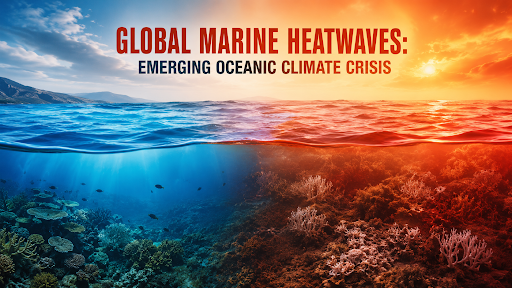
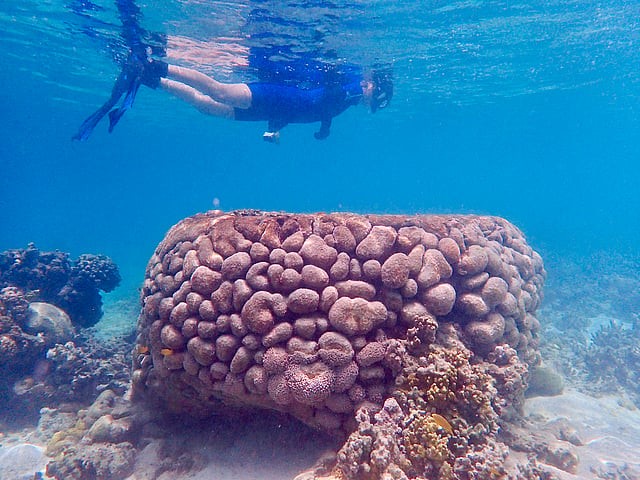
Extreme heat stress during the fourth global bleaching event weakened Goniopora corals at One Tree Reef, triggering an unprecedented outbreak of Black Band Disease. This combination killed 75% of colonies and signals the rapid decline of coral resilience worldwide, with serious ecological and human consequences.
Copyright infringement not intended
Picture Courtesy: Down to earth
A combination of extreme marine heatwaves and a rare infectious disease, Black Band Disease (BBD) has caused 75% mortality among Goniopora (flowerpot) corals at One Tree Reef, Great Barrier Reef.
|
Must Read: Coral reefs | Coral bleaching at Great Barrier Reef | CORAL BLEACHING | CORAL TRIANGLE | |
Corals are marine invertebrates composed of numerous tiny, genetically identical organisms known as polyps, which live together in colonies and secrete calcium carbonate to form the solid structures that make up coral reefs. A defining characteristic of corals is their close association with microscopic algae called zooxanthellae that reside within their tissues and contribute significantly to their nutrition and coloration.
Symbiotic relationship with Zooxanthellae
Corals and zooxanthellae maintain a mutualistic partnership in which the coral provides the algae with shelter and the compounds required for photosynthesis, while the zooxanthellae, in return, supply the coral with energy-rich organic molecules produced through photosynthesis. These nutrients enable corals to grow and build their calcium carbonate skeletons, and the pigments of the algae impart the vivid colours characteristic of healthy coral reefs.
Different types of Corals:
Hard Corals (Scleractinian Corals): Hard corals are the primary reef builders, producing aragonite-based calcium carbonate skeletons that create the rigid framework of coral reefs. They typically inhabit shallow, warm, clear, and well-lit waters where conditions favour photosynthesis. Common examples include Acropora, Porites, and Montipora.
Soft Corals (Alcyonacean Corals): Soft corals lack the solid skeletons of hard corals and therefore do not contribute to reef formation. Their bodies are flexible and often tree-like, supported internally by small structures called spicules. They are more tolerant of deeper or turbid waters compared to hard corals. Examples include sea fans, sea whips, and sea pens.
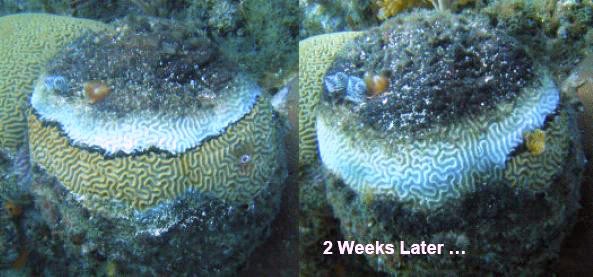
Coral bleaching occurs when corals lose their characteristic colour after expelling or losing their symbiotic zooxanthellae, the algae that normally provide them with food through photosynthesis and confer vibrant pigmentation. Elevated sea temperatures are the primary trigger for bleaching, although factors such as pollution, sedimentation, and changes in salinity can also induce stress. Once the algae are lost, corals turn white or pale, their energy supply declines sharply, and they become increasingly vulnerable to disease, reduced growth, and mortality.
Picture Courtesy: usgs
What are the ecological and global implication of coral mortality?
Structural collapse of reef ecosystems: The loss of long-lived corals reduces reef complexity, leading to declines in fish diversity, spawning habitats, and reef-building capacity. After the 2016 Great Barrier Reef bleaching, reefs that lost over 50% of corals recorded sharp drops in habitat-dependent fish species
Human impact: Coral degradation threatens food security for over one billion people who rely on reef fisheries and undermines coastal protection, as reefs absorb up to 97% of wave energy, reducing storm damage.
Climate change: Climate change is outpacing coral adaptation, with the IPCC projecting 70–90% reef loss at 1.5°C warming and over 99% at 2°C. Severe bleaching in remote, low-pollution regions such as the Phoenix Islands Protected Area shows that even pristine reefs are no longer protected from rising ocean temperatures.
Conclusion:
The mortality of Goniopora corals on the Great Barrier Reef showcases a dangerous new climate reality: even resilient corals are failing under extreme heat–disease interactions. This event is a global warning, emphasizing that without rapid emission reductions, coral reefs are critical ecosystems supporting a billion people, may face widespread collapse.
Source: Down to Earth
|
Practice Question Q. The recent mass mortality of Goniopora corals on the Great Barrier Reef highlights the emerging interplay between climate-induced bleaching and coral diseases. Discuss (250 words) |
A microbial consortium (cyanobacteria, sulfur bacteria) that forms a black mat on corals and kills tissue as it spreads.
Likely due to species-specific susceptibility triggered by extreme heat stress and compromised immunity.
Yes—but only if temperatures cool quickly. Prolonged heat exposure (as in OTR) prevents recovery and encourages disease.


© 2026 iasgyan. All right reserved