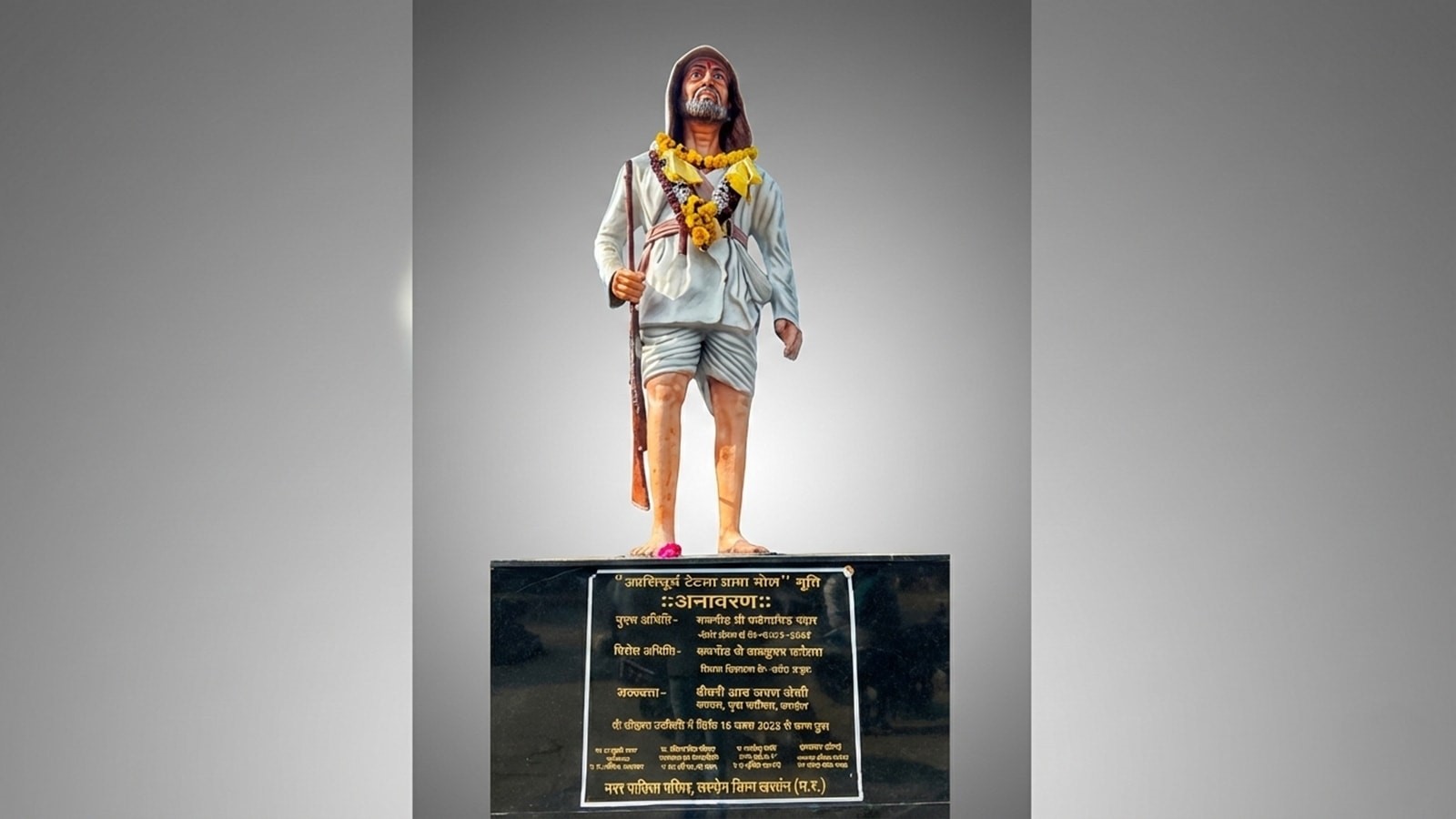
The Bhil tribe are one of India’s largest tribal communities, historically rooted in forested regions of western and central India and known for their rich culture and warrior traditions. From this community emerged Tatya Mama Bhil, a 19th-century resistance leader who used guerrilla tactics against British rule and exploitative forces. Remembered as a folk hero and symbol of tribal pride, his legacy highlights the vital role of Adivasi communities in India’s early anti-colonial struggles.
Copyright infringement not intended
Picture Courtesy: Indian Express
Context:
The Khargone Municipal Corporation approved funds to install a grand statue of Tatya Mama Bhil at a prominent junction renamed in his honour.
|
Must Read: BHILS | |
About Tatya Mama Bhil:
He emerged not as a conventional political leader but as a guerrilla-style rebel figure operating from forests and hilly terrain.
Tatya Mama Bhil led an armed resistance against British authority and its local collaborators.
Nature of his resistance:
British response:
His long evasion of British forces made him a symbol of tribal defiance and resistance to colonial rule.
Legacy:
Tatya Mama represents early indigenous resistance to colonial rule long before the mainstream freedom movement gathered pace.
Unlike many national leaders preserved in official archives, Tatya Mama lives vividly in oral traditions:
About Bhil Tribe:
One of India’s largest and oldest Adivasi (indigenous) communities, the Bhils have a deep historical presence across western and central India. Their identity is closely tied to forests, hills, and a rich warrior–hunter tradition.
Geographical Spread: The Bhils are mainly concentrated in:
Smaller populations also live in Chhattisgarh and parts of Karnataka.
Their settlements are often located in hilly and forested regions, historically giving them strategic advantages in warfare and survival.
Linguistic identity:
Historical role:
The Bhils have a long history of resistance and martial participation:
During colonial times, many Bhil uprisings were linked to:
Present day status:
However, there is growing recognition of Bhil contributions to art, culture, and India’s freedom struggle.
Conclusion:
The Bhil tribe and Tatya Mama Bhil together represent a powerful chapter of India’s tribal history. The Bhils’ long-standing connection with forests, fierce independence, and resistance to exploitation found a heroic expression in Tatya Mama’s struggle. His life turned community suffering into organized defiance, and his memory continues to symbolize tribal pride, courage, and the enduring fight for dignity and rights.
Source: Indian Express
|
Practice Question Q. Examine the socio-economic conditions that led to tribal revolts in 19th-century India. Illustrate your answer using the example of the Bhil resistance under Tatya Mama Bhil. (250 words) |
The Bhils are one of India’s largest Adivasi communities, traditionally living in forested and hilly regions of western and central India. They have a rich cultural heritage, strong community traditions, and a history of resistance against external control.
They are primarily concentrated in Madhya Pradesh, Rajasthan, Gujarat, and Maharashtra, especially in forest and hill tracts.
Tatya Mama Bhil (also known as Tantya Bhil) was a 19th-century tribal resistance leader from the Bhil community who fought against British colonial rule and exploitative moneylenders.


© 2026 iasgyan. All right reserved