The Supreme Court reaffirms Scheduled Caste status is restricted to Hindus, Sikhs, and Buddhists, citing its link to historical untouchability. This creates a disparity with religion-neutral ST status, leaving the inclusion of Dalit converts dependent on the Balakrishnan Commission’s findings
Copyright infringement not intended
Picture Courtesy: INDIANEXPRESS
Why in the News?
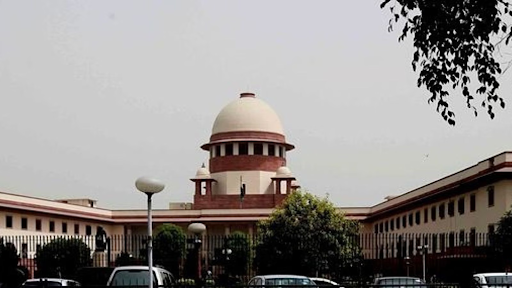
The Supreme Court held that the Scheduled Caste status is available only to Hindus, Sikhs and Buddhists and conversion to any other religion will result in “immediate and complete loss of” the caste status.
What are the key highlights of the supreme court judgement?
The Core Ruling: In the Chinthada Anand vs State of Andhra Pradesh case, the Court clarified that the religious restriction under the Constitution is non-negotiable.
No Dual Benefits: A person cannot profess a casteless religion (like Christianity) while simultaneously claiming benefits meant for communities suffering from the historical stigma of the Hindu caste system.
Fraud on the Constitution: The Court noted that retaining SC certificates or benefits after converting to a religion like Christianity amounts to a "fraud on the Constitution."
No Protection Under Atrocities Act: A convert is not entitled to protection under the SC/ST (Prevention of Atrocities) Act, 1989.
Constitutional Basis: The 1950 Order
The judgment relies entirely on the Constitution (Scheduled Castes) Order, 1950, issued by the President under Article 341.
Why the Exclusion?
The Court’s rationale is rooted in the historical definition of caste:
Can SC Status be "Reclaimed"?
The Court clarified that SC status can be revived if a person genuinely reconverts to Hinduism, Sikhism, or Buddhism. However, the Bench laid down a strict three-fold test for this:
Arguments Supporting the Verdict
Constitutional Fidelity: The Court cannot amend the Presidential Order; only Parliament can (under Article 341(2)).
Protecting the Pie: Existing SC groups argue that including large convert populations (like Dalit Christians) would dilute the quota benefits for the "most backward" Hindu Dalits.
Arguments Against the Verdict
Article 25 vs 14: Critics argue that penalizing a person for choosing a faith (by stripping their status) violates the Fundamental Right to Freedom of Conscience and Equality.
Social Stigma: Dalit Christians and Dalit Muslims continue to face social discrimination and endogamy despite their change in faith.
Conclusion
This verdict settles a long-standing legal debate: caste identity for the purpose of reservation is strictly tied to the religious framework of Hinduism, Sikhism, and Buddhism. For converts to other faiths, the "exit" from the religion is treated as an exit from the caste disability, legally extinguishing their claim to SC benefits.
Source: INDIANEXPRESS
|
PRACTICE QUESTION Q. “The Supreme Court reinforces the religious limitation of the Scheduled Caste status. Critically analyze this in light of the debate on extending SC status to Dalit Christians and Muslims.” 150 words |
Under the Constitution (Scheduled Castes) Order, 1950, SC status is restricted to individuals professing Hinduism, Sikhism, or Buddhism. Converting to Christianity or Islam results in the immediate loss of SC status.
The legal rationale is that Sikhism and Buddhism originated in India and share historical caste structures and the legacy of untouchability with Hinduism. Conversely, Christianity and Islam are theologically egalitarian and do not formally recognize the institution of caste in their doctrines.
According to the Supreme Court, the individual cannot rely merely on a certificate. They must prove unequivocal renunciation of the converted religion, cultural assimilation into the original SC caste's practices, and unimpeachable proof of acceptance back into the original SC community.


© 2026 iasgyan. All right reserved