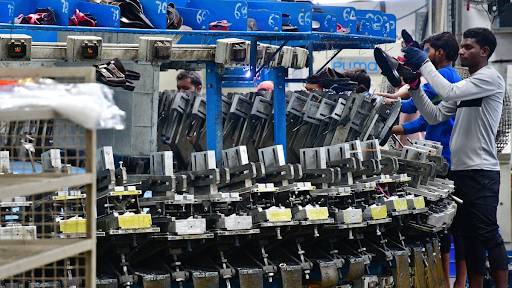
RoDTEP refunds embedded central, state, and local duties (like electricity and fuel taxes) not covered by other schemes. It offers transferable electronic scrips to pay basic customs duty, enhancing global price competitiveness.
Copyright infringement not intended
Picture Courtesy: globallinker
Why In News?
The Government has restored the original remission rates and value caps under the Remission of Duties and Taxes on Exported Products (RoDTEP) Scheme for all eligible export products.
What is the RoDTEP Scheme?
Launched on January 1, 2021, RoDTEP replaced the Merchandise Exports from India Scheme (MEIS) to ensure Indian exports comply with World Trade Organization (WTO) norms.
Core Principle: "Taxes and duties should not be exported." It ensures that hidden central, state, and local duties that are not refunded under any other scheme (like GST or Duty Drawback) are remitted to the exporter.
WTO Compliance: Unlike MEIS, which was viewed as an export subsidy (illegal under WTO rules), RoDTEP is a reimbursement mechanism for actual costs incurred, making it "non-actionable" or legal under international trade law.
Key Features of the Scheme
Comprehensive Coverage: It covers over 10,000 export items (HS Codes) across sectors like marine, agriculture, leather, gems & jewelry, and automobiles.
Issuance of Rebate: The refund is issued in the form of transferable electronic scrips. These scrips are maintained in an electronic ledger by the Central Board of Indirect Taxes and Customs (CBIC).
Transferability: These e-scrips can be used to pay Basic Customs Duty on imports or can be sold to other importers, providing liquidity to the exporter.
Automatic Process: The system is integrated with the ICEGATE portal, allowing for a digital, paperless, and end-to-end automated claim process.
What Duties Does RoDTEP Refund?
The scheme targets taxes that are not covered under GST or the Duty Drawback scheme. These include:
Strategic Significance
Global Competitiveness: By removing "tax-on-tax" (cascading effect), Indian goods become cheaper and more attractive in global markets.
Support for MSMEs: Small-scale exporters, who often operate on thin margins, benefit significantly from the automated refund of embedded costs.
Supply Chain Efficiency: The scheme encourages a cleaner, more documented supply chain as refunds are based on actual production data.
Export Targets: It plays a crucial role in India’s goal of reaching $2 trillion in exports by 2030. (Source: Foreign Trade Policy 2023)
Recent Update: Restoration of Rates (March 2026)
The government has withdrawn the earlier restriction that capped benefits at 50% of the notified rates.
Conclusion
The RoDTEP scheme enhances India’s export competitiveness by refunding embedded domestic taxes, ensuring compliance with WTO norms while creating a transparent, predictable fiscal environment that promotes "Ease of Doing Business" for Indian exporters in global markets.
Source: NEWSONAIR
|
PRACTICE QUESTION Q. Consider the following statements regarding the Remission of Duties and Taxes on Exported Products (RoDTEP) scheme: 1. It was introduced to replace the Merchandise Exports from India Scheme (MEIS) to strictly adhere to WTO norms. 2. It refunds un-refunded central, state, and local duties, but excludes embedded costs like mandi tax and electricity duties. Which of the statements given above is/are correct? a) 1 only b) 2 only c) Both 1 and 2 d) Neither 1 nor 2 Answer: a Explanation: Statement 1 is correct: The RoDTEP scheme was introduced on January 1, 2021, specifically to replace the older Merchandise Exports from India Scheme (MEIS). The MEIS was challenged by the United States at the World Trade Organization (WTO) on the grounds that it was an export subsidy. RoDTEP is designed to be WTO-compliant because it is a "remission" (refund) of taxes already paid, rather than an "incentive" or subsidy. Statement 2 is incorrect: The primary purpose of the RoDTEP scheme is precisely to refund those embedded costs that were previously not refunded under any other mechanism (like GST or Duty Drawback). This includes duties such as Mandi Tax, Electricity Duty, Coal Cess, and VAT on fuel used for transportation of export goods, |
RoDTEP stands for Remission of Duties and Taxes on Exported Products. It is a scheme by the Ministry of Commerce and Industry designed to boost Indian exports by refunding embedded taxes and duties that are not recovered under other mechanisms.
The Merchandise Exports from India Scheme (MEIS) was replaced because a World Trade Organization (WTO) dispute settlement panel found that it acted as an illegal export subsidy, violating international trade rules. RoDTEP operates on the WTO-compliant principle that "taxes should not be exported."
The RELIEF (Resilience & Logistics Intervention for Export Facilitation) scheme is a ₹487 crore initiative launched by the Indian government to directly ease the soaring marine insurance and logistics pressures faced by exporters due to global supply chain disruptions.


© 2026 iasgyan. All right reserved