The Prime Minister’s Internship Scheme is underperforming due to chronic under-spending and poor uptake, with acceptance below 34 percent. An unviable ₹5,000 stipend is the key deterrent, reflecting deeper issues like skill mismatches. Revamp needs higher stipends, NEP 2020 alignment, and NAPS-style apprenticeship integration.
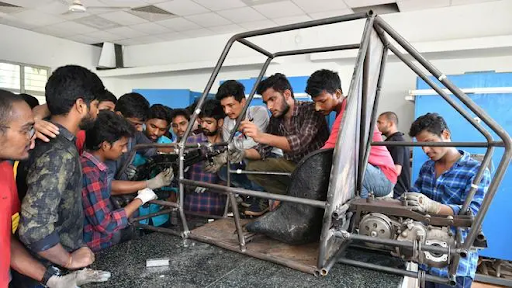
Copyright infringement not intended
Picture Courtesy: THEHINDUBUSINESSLINE
The Ministry of Corporate Affairs spent only 4% of its budget allocation for the Prime Minister’s Internship Scheme (PMIS) between April and November of FY26.
Announced in the Union Budget 2024-25, to bridge the gap between academic knowledge and practical industry skills.
It was launched by the Ministry of Corporate Affairs, to provide 1 crore internship opportunities to youth over a five-year period.
Duration: The internship lasts for 12 months, with at least 6 months dedicated to hands-on, real-world work experience.
Monthly Stipend: Interns receive ₹5,000 per month. This is paid via:
Additional Grants: A one-time incidental grant of ₹6,000 is provided upon joining.
Insurance: Every intern is covered under the Pradhan Mantri Jeevan Jyoti Bima Yojana and Pradhan Mantri Suraksha Bima Yojana, with premiums paid by the government.
Eligibility Criteria
Nationality & Age: Must be an Indian citizen aged between 21 and 24 years.
Education: Open to those who have completed High School (Class 10), Higher Secondary (Class 12), ITI, Polytechnic diplomas, or undergraduate degrees (BA, B.Sc, B.Com, etc.).
Ineligibility:
Implementation and Participation
Partner Companies: Internships are offered by India's top 500 companies across diverse sectors like banking, IT, manufacturing, and automotive.
Application Process: Candidates must register and apply through the official PM Internship Portal.
Selection: Shortlisting is managed by an AI-driven platform to ensure transparency and social inclusivity.
|
Why is the Scheme in the News? Severe Under-spending: The Ministry of Corporate Affairs (MCA) utilized only ₹500 crore, or 4%, of its ₹11,500 crore budget allocation for the scheme between April and November of FY26. (Source: Controller General of Accounts). Recurring Issue: In FY25, the MCA's budget was cut from ₹2,667 crore to ₹1,078 crore due to the surrender of unspent funds, largely linked to the PMIS (Source: Parliamentary Standing Committee). |
Low Participation and Declining Acceptance Rates
A significant gap between internship offers and acceptances suggests a fundamental design flaw in the scheme's appeal.
|
Pilot Round |
Offers Made |
Offers Accepted |
Acceptance Rate |
|
Round 1 |
82,000+ |
28,000 |
34% |
|
Round 2 |
83,000+ |
< 24,600 |
Below 30% |
(Source for data: Written reply by the Finance Minister in Parliament, December 2025)
Inadequate Financial Assistance
Low Stipend
The fixed monthly stipend of ₹5,000 is lower than the minimum wage for unskilled workers in metropolitan cities.
Economic Unviability
The low stipend makes it difficult for an intern to cover basic living costs like accommodation, food, and transport, making the opportunity unattractive despite the work experience.
Skill-Industry Mismatch
The India Skills Report 2025 indicates that despite overall employability rising to 54.81%, a significant gap remains between theoretical education and the practical skills required by industries.
Questionable Quality of Training
Skill programs, like the Pradhan Mantri Kaushal Vikas Yojana (PMKVY), are often criticized for prioritizing certification over genuine skill acquisition.
Weak Industry-Academia Linkages
Insufficient collaboration between companies and universities prevents curriculum updates and denies students vital exposure to real-world work environments.
Rationalize the Stipend Structure
The "one-size-fits-all" stipend must be revised. The government should introduce a tiered stipend system, indexed to the cost of living in different cities (e.g., Tier-1, Tier-2, Tier-3).
This aligns with the principles of fair remuneration outlined in the Code on Wages, 2019.
Integrate with National Education Policy (NEP) 2020
The scheme should be integrated with the academic framework as envisioned in the NEP 2020. This includes:
Learn from Successful Models like NAPS
The National Apprenticeship Promotion Scheme (NAPS) has shown better results due to its cost-sharing model. PMIS can adopt similar features to incentivize employer participation.
|
Scheme |
Stipend Model |
Key Feature |
|
PMIS |
Fixed stipend of ₹5,000 paid by the government. |
Low financial attractiveness for candidates and limited incentive for companies to invest more. |
|
NAPS |
Government shares 25% of the stipend (up to ₹1,500/month) with the employer. |
Encourages employers to participate and offer higher stipends, making the opportunity more attractive. |
Implement a Robust Quality Assurance Framework
Establish mandatory feedback and evaluation for both interns and companies to ensure internships offer meaningful skill-building, not just cheap labor.
The PM Internship Scheme needs urgent course correction, including increasing the stipend, integrating with NEP 2020, and adopting NAPS-like models to financially support and properly align on-the-job training.
Source: THEHINDUBUSINESSLINE
|
PRACTICE QUESTION Q. Consider the following statements about the Prime Minister's Internship Scheme (PMIS): 1. Applicants must be Indian citizens aged between 21 and 24 years. 2. Candidates currently pursuing full-time graduate degrees are ineligible. 3. Individuals whose family annual income exceeds ₹8 lakh are excluded from the scheme. How many of the above statements are correct? A) Only one B) Only two C) All three D) None Answer: C Explanation: Statement 1 is correct: Applicants must be Indian nationals aged between 21 and 24 years Statement 2 is correct: The scheme specifies that individuals engaged in full-time education or full-time employment are ineligible. Candidates must have already completed their qualifying degree (e.g., BA, B.Sc, B.Com, etc.) to apply. Statement 3 is correct: Individuals whose annual family income (including parents/spouse) exceeds ₹8 lakh for the relevant financial year are excluded from the scheme. |
The PMIS is a government initiative launched to provide one crore paid, hands-on industry internship opportunities to young Indians (aged 21-24) over five years, aiming to bridge the gap between academic knowledge and industry skills.
The primary reason is the inadequate fixed monthly stipend of ₹5,000. This amount is significantly lower than the minimum wage for unskilled workers in major cities, making it economically unviable for interns, especially those who need to relocate.
The Ministry of Corporate Affairs (MCA) is the nodal ministry responsible for spearheading and implementing the Prime Minister's Internship Scheme.




© 2026 iasgyan. All right reserved