UDISE+ is India's premier digital platform for school education data. Managed by the Ministry of Education, it tracks students, teachers, and infrastructure, enabling data-driven governance, improving resource allocation, and ensuring the effective implementation of the National Education Policy 2020.
Click to View MoreThe Performance Grading Index (PGI) 2.0, released by the Ministry of Education, assesses state and district-level school education. By evaluating 70 indicators, it promotes competitive federalism, highlights infrastructure improvements, and identifies crucial learning outcome gaps to guide evidence-based policymaking.
Click to View MoreThe Shastrarth tradition is an ancient Indian system of structured philosophical debate relying on logic, evidence (Pramana), and ethical conduct. Recently revived by Nalanda University and supported by NEP 2020, it bridges India's classical intellectual heritage with modern education to foster critical thinking and democratic dialogue.
Click to View MoreDIKSHA is India's 'One Nation, One Digital Platform' for school education. Launched by the Ministry of Education, it offers multilingual e-content, QR-coded textbooks, and teacher training. It drives NEP 2020's vision by democratizing learning despite persistent digital divide challenges.
Click to View MoreThe Global Skills Challenge prepares India’s youth for the biennial WorldSkills Competition. By participating in these elite platforms, India benchmarks its vocational training against global standards, driving initiatives like PMKVY and the Skill India Mission to harness its massive demographic dividend effectively.
Click to View MoreSikkim is India's fifth fully literate state, achieving 99.82% literacy under the ULLAS scheme. Targeting adults aged 15 and above, this Ministry of Education initiative aligns with NEP 2020 by imparting foundational literacy, numeracy, and essential life skills.
Click to View MoreThe NITI Aayog 2026 report analyses India’s school education, noting universal primary access but severe learning deficits, secondary dropouts, and fragmented structures. It proposes 13 systemic and academic reforms to shift focus from mere access to meaningful learning quality.
Click to View MoreThe SANKALP (Skill Acquisition and Knowledge Awareness for Livelihood Promotion) scheme, launched in 2018 by the Ministry of Skill Development and Entrepreneurship with assistance from the World Bank, aims to strengthen short-term skill training by improving institutional capacity, ensuring industry relevance, and promoting inclusion of marginalised groups. However, audit findings by the Comptroller and Auditor General of India and observations of the Public Accounts Committee have highlighted concerns such as underutilisation of funds, slow implementation, weak monitoring mechanisms, and lack of preparedness. The issue underscores the need for stronger governance, outcome-based implementation, better industry linkages, and integration of vocational education within the school system to improve employability and effectively harness India’s demographic potential.
Click to View MoreThe Ol Chiki script’s centenary, inaugurated by President Droupadi Murmu, marks 100 years since Pandit Raghunath Murmu created it for Santhali. As a distinct scientific alphabet, it preserves tribal identity. With Santhali in the Eighth Schedule, focus now shifts to NEP-aligned mother tongue education, digital inclusion, and Bhashini-led integration.
Click to View MoreThe Prime Minister’s Internship Scheme is underperforming due to chronic under-spending and poor uptake, with acceptance below 34 percent. An unviable ₹5,000 stipend is the key deterrent, reflecting deeper issues like skill mismatches. Revamp needs higher stipends, NEP 2020 alignment, and NAPS-style apprenticeship integration.
Click to View MoreThe Union Ministry of Education's 'Guidelines for Regulation of Coaching Center 2024' aims to regulate India's 'shadow education' system by mandating registration, setting age limits for enrolment, ensuring tutor qualifications, and enforcing fair fee policies. These regulations are a response to rising student suicides, financial exploitation, and the undermining of formal education.
Click to View MoreNational Mathematics Day, observed on December 22, commemorates Srinivasa Ramanujan. Instituted in 2011, it highlights mathematics in science and daily life. The government also declared 2012 as National Mathematics Year to promote learning and research across India’s academics and institutions.
Click to View More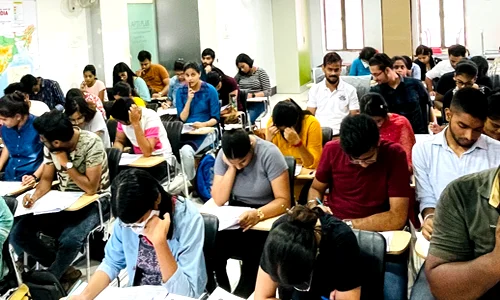
© 2026 iasgyan. All right reserved