Samagra Shiksha, implementing NEP 2020, has improved infrastructure, enrolment and teacher-pupil ratios but faces funding gaps, learning deficits, vacancies and a digital divide. Realising its potential needs outcome-based financing, stronger district execution, continuous teacher development, and deeper Centre-state cooperation governance.
Copyright infringement not intended
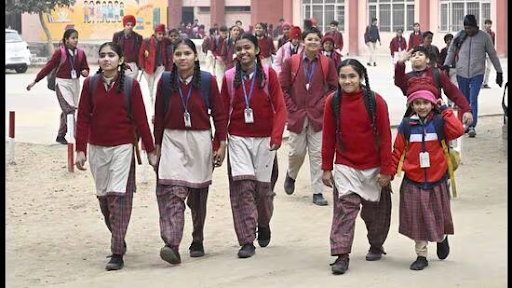
Picture Courtesy: hindustantimes
The Union Education Minister recently mandated that states must follow Samagra Shiksha norms to secure central funding, emphasizing uniform implementation of the scheme.
It is a comprehensive, integrated scheme for school education covering pre-school to class XII.
Launched in 2018, it merged three older schemes: Sarva Shiksha Abhiyan (SSA), Rashtriya Madhyamik Shiksha Abhiyan (RMSA), and Teacher Education (TE).
Core Objective: To ensure inclusive and equitable quality education at all levels, in line with the Sustainable Development Goal for Education (SDG-4).
Financial Outlay: A total financial outlay of ₹2.94 lakh crore has been approved for the period from 2021-22 to 2025-26, with a central share of ₹1.85 lakh crore. (Source: PIB)
Coverage: The scheme benefits over 15.6 crore students and 57 lakh teachers across 11.6 lakh schools (government and aided). (Source: PIB)
Key Interventions
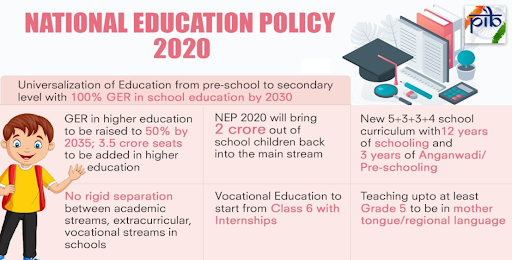
The Samagra Shiksha scheme has been updated to serve as the main vehicle for implementing NEP 2020's recommendations.
Source: THEHINDU
|
PRACTICE QUESTION Q. The NIPUN Bharat Mission, a key component of the Samagra Shiksha Scheme, aims to: A) Provide vocational education to all secondary school students. B) Ensure every child achieves foundational literacy and numeracy by Grade 3. C) Equip Government schools with smart classrooms and digital boards. d) Strengthen Teacher Education Institutions Answer: B Explanation: The NIPUN Bharat Mission aims to B) Ensure every child achieves foundational literacy and numeracy by Grade 3. |
Samagra Shiksha is an integrated scheme for school education in India, launched in 2018. It covers education from pre-school to class XII and treats it holistically, subsuming earlier schemes like Sarva Shiksha Abhiyan (SSA), Rashtriya Madhyamik Shiksha Abhiyan (RMSA), and Teacher Education (TE).
The NIPUN (National Initiative for Proficiency in Reading with Understanding and Numeracy) Bharat Mission is a key component of Samagra Shiksha. Its objective is to ensure that every child in the country necessarily attains foundational literacy and numeracy (FLN) by the end of Grade 3.
The Performance Grading Index (PGI) is a tool used by the Ministry of Education to assess the performance of the school education system across all States and Union Territories. It evaluates them on a set of 73 indicators, providing insights into their strengths and weaknesses to guide improvements.


.jpg)

© 2026 iasgyan. All right reserved