The expiry of the New START Treaty between United States and Russia risks ending nuclear restraint, eroding transparency and weakening the NPT. China’s refusal to join talks adds complexity, while India may face pressure to reassess credible minimum deterrence, highlighting the need for multilateral risk-reduction frameworks.
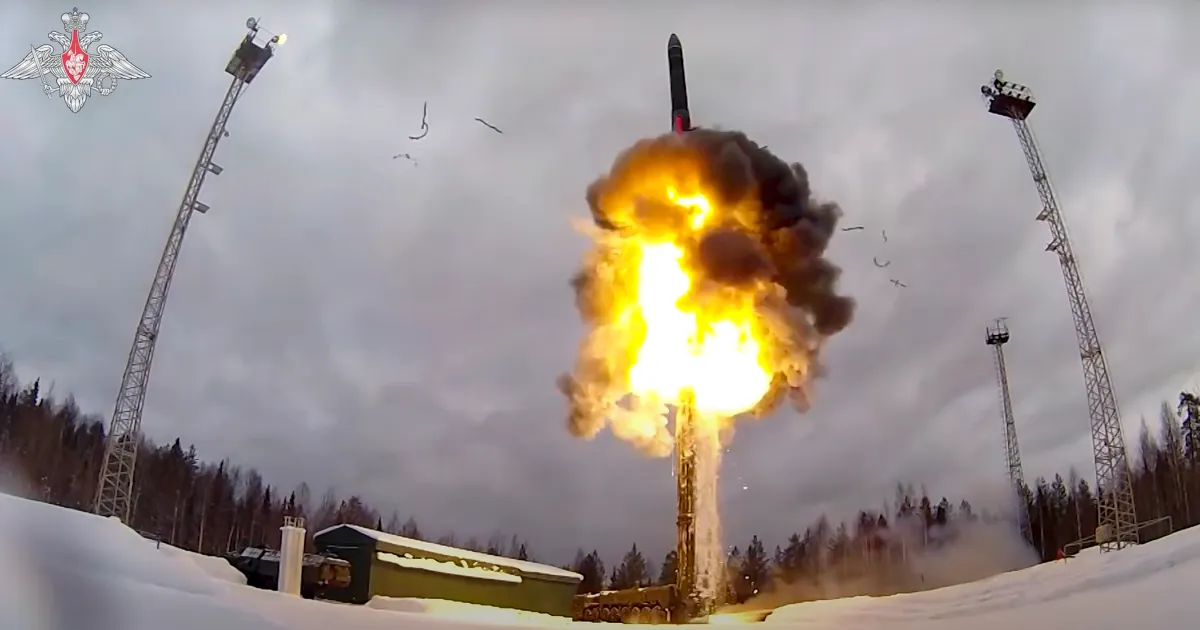
Copyright infringement not intended
Picture Courtesy: THEGUARDIAN
Context
The New START treaty between the US and Russia has expired, ending the last nuclear arms control agreement and raising concern of an unregulated nuclear arms race.
What is the New START Treaty?
The New START treaty, signed in 2010 and effective in 2011, is a key element of global strategic stability that limited the nuclear arsenals of the two largest nuclear powers.
Core Mandates: The treaty established clear, verifiable limits on the number of deployed strategic nuclear weapons.
Verification Regime: It created a comprehensive system of on-site inspections, data exchanges, and notifications, ensuring transparency and mutual confidence.
Current Status: Russia suspended its participation in the treaty's verification mechanisms in 2023, citing geopolitical tensions, and the treaty's expiration now removes all legal constraints on their arsenals.
Why the Treaty's Expiry Threatens Global Security?
Removal of All Limits
Both the US and Russia are now legally free to expand their nuclear arsenals without any restrictions. This could trigger a rapid increase in the number of 'deployed' (ready-to-fire) warheads.
Loss of Transparency
The loss of the treaty’s verification regime and mutual monitoring increases opacity and unpredictability, thus raising the risk of miscalculation during a crisis.
Erosion of Trust and Dialogue
Arms control treaties provide essential channels for communication; their absence deepens mistrust and makes crisis management more difficult.
Violation of the NPT Spirit
The Nuclear Non-Proliferation Treaty (NPT) mandates that nuclear-weapon states pursue disarmament. The potential lapse of the New START treaty is viewed as a violation of the NPT, increasing the risk of nuclear proliferation.
The 'China Factor': A New Strategic Reality
China's emergence as a major nuclear power transformed arms control from a bilateral to a trilateral challenge.
Impact on India’s Strategic Interests
Fueling a Regional Arms Race
If the US expands its nuclear forces to counter both Russia and China, then China will also accelerate its own nuclear modernization.
A more powerful Chinese arsenal directly threatens India, forcing New Delhi to reconsider its doctrine of 'Credible Minimum Deterrence' and expand its own capabilities.
Straining Strategic Autonomy
The growing rift between the US-led West and the Russia-China axis puts pressure on India's policy of multi-alignment.
India maintains strategic partnerships with both sides (e.g., Quad with the US, defence ties with Russia) and will face increasing pressure to align with one bloc, challenging its independent foreign policy.
Undermining Global Disarmament Efforts
India has historically been an advocate of universal, non-discriminatory disarmament, as reflected in initiatives like the Rajiv Gandhi Action Plan (1988).
The failure of the world's leading nuclear powers to uphold their commitments weakens the global non-proliferation regime and undermines India's long-standing position.
Way Forward
Prioritize Risk Reduction: In the absence of formal treaties, the immediate focus must be on crisis communication and transparency measures to prevent accidental escalation.
Establish a Multilateral Framework: Future arms control efforts must move beyond a bilateral US-Russia focus.
India's Potential Role: As a responsible nuclear power, India can leverage platforms like the G20 and the UN Conference on Disarmament to advocate for risk-reduction measures, such as a global 'No First Use' (NFU) agreement.
Conclusion
The end of the New START treaty has created a 'nuclear anarchy,' necessitating a shift from numerical arms limits to a new paradigm centered on transparency, crisis communication, and strategic risk reduction to prevent a nuclear conflict.
Source: THEGUARDIAN
|
PRACTICE QUESTION Q. "The expiry of the New START Treaty marks the disintegration of the post-Cold War arms control architecture." Discuss. 150 words |
The New Strategic Arms Reduction Treaty (New START) is a nuclear arms control pact signed between the United States and Russia in 2010. It limited each country to 1,550 deployed strategic warheads and 700 deployed missiles/bombers, establishing a regime of inspections and data sharing.
China argues that its nuclear arsenal (estimated at roughly 600 warheads) is smaller than that of the US or Russia (approx. 5,000+ each). Beijing maintains that it should not be held to the same reduction standards until the superpowers reduce their stockpiles drastically.
It triggers a potential chain reaction: if the US expands its arsenal to counter Russia, China may accelerate its modernization. A stronger Chinese nuclear capability threatens India, forcing India to expand its own arsenal, which in turn could provoke Pakistan, worsening the security dilemma in South Asia.



© 2026 iasgyan. All right reserved