Navara is an ancient medicinal rice native to Kerala’s Palakkad region, valued for its therapeutic role in Ayurveda and its rich nutritional profile. Once widely grown, it has become rare due to low yields, labour-intensive cultivation, pest sensitivity, and competition from hybrid varieties. Despite these challenges, Navara remains important for its cultural significance, biodiversity value, GI tag recognition, and unique place in traditional health practices.
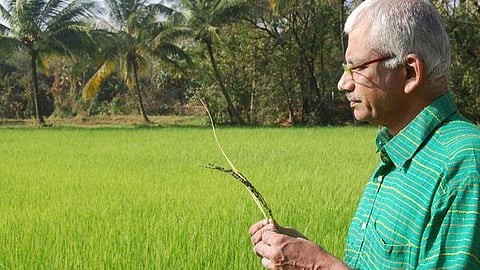
Navara: Kerala rare medicinal rice
https://www.downtoearth.org.in/agriculture/p-narayanan-unny-was-the-keeper-of-the-red-grain
Copyright infringement not intended
Picture Courtesy: Down to Earth
Context:
|
Must Read: INTELLECTUAL PROPERTY RIGHTS OVER NAVARA RICE | |
Navara is an ancient medicinal rice variety believed to have been cultivated for nearly two millennia. Once widespread in Kerala, it has now become rare due to challenges such as the disappearance of pure seed stock, low productivity, high cultivation costs, and the dominance of high-yielding hybrid varieties.
Nutritionally, Navara is known for its rich composition of fats, proteins, and carbohydrates. Because of its therapeutic value and limited availability, it is often described as a “golden grain.” Traditional practices regard it as beneficial for enhancing immunity and supporting the health of pregnant women and infants.
Botanically, Navara belongs to the Oryza group of rice but stands apart as a distinctive endemic variety native to the Palakkad (Palghat) region of Kerala. The Oryza genus comprises grass species that include both wild and cultivated forms of rice.
In recognition of its cultural and geographical uniqueness, Navara rice received a Geographical Indication (GI) tag in 2007.
Importance of Navara Rice:
Medicinal value: Navara is one of the few rice varieties recognised for therapeutic use in Ayurveda.
It is central to treatments such as Navarakizhi, convalescence diets, and therapies for muscular, bone, and rheumatic conditions. Its bran is rich in antioxidants, making it valuable in strengthening immunity and supporting recovery from illnesses.
Nutritional benefits: This rice contains a balanced profile of carbohydrates, proteins, and beneficial fats.
It is traditionally recommended for pregnant women, infants, and the elderly because of its easily digestible texture and restorative properties.
Cultural Significance: Navara plays a role in Kerala’s cultural traditions.
It is used in certain temple ceremonies, seasonal rituals, and in the month of Karkidakam (Ayurvedic rejuvenation period), symbolising nourishment, healing, and purity.
Agricultural Heritage and Biodiversity: As a 2,000-year-old landrace endemic to Palakkad, Navara represents Kerala’s rich agricultural history.
Its conservation helps preserve genetic diversity, which is crucial for developing climate-resilient crops and maintaining ecological balance.
Economic Importance: With its Geographical Indication (GI) status (granted in 2007), Navara holds strong market potential as a speciality grain.
Demand from Ayurveda centres, wellness industries, and niche export markets provides income opportunities for farmers cultivating this rare variety.
Ecological Relevance: Navara’s short cultivation cycle and adaptability to local agro-ecosystems make it important in the context of climate variability.
Its organic cultivation practices also promote soil health, biodiversity restoration, and sustainable farming.
What are the challenges in the cultivation of Navara Rice?
Low Yield: Navara produces significantly lower yields than modern high-yielding or hybrid varieties.
This makes farmers reluctant to allocate land to it, especially where landholdings are small and profitability is crucial.
High Production and Labour Costs: The crop demands intensive care throughout its short 60-day growth period.
Because chemical pesticides cannot be used (due to its medicinal value), farmers rely on manual or biological pest-control methods—substantially increasing labour requirements and cost of cultivation.
Pest and Disease Vulnerability: Navara’s delicate stems and grains make it highly susceptible to pests and fungal infections. Traditional biological sprays often offer limited protection, requiring repeated interventions.
Shrinking Availability of Pure Seeds
Decades of hybridisation and the decline of traditional farming practices have led to a scarcity of uncontaminated Navara seeds.
Maintaining genetic purity is a continuous challenge.
Sensitivity to Climate Variability: Irregular rainfall, unseasonal temperature fluctuations, and humidity changes can disrupt sowing and affect grain formation.
This is critical in Kerala, where monsoon variability has increased in recent years.
Government initiatives:
National Level
Kerala State Initiatives
Conclusion:
Navara rice embodies the intersection of heritage, health, and ecological wisdom, yet its survival is threatened by economic, climatic, and cultivation challenges. Strengthening incentives, improving conservation efforts, and expanding market support are essential to ensure that this ancient medicinal grain remains a living part of India’s agricultural and cultural landscape.
Source: Down to Earth
|
Practice Question With reference to traditional rice landraces in India, consider the following pairs: 1. Pokkali Rice — Salinity-tolerant variety of Kerala 2. Jeerakasala Rice — Aromatic rice used in Malabar cuisine 3. Navara Rice — Mainly used for Ayurvedic therapies Which of the above pairs is/are correctly matched? Answer: D Explanation Pair 1 is correct: Pokkali Rice — Salinity-tolerant variety of Kerala Pair 2 is correct: Jeerakasala Rice — Aromatic rice used in Malabar cuisine Pair 3 is correct: Navara Rice — Mainly used for Ayurvedic therapies Q. How can traditional agricultural practices contribute to India’s climate-resilient farming strategies? (150 words) |
Navara is an ancient medicinal rice landrace from Kerala, cultivated for nearly 2,000 years and valued for its therapeutic properties in Ayurveda.
It is used in Ayurvedic treatments like Navarakizhi, therapeutic porridges, and recovery diets due to its nutrient-rich bran, antioxidants, and restorative effects on immunity and muscle strength.
It is endemic to the Palakkad (Palghat) region of Kerala, known for its traditional paddy ecosystems.




© 2026 iasgyan. All right reserved