Dr. B.R. Ambedkar was a jurist, reformer, economist, and the chief architect of India’s Constitution who dedicated his life to securing equality and dignity for the marginalised. Rising from caste oppression, he shaped India’s democratic framework through fundamental rights, social justice provisions, labour reforms, and economic ideas that influenced institutions like the RBI. His conversion to Buddhism symbolised liberation from caste tyranny, and his legacy continues to guide movements for rights and inclusion. His death anniversary, observed as Mahaparinirvan Diwas, reflects the belief that he attained ultimate spiritual and social fulfilment.
Copyright infringement not intended
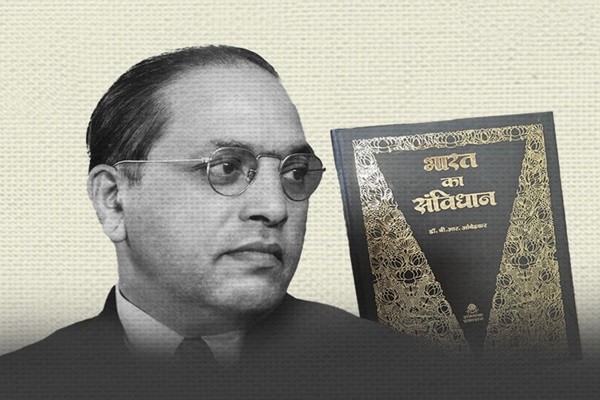
Picture Courtesy: News on Air
The nation pays homage to Bharat Ratna Dr. B.R. Ambedkar on his 70th Mahaparinirvan Diwas or death anniversary.
|
Must Read: BR AMBEDKAR | AMBEDKAR JAYANTI | |
Bhimrao Ramji Ambedkar (14 April 1891 – 6 December 1956), popularly known as Babasaheb, stands among India’s most influential nation-builders. A jurist, economist, scholar, and reformer, he chaired the Drafting Committee of the Constituent Assembly and became independent India’s first Law Minister, earning recognition as the moral architect of modern India.
Ambedkar’s personality was remarkably diverse and he was a prolific writer, a student of religions, an incisive thinker, and a commanding orator. His life illustrates the power of perseverance, as he rose from a background of exclusion to reshape India’s social and political landscape.
Despite his exceptional credentials, Ambedkar’s return to India confronted him with the harsh reality that education alone could not end discrimination. He was denied opportunities, insulted in workplaces, and even faced resistance as a professor solely because of his caste identity. These personal experiences deepened his resolve to fight the oppressive social order and secure dignity for oppressed groups.
Chairman of the Drafting Committee: One of Ambedkar’s most historic responsibilities was his selection in 1947 as the Chairman of the Drafting Committee. This body was entrusted with the difficult task of preparing India’s first Constitution.
Leadership in nation-building: Under his guidance, the committee studied several global constitutional models, polished inputs from experts, and synthesized diverse viewpoints of sub-committees. Working against time, Ambedkar steered the process efficiently and delivered a comprehensive draft.
“Architect of the Indian Constitution”: Because of his enormous influence on content, language, and structure, Ambedkar is popularly remembered as the principal architect of the Constitution. His persuasive arguments in the Assembly and his drafting work laid the foundation of modern India’s legal and political framework.
Champion of equality and justice: Ambedkar ensured that the Constitution became a mechanism for inclusive nation-building. Fundamental Rights and Directive Principles were deliberately shaped to secure dignity and opportunity for every citizen, irrespective of caste, faith, gender, or class.
Active voice in constitutional debates: Ambedkar was among the most articulate participants in the Constituent Assembly. His speeches were marked by precision, evidence-based reasoning, and moral conviction. He tackled criticisms from ideological opponents—ranging from conservatives to communists—by explaining the logic behind each clause. His final speech defending the draft remains one of the most profound reflections on democracy in India’s legislative history.
Relentless advocate for marginalised communities: Perhaps the most meaningful dimension of Ambedkar’s contribution was his unwavering struggle to secure rights for Dalits and other oppressed groups. Having experienced exclusion himself, he ensured constitutional protections were not symbolic but enforceable.
Abolishing caste discrimination: He secured the constitutional abolition of untouchability through Article 17 and pushed for affirmative action provisions under Articles 15(4) and 16(4). These measures were meant to undo centuries of injustice and ensure dignified participation of historically disadvantaged communities.
Foundation of Monetary policies: Ambedkar’s book The Problem of the Rupee (1923) analysed the instability of India’s currency system. His proposals later influenced the establishment of the Reserve Bank of India in 1934, making him one of the earliest architects of India’s monetary policy thinking.
Pioneer of Fiscal Federalism: His research on provincial finance in the early 1920s provided intellectual grounding for financial decentralisation in India. These ideas later guided the design of institutions like the Finance Commission.
Reforms for Labour welfare: As Labour Member of the Viceroy’s Council (1942–46), Ambedkar pushed for worker-friendly laws. He introduced the eight-hour workday, maternity benefits, labour welfare funds, and set up Employment Exchanges—steps that strengthened labour rights in colonial India.
Planning of Water and Power resources: Ambedkar saw irrigation and energy development as critical for India’s progress. He supported river valley projects, and contributed to institutions like the Central Water Commission and Damodar Valley Corporation, promoting long-term resource development.
Advocacy for Monetary stability and welfare economics: He emphasised that unchecked inflation disproportionately harms the poor. His insistence on financial discipline and price stability resonates with modern inflation-targeting frameworks.
Bahishkrit Hitkarini Sabha (1923): Formed to promote education, social upliftment, and self-respect among oppressed communities.
Independent Labour Party (1936): Created to represent labour interests and push for social justice and political participation.
Scheduled Castes Federation (1942): A platform for mobilising Dalits politically and advocating for constitutional safeguards.
Republican Party of India (announced 1956): Ambedkar envisioned it as a party rooted in equality and social transformation; it was established after his death.
|
Why is Dr. B.R. Ambedkar’s death anniversary observed as Mahaparinirvan Diwas? Dr. B.R. Ambedkar’s death anniversary (6 December) is commemorated as Mahaparinirvan Diwas because his passing is understood in Buddhist tradition as attaining “Mahaparinirvana” — the ultimate liberation of the soul from the cycle of birth and death. Ambedkar embraced Buddhism in 1956, just a few weeks before his death. For millions of Dalits, this act symbolised spiritual freedom, social dignity, and a complete rejection of caste oppression. Within Buddhist philosophy, the term Parinirvana refers to the moment when an enlightened being, after death, transcends all worldly suffering. The prefix “Maha” (great) highlights the significance of his contribution to humanity. Therefore, calling it Mahaparinirvan Diwas. |
|
Aspect |
Jawaharlal Nehru |
B.R. Ambedkar |
|
Social Background & Early Experience |
Nehru came from a privileged, upper-class family, which gave him access to elite education and global exposure. His upbringing fostered confidence in liberalism, nationalism, and gradual reform. |
Ambedkar was born into an oppressed caste and grew up experiencing discrimination, which shaped his commitment to fighting inequality and securing dignity for marginalised communities. |
|
Worldview |
His ideas were shaped by Western liberal thought, nationalism, and socialist economics, leading him to imagine India as a modern, secular nation. |
His worldview emerged from lived oppression, making him focus on social justice, individual rights, and dismantling caste hierarchies as prerequisites for democracy. |
|
Approach to Nation Building |
Nehru emphasised political mobilisation, parliamentary institutions, and State-led development as tools to modernise India. |
Ambedkar prioritised transforming society through constitutional safeguards, institutional checks, and rights-based empowerment. |
|
Vision of Democracy |
He believed democracy would evolve through political leadership, electoral processes, and developmental planning. |
He argued that democracy would fail without social and economic equality, stressing that political rights alone were insufficient. |
|
Economic Perspective |
Nehru promoted central planning, public sector dominance, and industrialisation through Five-Year Plans. |
Ambedkar specialised in fiscal federalism, labour welfare, monetary policy, and warned that inflation hurts the poor most. |
|
Position on Social Reform & Caste |
Nehru viewed caste as a tradition that would gradually weaken through education and economic change, avoiding direct confrontation with elite groups. |
Ambedkar saw caste as a structural evil that had to be challenged legally, socially, and culturally, leading him to push for reservations and abolition of untouchability. |
|
Role in Institutional Development |
Nehru built political culture, parliamentary practice, foreign policy orientation, and planning frameworks. |
Ambedkar shaped the Constitution itself, embedding safeguards for equality, federalism, and minority protections. |
|
Relationship & Differences |
While Nehru respected Ambedkar intellectually, he often prioritised political consensus over radical reform. |
Ambedkar admired Nehru’s vision but criticised Congress for symbolic change without structural transformation. |
|
Legacy |
His legacy lies in building democratic institutions, secular nationalism, industrial policy, and foreign relations. |
His legacy lies in social justice movements, constitutional rights, and empowerment of marginalised groups, making democracy meaningful on the ground. |
Dr. B.R. Ambedkar remains a towering figure in India’s national journey—an intellectual who converted personal suffering into a universal struggle for dignity. As the architect of the Constitution, he ensured that democracy was not merely about political power but about social justice, equality, and human rights. His legacy lives in the rights of the marginalised, the fight against discrimination, and the idea that true freedom must uplift the weakest. Ambedkar’s life reminds India that nation-building is incomplete without inclusion, and that justice is the foundation on which real democracy stands.
Source: News on Air
|
Practice Question Consider the following statements about Ambedkar’s organisations: 1.The Bahishkrit Hitkarini Sabha was founded to uplift socially oppressed communities through education and awareness. 2.The Independent Labour Party focused primarily on representing industrial workers and labour rights. 3.The Scheduled Castes Federation aimed at political mobilisation of Dalits. Which of the statements given above is/are correct? A. 1 and 2 only Answer: C Explanation: · Statement 1 is correct. In 1923, Ambedkar set up Bahishkrit Hitkarini Sabha to empower Dalits through education, advocacy and self-respect. · Statement 2 is correct. The Independent Labour Party (1936) articulated labour issues in electoral politics and challenged upper-caste dominance. · Statement 3 is correct. The Scheduled Castes Federation (1942) evolved as a political instrument to secure representation and constitutional safeguards for Dalits. Thus, all three statements are correct. |
He chaired the Drafting Committee and shaped key provisions on equality, fundamental rights, federalism, and safeguards for Scheduled Castes, ensuring that the Constitution became a tool for social justice and democratic governance.
His work The Problem of the Rupee laid the foundation of India’s monetary policy and influenced the creation of the RBI. He also pioneered fiscal federalism and introduced labour reforms such as the 8-hour workday.
Ambedkar combined intellectual critique, legal reform, and political mobilisation. He ensured constitutional abolition of untouchability, fought for reservations, established organisations for Dalit upliftment, and converted to Buddhism as an act of social emancipation.





© 2026 iasgyan. All right reserved