Description
Source: TOI
Disclaimer: Copyright infringement not intended.
Context
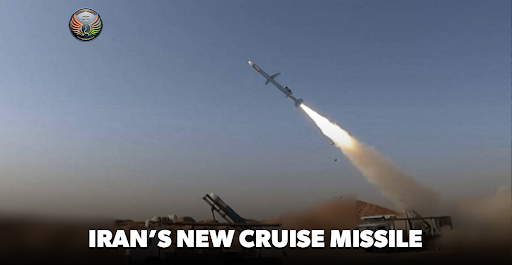
Iran has successfully test-fired the advanced Ghadr-380 anti-warship cruise missile, with a range of 1,000 kilometers (600 miles). This missile is capable of targeting and potentially hitting U.S. Navy ships deployed in the near Sea regions . The missile test was broadcast on Iranian state TV, highlighting its strategic importance.

Key Points of the Missile Test
|
Missile Type
|
Ghadr-380 mile type L (anti-warship cruise missile)
|
|
Range
|
1,000 kilometers (600 miles), capable of reaching the U.S. Navy ships in Persian Gulf and Sea of Oman
|
|
Missile Features
|
- Anti-jamming capability
- Quick readiness (launched by one personnel in less than 5 minutes)
|
|
Launch Site
|
Launched from an underground missile facility in central Iran, targeting the Sea of Oman
|
|
Missile Launch Time
|
The specific time of the test and the warhead details were not disclosed by the Iranian authorities
|
|
Strategic Significance
|
Ability to hit key naval targets, including U.S. warships, in critical maritime regions
|
|
Underground Facility
|
Part of a network of underground missile facilities in southern Iran near the Strait of Hormuz
|
|
Capability for Launch
|
Ready for launch in under 5 minutes by a single operator
|
Iran’s Military Strength and Strategy:
- Underground Missile Facilities:
-
- Iran has a history of constructing underground missile facilities, particularly along the southern coast, near the strategically important Strait of Hormuz.
- Iran claims to have a variety of missiles capable of striking targets at ranges up to 2,000 kilometers, potentially reaching parts of the Middle East, including Israel.
- Iran has developed advanced missile systems, including liquid-fueled missiles, to serve as deterrents
- Iran's ballistic missile program developed as a deterrent after the brutal 8-year Iran-Iraq War in the 1980s, where both countries used missiles to target civilian areas.
- Due to UN arms embargoes limiting access to advanced weapons, Iran focused on building its own missile systems domestically.
- Impact on Regional Security:
-
- Iran’s missile and nuclear programs continue to be a point of concern for the U.S. and its Western allies.
- The development and deployment of missiles with a longer range heighten tensions in the region, particularly with regard to the U.S. naval presence.
Conclusion
Iran’s successful test-firing of the Ghadr-380 missile further bolsters its military deterrence capabilities in the Persian Gulf and Sea of Oman. The missile’s extended range and anti-jamming features are designed to counter modern naval threats, particularly those posed by the U.S. Navy.
Source: TOI
|
PRACTICE QUESTION
Q.With reference to Iran’s Ghadr-380 anti-warship missile, consider the following statements:
- The Ghadr-380 missile has a range of 1,000 kilometers but can not target U.S. Navy ships in the Persian Gulf and Sea of Oman.
- The missile is designed to be launched by multiple personnel within 5 minutes.
- Iran’s missile test highlighted the strategic importance of its underground missile facilities near the Strait of Hormuz.
Which of the statements given above is/are correct?
(a) 1 and 2 only
(b) 3 only
(c) 2 and 3 only
(d) 1, 2, and 3
Answer: (b)
Explanation:
- Statement 1 is incorrect
The Ghadr-380 missile has a range of 1,000 kilometers, making it capable of targeting U.S. Navy ships in the Persian Gulf and Sea of Oman.
- Statement 2 is incorrect
The missile can be launched by a single personnel in under 5 minutes, not by multiple personnel.
- Statement 3 is correct
Iran’s missile test emphasized the strategic role of its underground missile facilities, especially those located near the Strait of Hormuz, a vital maritime region.
|