Global tensions have shifted strategic focus to the Indian Ocean Region amid US-Iran strains, the Pakistan-Afghanistan border clash, and the Chagos dispute. Threats to the Strait of Hormuz endanger India’s energy and Chabahar access. India counters China via Agalega, the Double Fishhook strategy, IORA, and Colombo Security Conclave.
Copyright infringement not intended
Picture Courtesy: INDIANEXPRESS
Context
Global tensions are shifting from the Western Pacific to the Indian Ocean Region (IOR), fueled by escalating conflicts in West Asia that threaten global trade, energy security, and regional stability
|
Read all about: INDIAN OCEAN REGION |
Why has the "Flashpoint" Shifted to the Indian Ocean?
US-Iran Nuclear Conflict
The US administration's "Zero Tolerance" policy towards Iran's nuclear ambitions, marked by events like "Operation Midnight Hammer" in June 2025, has prioritized military mobilization against Iran over the Sino-American rivalry.
Energy Security Threat
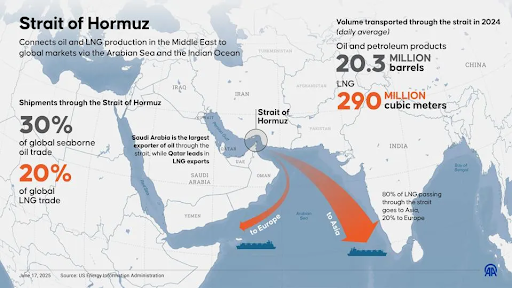
The Strait of Hormuz is a critical chokepoint through which approximately 21% of global petroleum liquid consumption passes daily, making an IOR conflict a direct threat to global energy supplies. (Source: US Energy)
Regional Instability
The outbreak of an "open war" between Pakistan and Afghanistan creates a volatile second front on India's western border.
The Diego Garcia and Chagos Archipelago Dispute
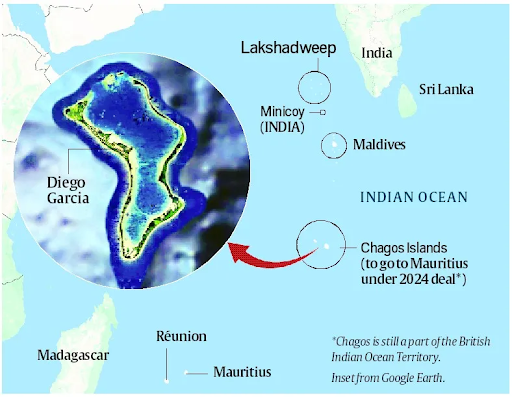
The renewed Chagos Archipelago (Diego Garcia) dispute, involving the UK, Mauritius, and the Maldives, connects the Iran conflict to Indian Ocean Region (IOR) sovereignty issues.
Regional Impact of the US-Iran Conflict
A military conflict involving Iran would have cascading effects across the IOR, destabilizing the entire region far beyond Iran's borders.
Widening War Theatre
The conflict would likely expand into the Arabian Sea and involve US allies hosting CENTCOM assets, such as Qatar, Bahrain, and Saudi Arabia, who could be targeted by Iran or its proxies.
Disruption of Trade and Energy
A blockade of the Strait of Hormuz would trigger a severe energy crisis for import-dependent nations. For India, which imports over 87% of its crude oil, this would lead to an unprecedented economic shock.
Refugee and Terror Spillover
The "open war" between Pakistan and Afghanistan along the Durand Line threatens to push refugees and terror groups like the Tehrik-i-Taliban Pakistan (TTP) across borders, destabilizing South Asia.
Challenges and Dilemmas for India
Pressure on Strategic Autonomy
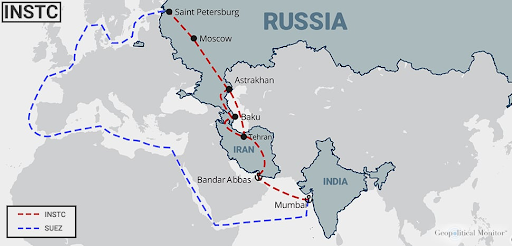
A US-Iran war would force India to choose between its strategic partner (the US) and its civilizational and connectivity partner (Iran). This choice could jeopardize key projects like the Chabahar Port and the International North-South Transport Corridor (INSTC).
The Decolonization Dilemma
India's support for Mauritius' anti-colonial claim over Chagos conflicts with its pragmatic reliance on the US base in Diego Garcia for security against Chinese expansionism in the IOR, presenting a conflict between principle and realpolitik.
Safety of the Diaspora
A regional war in the Gulf would endanger the roughly 9 million Indians living and working in GCC countries, potentially requiring the largest evacuation operation in global history.
Two-Front Instability Risk
The Pakistan-Afghanistan conflict, coupled with Pakistan’s accusations against India, creates a volatile western front, adding to existing tensions on the northern border.
Way Forward for India
Lead De-escalation Efforts
Leverage diplomatic relationships with the US, Iran, and Russia to advocate for restraint and a peaceful resolution.
Insulate the Chagos Issue
Work with partners to separate the issue of sovereignty transfer to Mauritius from the operational lease of the Diego Garcia base, finding a middle path that respects international law and ensures regional security.
Strengthen Maritime Security
Accelerate the militarization of the Andaman and Nicobar Islands and enhance logistics agreements (like LEMOA) with partners like France and Australia to secure its maritime interests.
Pursue Energy Diversification
Reduce dependence on the Persian Gulf by transitioning to renewable energy and diversifying crude oil imports from regions like West Africa and Latin America.
Conclusion
Given the Indian Ocean Region's (IOR) rising prominence as a global hotspot, India needs to assume a proactive leadership role and become a stabilizing power, moving beyond its current stance as a reactive observer.
Source: INDIANEXPRESS
|
PRACTICE QUESTION Q. The Indian Ocean is transitioning from a 'Zone of Peace' to a 'Contested Commons'." Analyze. 150 words |
The IOR is becoming a flashpoint due to three simultaneous crises: a potential US-Iran conflict involving nuclear brinkmanship, escalating war between Pakistan and Afghanistan along the Durand Line, and the sovereignty dispute over the Chagos Archipelago (Diego Garcia).
Diego Garcia is often called an "Unsinkable Aircraft Carrier." It hosts a joint US-UK military base critical for housing stealth bombers and nuclear submarines, allowing the US to project power into West Asia (Iran) and East Africa.
A US-Iran conflict threatens the Strait of Hormuz, through which a vast amount of global oil passes. Since India imports over 85% of its crude oil, disruption here would spike prices, widen India's Current Account Deficit, and force a diplomatic choice between the US (strategic partner) and Iran (energy/connectivity partner).

© 2026 iasgyan. All right reserved