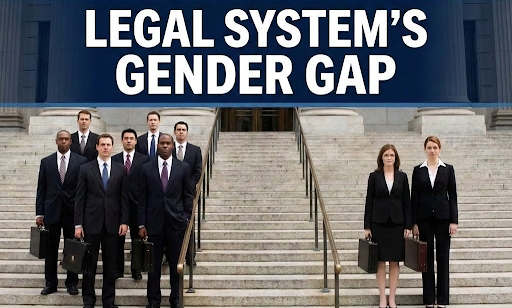
Despite constitutional ideals, courts face a stark gender gap, especially in higher judiciaries. Overcoming systemic patriarchy requires transparent collegium reforms, better infrastructure, and criminalizing marital rape. Gender parity is essential for equitable justice and true democratic empowerment.
Why In News
Data from the Supreme Court Bar Association indicates gender gap acts as a structural barrier at the foundational entry point of the judiciary.
|
Read all about: Women In Judiciary l Gender Justice And Judicial Appointments In India |
What are the key highlights of the Supreme Court Bar Association report?
Over 80% of women lawyers find the profession "tough". While women constitute 15% of India's lawyers, barely 2% hold leadership positions in Bar Councils.
Nearly 60% of women report limited work opportunities, and over 40% cite pay inequality and networking barriers as major career hurdles.
Gender Disparity in the Indian Legal System
The Constitution guarantees justice, equality, and dignity as fundamental rights under Articles 14, 15, and 21. However, the gender gap persists within the nation's legal and judicial framework.
Current State of Women's Representation in the Judiciary
Supreme Court: Justice B.V. Nagarathna is currently the sole woman judge on the bench.
High Courts: Out of approximately 780+ working judges in High Courts, only about 116 are women.
Leadership Gap: As of early 2026, only one of the 25 High Courts is headed by a woman Chief Justice.
Zero Representation: Several High Courts, including those of Uttarakhand, Meghalaya, and Tripura, recently reported having zero women judges on their benches.
District Judiciary: Women comprise 37% of the lower judiciary. This higher representation is largely attributed to the entrance examination system, which is transparent and merit-based, unlike the opaque Collegium system used for higher appointments
What are the Core Reasons for the Persistent Gender Gap?
Structural and Procedural Barriers
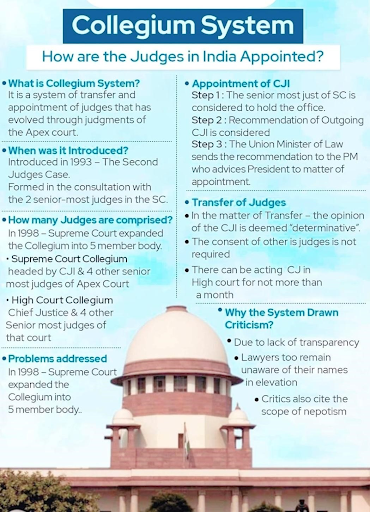
The Collegium system—a male-dominated structure of senior judges—often favors candidates from elite social and professional circles, making it difficult for women to be nominated.
Seniority and Continuous Practice Norms
Appointment rules frequently require a minimum period of continuous legal practice (e.g., seven years for district judges in India). This rule disproportionately penalizes women who take career breaks for childbirth or caregiving.
Limited Lateral Entry from the Bar
A large portion of high-court judges are elevated from the "Bar" (practising advocates). Since women constitute only about 15% of advocates in some regions, the pool for elevation is naturally smaller.
Primary Caregiver Expectations
Societal norms often place the disproportionate burden of family and household responsibilities on women, making the long hours and high pressure of judicial roles difficult to sustain.
Gender Stereotypes
Persistent unconscious biases regarding women's "suitability" for high-stakes decision-making or their perceived "emotional nature" can lead to them being overlooked for senior leadership roles.
Inadequate Facilities
A study found that 20-22% of district court complexes lack basic amenities like separate toilets for women, and many lack childcare or crèche facilities. (Source: National Judicial Data Grid)
What are the Impact of a Male-Dominated Judiciary?
Gender Bias in Judicial Reasoning
A male-centric bench often relies on patriarchal "social morality" rather than constitutional morality.
The "Leaking Pipeline" Effect
While women make up nearly 35-38% of the lower judiciary, their representation drops to roughly 13-14% in High Courts. This systemic exclusion at higher levels discourages women lawyers from staying in litigation. (Source: India Justice Report)
Erosion of Public Trust
A judiciary that does not mirror the diversity of its citizens suffers from a "legitimacy deficit." Victims of gender-based violence may feel intimidated or misunderstood when appearing before an all-male bench.
Narrow Perspective on Law
Diverse benches bring different lived experiences, which are crucial for interpreting laws related to marriage, inheritance, and reproductive rights. A male-dominated court may overlook the unique socio-economic realities women face.
Steps Taken to Address the Disparity
Horizontal Reservations
Several states, including Andhra Pradesh, Assam, Bihar, Rajasthan, and Telangana, have implemented 30-35% horizontal reservation for women in the subordinate (lower) judiciary.
Removal of Stereotypical Language
The Supreme Court launched the "Handbook on Combating Gender Stereotypes" (2023) to identify and eliminate the use of language like "housewife" or "career woman" in judicial orders.
Infrastructure Improvements
To retain women in the workforce, the judiciary has started prioritizing gender-neutral infrastructure. This includes the mandate for Vulnerable Witness Deposition Centres and the recent establishment of a large-scale creche at the Supreme Court.
Judicial Sensitization
The National Judicial Academy (NJA) has integrated mandatory "Gender Sensitization" modules into the training programs for newly recruited judges to address subconscious biases.
Banning Regressive Tests
In the State of Jharkhand vs Shailendra Kumar Rai, the Supreme Court officially banned the archaic and invasive "two-finger test" in rape cases, labeling it as a violation of a woman's right to privacy and dignity.
Way Forward
Institutionalize Representation
The Supreme Court Collegium should adopt transparent, gender-inclusive criteria for judicial appointments and consider affirmative action policies.
Reservation in Higher Judiciary
Extending the 33% reservation—currently applicable in local bodies and proposed for Parliament—to the High Courts and Supreme Court to break the "glass ceiling" effectively
All India Judicial Service (AIJS)
Implementing a centralized recruitment process (similar to UPSC) would standardize merit-based entry and could include mandatory quotas for women, bypassing local "network-based" barriers.
Enact Comprehensive Legal Reforms
The legislature must amend outdated laws, including the criminalization of marital rape, to align with constitutional principles and international standards.
Gender-Neutral Infrastructure
Modernizing district courts to include separate washrooms, creches, and safe waiting areas for women lawyers and litigants is a prerequisite for retention.
Leverage Technology
Expanding digital courts and online complaint portals (like the SHe-Box for workplace harassment) to reduce the physical, financial, and social barriers women face in accessing justice.
Conclusion
Achieving true gender justice in the legal system requires dismantling institutional patriarchy through structural reforms and representation to fulfill the constitutional promise of equality for all.
Source: BUSINESS-STANDARD
|
PRACTICE QUESTION Q. The representation of women in the Higher Judiciary is not just about statistics but about the legitimacy of the institution itself. Analyze. 150 words |
As of March 2026, only 1 out of 34 sitting Supreme Court judges are women. Historically, only 11 women judges have been appointed in the Court's 75-year history, representing just 4% of total appointments.
Court infrastructure often lacks basic, gender-sensitive facilities. As of 2023, only 13.1% of district court complexes have creche facilities, and just 32% have separate lock-up facilities for women, creating a patriarchal work environment that disadvantages women.
Released by the Chief Justice of India in 2023, the handbook is designed to instruct judges to avoid using patriarchal language, victim-blaming attitudes, and stereotypical assumptions in their rulings, particularly in sensitive sexual violence cases.



© 2026 iasgyan. All right reserved