🔔Join APTI PLUS Prelims Mirror 2026 | All India Open Mock Test Series on 12th April, 26th April & 3rd May 2026 |Register Now!
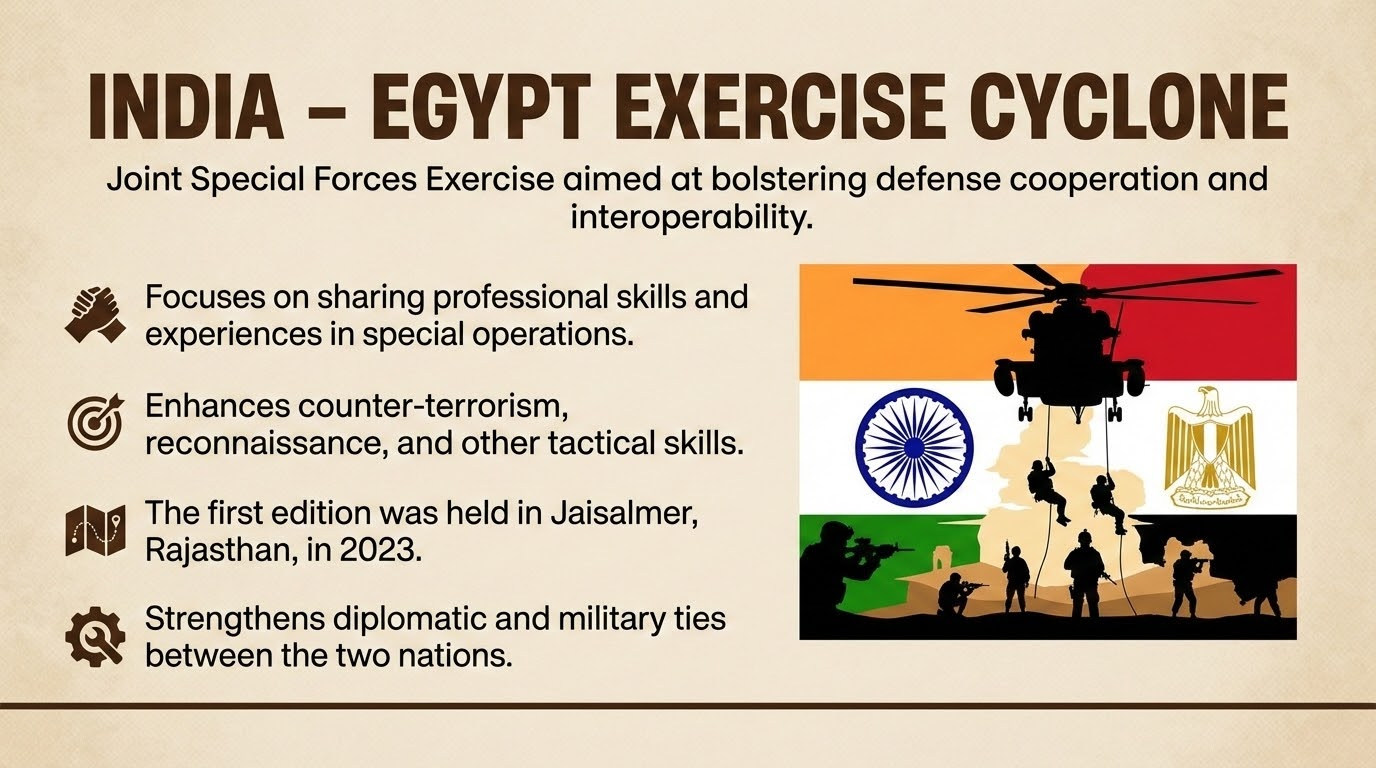
Exercise Cyclone-IV (2026) in Anshas, Egypt, marks the fourth joint special forces drill between India and Egypt. Focusing on counter-terrorism and desert warfare, the exercise enhances interoperability and strengthens the Strategic Partnership.
Why In News?
The Indian Army contingent departed for Egypt to participate in the Exercise Cyclone-IV at Anshas from April 9 to 17, 2026.
About Exercise Cyclone 2026
Exercise Cyclone Timeline
Focus Areas of the Exercise
Counter-Terrorism: Drills focusing on surgical strikes, hostage rescue, and neutralizing terrorist hideouts in desert environments.
Special Operations Tactics: Exchange of techniques in sniping, combat free fall, reconnaissance, and surveillance.
Desert Warfare: Mastery of survival and combat maneuvering in arid, semi-desert conditions, which is a shared geographical challenge for both nations.
Source: PIB
|
PRACTICE QUESTION Q. Consider the following statements regarding the bilateral exercise 'Cyclone-IV':
Which of the statements given above is/are correct? A) 1 only B) 2 only C) Both 1 and 2 D) Neither 1 nor 2 Answer: B Explanation: Statement 1 is incorrect: Exercise 'Cyclone-IV' (2026) is not a tri-service exercise involving the Army, Navy, and Air Force. It is specifically a Joint Special Forces Exercise between the Indian Army and the Egyptian Army. Statement 2 is correct: The 2026 edition (4th edition) of Exercise Cyclone is being hosted at the Anshas training base (Rangers Forces Headquarters) in Egypt from April 9 to April 17, 2026. |
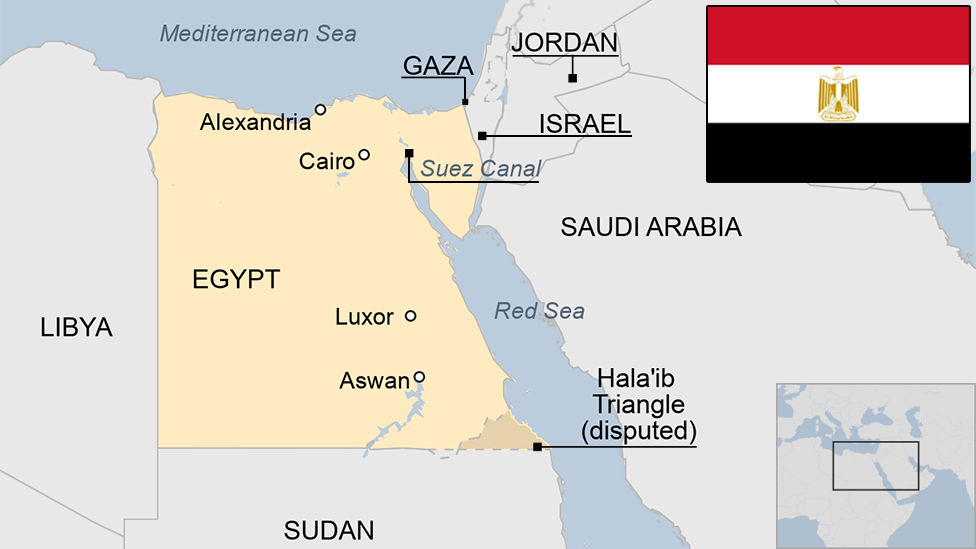
Exercise Cyclone-IV is the 4th edition of an annual joint military exercise between the Special Forces of the Indian Army and the Egyptian Army. It is scheduled to be held in Anshas, Egypt, from April 9 to 17, 2026.
The primary objectives are to enhance interoperability, joint mission planning, and tactical maneuvers in desert and semi-desert terrains. It specifically focuses on modern asymmetric warfare, counter-terrorism, surgical strikes, and hostage rescue operations.
The Red Sea crisis forces commercial ships to avoid the Suez Canal and reroute via the Cape of Good Hope. This extends voyage times by 10 to 15 days, drastically increasing freight rates, surging fuel consumption, and delaying the arrival of essential raw materials, which temporarily stalls manufacturing sectors.


© 2026 iasgyan. All right reserved