ISRO’s SMOPS-2026 conference highlights the shift toward managing orbital assets within a projected $1.8 trillion space economy. Integrating AI and Space Situational Awareness is crucial for the success of Gaganyaan and ensuring India’s strategic autonomy in congested orbits.
Why In News?
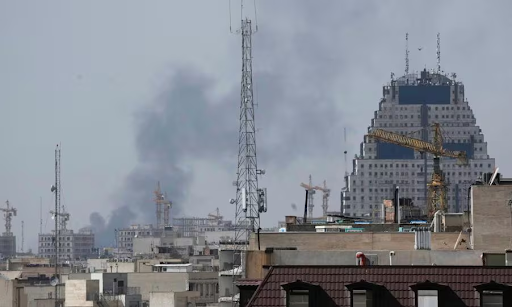
The second edition of the International Conference on “Spacecraft Mission Operations: SMOPS- 2026” with the theme of “Innovative Operations for Smart and Sustainable Space Mission Management – Next Generation” organised in Bangalore.
About International Conference on Spacecraft Mission Operations (SMOPS)
It serves as a global platform where space agencies, academia, and industry leaders converge to discuss the evolving landscape of managing complex space missions.
Hosted by the Indian Space Research Organisation (ISRO) in collaboration with the International Academy of Astronautics (IAA) and the Aeronautical Society of India (AeSI).
Key Objectives of SMOPS
Knowledge Exchange: Share experiences in mission operations for satellites, deep-space probes, and human spaceflight.
Technological Synergy: Discuss the integration of emerging technologies like Artificial Intelligence (AI) and Machine Learning (ML) in automating mission control.
Standardization: Promote international standards for interoperability between different space agencies’ ground stations.
Core Themes & Discussion Areas
Automation & AI: Increasing satellite numbers make manual monitoring unsustainable. AI-driven anomaly detection and collision avoidance minimize risks and fuel use.
Space Situational Awareness (SSA): "Mega-constellations" and debris prioritize SSA to protect assets like the ISS and future Bhartiya Antariksha Station.
Deep Space Operations: Missions like Mangalyaan and Aditya-L1 utilize specialized networking to manage high-latency communication and Lagrange point gravitation.
Ground Segment Evolution: Adopting Ground Station as a Service (GSaaS) reduces costs for private players and startups.
Source: PIB
|
PRACTICE QUESTION Q. With reference to the International Conference on Spacecraft Mission Operations (SMOPS-2026), consider the following statements:
Which of the statements given above are correct? A) 1 and 2 only B) 2 and 3 only C) 1 and 3 only D) 1, 2, and 3 Answer: B Explanation: Statement 1 is incorrect: SMOPS-2026 focuses on "Spacecraft Mission Operations" (mission management, satellite operations, AI, Ground Station operations), not specifically on "launch vehicle manufacturing". Statement 2 is correct: The conference is jointly organized by the Indian Space Research Organisation (ISRO), the Astronautical Society of India (ASI), and the International Academy of Astronautics (IAA). Statement 3 is correct: The theme for the 2026 edition (second edition) is "Innovative Operations for Smart and Sustainable Space Mission Management – Next Generation". |
SMOPS stands for the International Conference on Spacecraft Mission Operations. It is a premier global platform hosted by ISRO where space agencies and industry leaders discuss the evolving landscape of managing complex orbital assets, deep space missions, and human spaceflight.
Space Situational Awareness (SSA) refers to the tracking, monitoring, and understanding of objects in orbit, including active satellites and space debris. It is crucial for predicting potential collisions and ensuring orbital security.
Project NETRA (Network for space object Tracking and Analysis) is an indigenous initiative by ISRO to build space observation capabilities. It tracks space debris and celestial hazards to autonomously protect India's orbital space assets.


© 2026 iasgyan. All right reserved