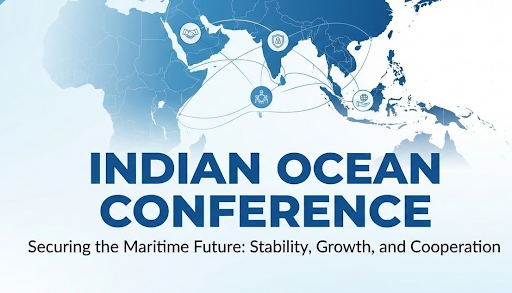
The Indian Ocean Conference (IOC) is a premier consultative forum for regional states and global partners to discuss maritime cooperation, security, and sustainable development. It promotes India’s SAGAR (Security and Growth for All in the Region) vision, addressing non-traditional threats and geopolitical stability.
Why In News?
Mauritius hosted the 9th Indian Ocean Conference (IOC 2026), emphasizing "Collective Stewardship for Indian Ocean Governance" and regional maritime security.
What is the Indian Ocean Conference (IOC)?
It is a consultative forum for states in the Indian Ocean Region (IOR) to discuss regional architecture, security, and economic cooperation.
Evolution and Institutional Framework
The conference is organized by the India Foundation in association with the Ministry of External Affairs (MEA) and regional partners.
Key Themes Addressed in Recent Conferences
Maritime Security: Addressing non-traditional threats like piracy, Illegal, Unreported, and Unregulated (IUU), and maritime terrorism.
Climate Change: Discussing the vulnerability of Small Island Developing States (SIDS) like Maldives, Mauritius, and Seychelles to rising sea levels.
Geopolitical Competition: Managing the increasing naval presence of extra-regional powers (specifically the "Great Power Competition") to ensure a "Free, Open, and Inclusive Indo-Pacific".
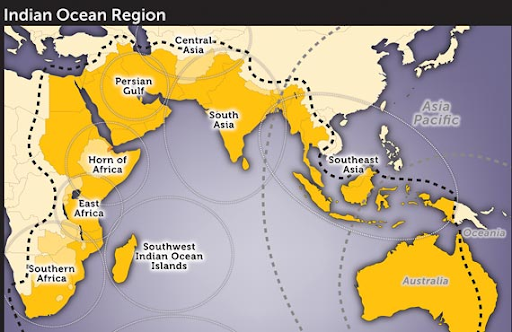
What is the Indian Ocean Region (IOR)?
The Indian Ocean Region (IOR) spanning from the East African coast to Western Australia, is the third-largest water body in the world, covering about 20% of the Earth’s water surface.
Strategic Significance
|
India’s Vision in IOR India positions itself as a "Net Security Provider" and "First Responder" in the region.
|
Major Challenges in the IOR
Debt-Trap Diplomacy: Concerns over unsustainable infrastructure financing (especially from China) leading to loss of strategic autonomy for smaller littoral states.
Maritime Domain Awareness (MDA): The need for real-time data sharing to monitor ship movements and prevent environmental disasters.
Legal Clarity: Strengthening adherence to the UNCLOS (United Nations Convention on the Law of the Sea) 1982 to resolve territorial disputes.
Great Power Competition: Increasing naval footprint of extra-regional powers has led to heightened militarization of the region.
Non-Traditional Threats: These include Illegal, Unreported, and Unregulated (IUU) fishing, piracy, human trafficking, and climate change affecting low-lying island states.
Way Forward
The Indian Ocean Conference (IOC) aims for global prosperity through a rules-based order and better connectivity, strengthening regional peace and sustainable growth.
Source: WIONEWS
|
PRACTICE QUESTION Q. Evaluate the strategic significance of the Indian Ocean Region (IOR) for India's economic and security architecture. 150 words |
The IOC is a premier Track 1.5 diplomatic forum organized annually by the India Foundation in association with the Ministry of External Affairs. It brings together states within the Indian Ocean Region (IOR) to discuss maritime security, governance, and regional cooperation.
Debt-trap diplomacy refers to the practice where a creditor nation extends massive, often opaque, bilateral loans to smaller developing nations for infrastructure projects. When the debtor nation (like the Maldives) cannot repay, the creditor gains immense strategic and political leverage, severely limiting the debtor's strategic autonomy.
The Information Fusion Centre – Indian Ocean Region (IFC-IOR) is an integrated maritime surveillance hub established by India in Gurugram. It collaborates internationally to provide real-time Maritime Domain Awareness (MDA), helping regional coast guards preempt threats like piracy, maritime terrorism, and illegal fishing.


© 2026 iasgyan. All right reserved