India’s road safety crisis stems from weak systems, not just driver mistakes. Fatalities stay high despite the 2019 law because of poor road design, corrupt licensing, and weak enforcement. Delayed institutional reforms worsen the problem. Strengthening engineering, enforcement, education, and emergency care is key to reducing deaths.
Copyright infringement not intended
Picture Courtesy: THEHINDU
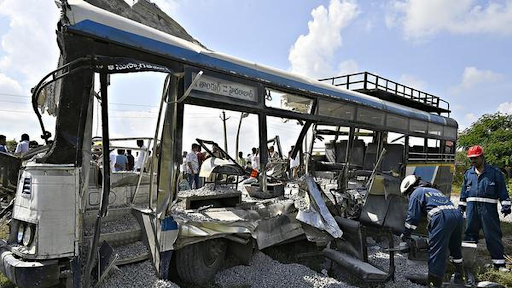
Road crashes remain a major problem, resulting in over 170,000 deaths in 2023. The Supreme Court recently highlighted the issue's severity by noting recent accidents in Rajasthan and Telangana.
Accidents and Fatalities: In 2023, India recorded 4.80 lakh road accidents and 1.73 lakh fatalities, according to the Ministry of Road Transport and Highways (MoRTH) report.
Global Impact: India accounts for approximately 10% of global road crash fatalities, despite having only 1% of the world's vehicles (Source: World Bank).
Demographic Impact: 67% of road fatalities are individuals aged 18-45 (2023 MoRTH report).
Economic Cost: Road crashes cost the Indian economy an estimated 3% to 5% of GDP annually, according to the World Bank.
Vulnerable Users and High-Risk Zones:
National Highways, which make up less than 5% of the road network, are the site of nearly 55% of deaths (Source: MoRTH).)
Engineering Flaws
Faulty Road Design: Many roads lack safety due to poor design, including unscientific intersections, inadequate signage, unmarked speed breakers, and sharp, unwarned curves.
Neglect of 'Blackspots': Accident 'blackspots' are often identified but remain unrectified for years due to bureaucratic delays and lack of accountability.
Lack of Safety Audits: Safety audits are required for new highway projects but are rarely conducted for existing roads.
|
Case Study - "Zero-Fatality Corridor": An initiative by the SaveLIFE Foundation on the Mumbai-Pune Expressway demonstrated that targeted, low-cost engineering solutions (like improved signage, rumble strips) could reduce road crash deaths by 52% between 2016 and 2020. |
Enforcement Failures
Dilution of the Law: Several states have diluted the Motor Vehicles (Amendment) Act, 2019, reducing the increased penalties, driven by fear of public backlash.
Corruption & Flawed Licensing: A survey found over 60% of license holders avoided a proper driving test. (Source: SaveLIFE Foundation).
Lack of Technology: Technology like speed cameras and automatic number plate recognition systems is minimally used.
Awareness Gaps
Flawed Driver Training: Driver training is largely unregulated, prioritizing basic vehicle operation over defensive driving, road ethics, and traffic rule comprehension.
High-Risk Behaviour: Violations like not wearing helmets or seatbelts, drunken driving, and using mobile phones while driving are common. In 2023, not wearing a helmet resulted in over 54, 000 deaths of two-wheeler riders. (Source: MoRTH)
Ineffective Awareness Campaigns: Fail to sustain behavioral change for a strong road safety culture.
Emergency Care Inadequacies
Delayed Medical Response: The "Golden Hour"—the critical first hour after an accident—is often lost due to ambulance shortages, traffic, and a lack of highway trauma care centers.
Bystander Hesitation: Fear of police trouble and legal issues, coupled with low awareness of the Good Samaritan Law, deters many bystanders from helping accident victims.
Systemic and Institutional Flaws
Lack of a Lead Agency: The Supreme Court and expert committees like the Sundar Committee (2007) recommended a lead agency for road safety.
Fragmented Responsibility: Poor inter-departmental coordination across multiple ministries (Transport, Home Affairs, Health) for road safety leads to unclear accountability.
Unscientific Accident Investigation: Superficial crash investigations, with police FIRs blaming "driver negligence" instead of analyzing road design, vehicle condition, or environment, yield flawed data that hinders effective policymaking.
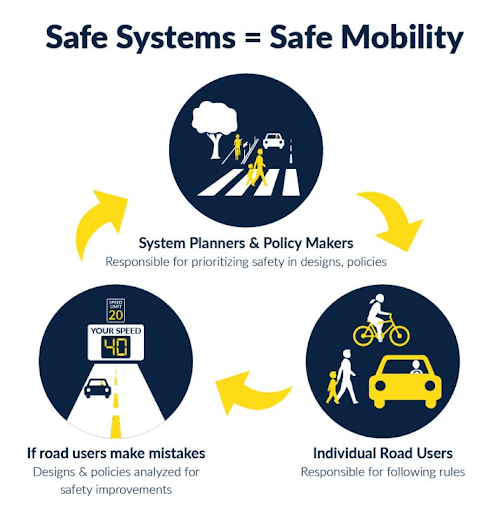
Systemic Safety (Adopt a 'Safe System' Approach):
Empowerment (Strengthen the National Road Safety Board)
Enforcement and Compliance (Uniform and Technology-Driven)
Post-Crash Care (Strengthen and Standardize)
Evidence-Based Action (Data-Driven Interventions)
Addressing the road safety crisis demands a holistic 'Safe System' approach, supported by strong political commitment, institutional empowerment, and vigorous enforcement, to save lives and transform deadly roads into safe corridors of development.
Source: THEHINDU
|
PRACTICE QUESTION Q. Discuss the need for a unified national road safety authority in India. 150 words |
The majority of road accidents are caused by human error, with over-speeding being the most significant factor, followed by driving on the wrong side of the road, drunk driving, and the use of mobile phones while driving.
Penalties were significantly increased under the Motor Vehicles (Amendment) Act, 2019. Fines can range from ₹1,000 for not wearing a helmet/seatbelt to ₹10,000 and/or imprisonment for drunk driving.
The "Good Samaritan Law" provides legal protection to bystanders who voluntarily provide emergency medical or non-medical assistance to accident victims. This law encourages people to help without fear of legal complications, which helps ensure timely medical attention during the critical "golden hour" after an accident.



© 2026 iasgyan. All right reserved