NCERT is revising textbooks under NEP 2020 to integrate historical contributions to science and mathematics, along with Indian Knowledge Systems (IKS), to promote national pride. Successful implementation requires careful planning, strong supporting evidence, and thorough teacher training to maintain academic standards and prevent bias.
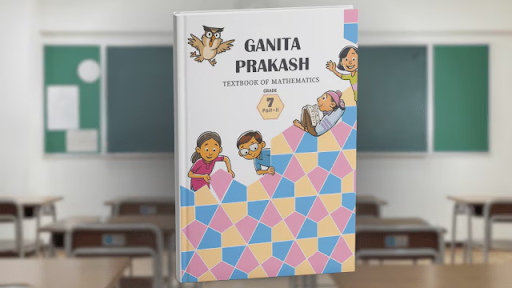
Copyright infringement not intended
Picture Courtesy: INDIANEXPRESS
The National Council of Educational Research and Training (NCERT) revised the Class 7 mathematics textbook to include ancient contributions to integrate 'Indian Knowledge Systems' (IKS) into mainstream education.
It aims to transform learning by blending ancient wisdom with contemporary teaching methods to cultivate a holistic, culturally informed, and innovative educational experience that both connects students to their heritage and prepares them for current-day challenges.
Rationale for Integrating Indian Knowledge Systems (IKS)
Alignment with NEP 2020: Fulfills the mandate of the National Education Policy (NEP) 2020; education system rooted in the Indian ethos.
Decolonization and Historical Accuracy: Counters Eurocentric biases by recognizing the foundational contributions of ancient Indian scholars to global knowledge.
Cultivating National Pride and Identity: Helps students cultivate a stronger sense of cultural identity and self-esteem through learning about intellectual heritage.
Promoting Holistic and Interdisciplinary Learning: Facilitates connections between subjects like mathematics, history, philosophy, and arts, encouraging a comprehensive approach to education.
Mathematics
Ancient India was a cradle of mathematical innovation, laying the groundwork for modern arithmetic and algebra.
|
Discovery |
Key Contributor(s) |
Significance |
|
Pythagorean Theorem |
Baudhayana in the Shulbasutras (800 BCE) |
Formulated the theorem for constructing ritual altars centuries before Pythagoras. This is one of the earliest known expressions of the theorem. |
|
Zero (Shunya) & Decimal System |
Aryabhata (5th century CE) used zero as a placeholder. Brahmagupta (7th century CE) established arithmetic rules in his text Brahmasphutasiddhanta. |
Revolutionized mathematics, enabling complex calculations and forming the basis for modern computing and digital systems. |
|
Algebra (Bijaganita) |
Aryabhata, Brahmagupta, and Bhaskara II (12th century CE) |
Developed systematic methods for solving linear and quadratic equations, including indeterminate equations, which advanced the field of algebra. |
Medicine and Surgery (Ayurveda)
Sushruta (600 BCE): Known as the "Father of Surgery," his text, the Sushruta Samhita, is a foundational work in medicine and surgery. It details:
Charaka (300 BCE): His work, the Charaka Samhita, is a comprehensive text on Ayurveda, detailing concepts of digestion, metabolism, genetics, and immunity.
Metallurgy and Material Science
Delhi Iron Pillar: Erected during the Gupta period (400 CE), this 7.2-meter iron pillar has resisted corrosion for over 1600 years, showcasing advanced metallurgical skill.
Wootz Steel: Originated in South India around the 6th century BCE, this high-carbon crucible steel was renowned for its hardness and sharpness.
Urban Planning
Indus Valley Civilization (c. 2500-1900 BCE): Cities like Mohenjo-Daro and Harappa demonstrate sophisticated urban planning centuries ahead of their time.
Key Features:
Indian Knowledge Systems (IKS) Division: Established in 2020 under the Ministry of Education. Its functions include:
Source: INDIANEXPRESS
|
PRACTICE QUESTION Q. Analyze concerns about accuracy and ideological influence in revising history textbooks. 150 words |
The Indian Knowledge System (IKS) refers to the rich, diverse, and timeless body of knowledge that originated in the Indian subcontinent. It encompasses contributions in fields like science, mathematics (e.g., algebra, geometry), medicine (Ayurveda), philosophy, arts, metallurgy, and astronomy, developed by ancient Indian scholars and thinkers.
This integration is a direct implementation of the National Education Policy (NEP) 2020. The primary goals are to create an education system "rooted in Indian ethos," decolonize the curriculum from its Eurocentric bias, instill a sense of national pride among students, and promote a more holistic and interdisciplinary approach to learning.
Key examples include tracing the origins of algebra ('Bijaganita') to Brahmagupta's work, crediting Acharya Kanad with the concept of the atom ('Parmanu'), and highlighting advanced surgical techniques like rhinoplasty from the Sushruta Samhita. The astronomical contributions of Aryabhata are also linked to modern Indian space missions.

© 2026 iasgyan. All right reserved