Scientists at the National Oceanic and Atmospheric Administration revised El Niño detection, adopting a rolling baseline to adjust for ocean warming and avoid false positives. The shift improves monsoon forecasting for India, aiding agriculture and inflation management, after shocks like 2023–24 heatwaves and sugar shortages.
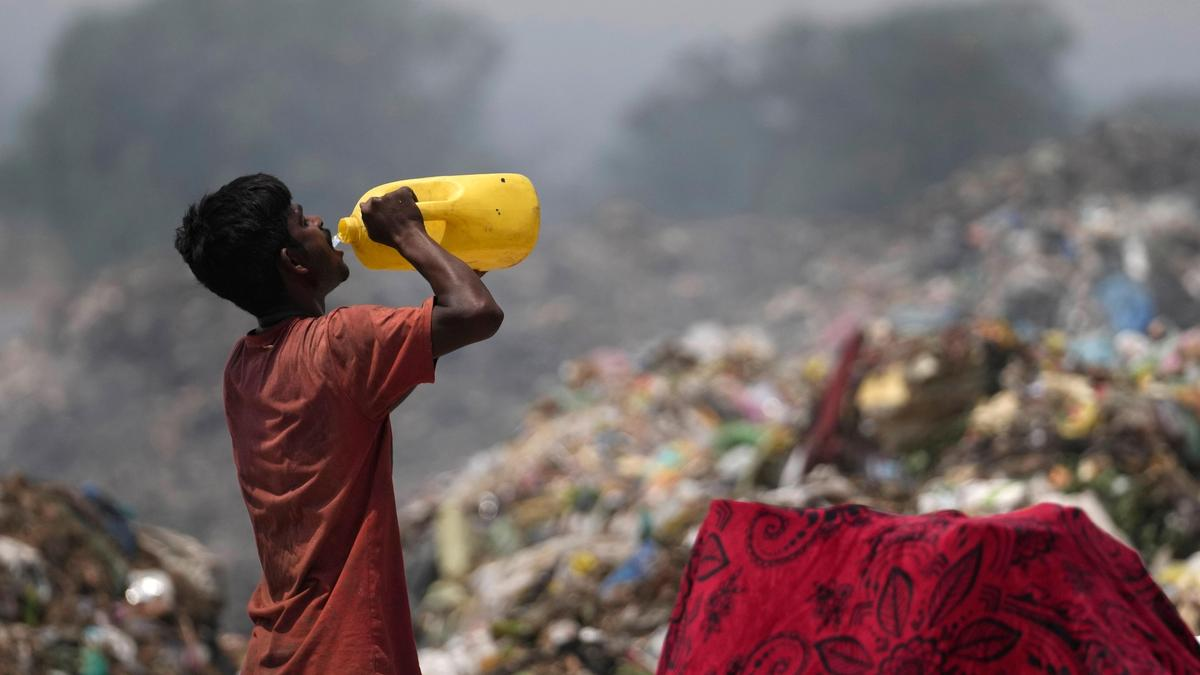
Copyright infringement not intended
Picture Courtesy: THEHINDU
Context
USA Scientists at the National Oceanic and Atmospheric Administration (NOAA) have updated the baseline for identifying El Niño and La Niña events to account for rising global ocean temperatures caused by climate change.
What is the New Protocol for Labelling El Niño?
NOAA tracks events using the Oceanic Niño Index (ONI), which measures temperature deviations in the east-central equatorial Pacific. The baseline for calculating ONI has been changed to filter out global warming effects.
|
Old Method (Fixed Baseline) |
New Method (Rolling Baseline) |
|
|
Reference Period |
Compared current sea surface temperatures (SST) to a fixed 30-year average (e.g., 1991–2020). |
Uses a non-stationary, rolling 30-year average that is updated every 5 years. |
|
The Problem Addressed |
Global warming made the ocean baseline warmer, leading to "false positives" for El Niño even in neutral years. |
This method effectively subtracts the long-term warming trend, isolating the natural variability of the ENSO cycle. |
|
Objective |
To identify temperature anomalies against a stable, historical average. |
To distinguish between natural weather patterns (El Niño) and human-induced warming. |
Why was this Change Necessary?
Distinguishing Signal from Noise: Climate change is a constant "warming noise." The new baseline prevents misclassifying neutral years as El Niño years due to overall ocean heating; 2023 was the warmest on record.
Improving Forecast Accuracy for Agriculture: Accurate El Niño labeling is crucial for India's GDP, as El Niño suppresses the Indian Monsoon. False predictions can lead to market-distorting policies like unnecessary export bans.
What are the Implications of El Niño and Heat Spikes on India?
Monsoon & Food Security
El Niño years are historically linked to drought and deficient rainfall in India, severely impacting food security.
Inflationary Pressure (Agflation)
Erratic weather patterns directly fuel food price inflation. In late 2023 and early 2024, India's food inflation remained high, primarily driven by volatility in vegetable and pulse prices.
Heatwaves and Public Health
The combination of El Niño (which transfers ocean heat to the atmosphere) and global warming creates "compound extreme events" like prolonged heatwaves.
Way Forward for India
India must transition from reactive disaster management to proactive climate adaptation and resilience.
Technological Upgradation: The government's ₹2,000 crore "Mission Mausam" seeks to make India "Weather Ready" through upgraded radars and AI forecasting, with immediate integration of NOAA's new baseline into IMD models.
Agricultural Adaptation: Implement the M.S. Swaminathan Committee's "evergreen revolution" via Climate-Smart Agriculture (CSA). Scale up the successful resilient farming demonstrations of the NICRA (National Innovations in Climate Resilient Agriculture) project nationwide.
Decentralized Water Management: Mission Amrit Sarovar (rejuvenating 75 ponds/district) is crucial for decentralized water storage and groundwater recharge, a vital buffer during El Niño-induced droughts.
Financial Resilience: Reform the Pradhan Mantri Fasal Bima Yojana (PMFBY) to ensure faster claim settlements. Utilize technology like satellite data and AI for immediate damage assessment, particularly during extreme weather.
Learning from International Events
Conclusion
NOAA's baseline update signals a new climatic reality. For India, this reinforces the urgent need to build systemic climate resilience across the economy—from agriculture and water governance to fiscal planning—to sustain long-term growth.
Source: THEHINDU
|
PRACTICE QUESTION Q. Which of the following is the correct objective of 'Mission Mausam', frequently seen in the news? A) To privatize the Indian Meteorological Department (IMD) for better efficiency. B) To construct large dams in every district of India to prevent drought. C) To make India "Weather Ready" by upgrading radars and introducing AI in weather forecasting. D) To exclusively fund cloud seeding operations in drought-prone areas. Answer: C Explanation: The Union Cabinet approved 'Mission Mausam' in 2024 to upgrade infrastructure, integrate AI/ML, and improve forecasting accuracy, aiming to make India "Weather Ready" and "Climate Smart." |
The Oceanic Niño Index (ONI) is the primary standard used by NOAA to identify El Niño (warm) and La Niña (cool) events. It measures the sea surface temperature deviation from the average in the east-central equatorial Pacific Ocean (Niño 3.4 region).
NOAA changed the protocol because rising global ocean temperatures (due to climate change) were distorting data. Using a fixed past average made neutral years look like El Niño years. The new "rolling" baseline updates every 5 years to account for this background warming, ensuring more accurate identification of natural weather patterns.
If scientists predict an El Niño when it is actually just background warming, the Indian government might take unnecessary defensive measures like banning food exports or stockpiling. This can distort markets, affect farmer income, and impact GDP growth, as agriculture is a key component of the Indian economy.


© 2026 iasgyan. All right reserved