Description
Copyright infringement not intended
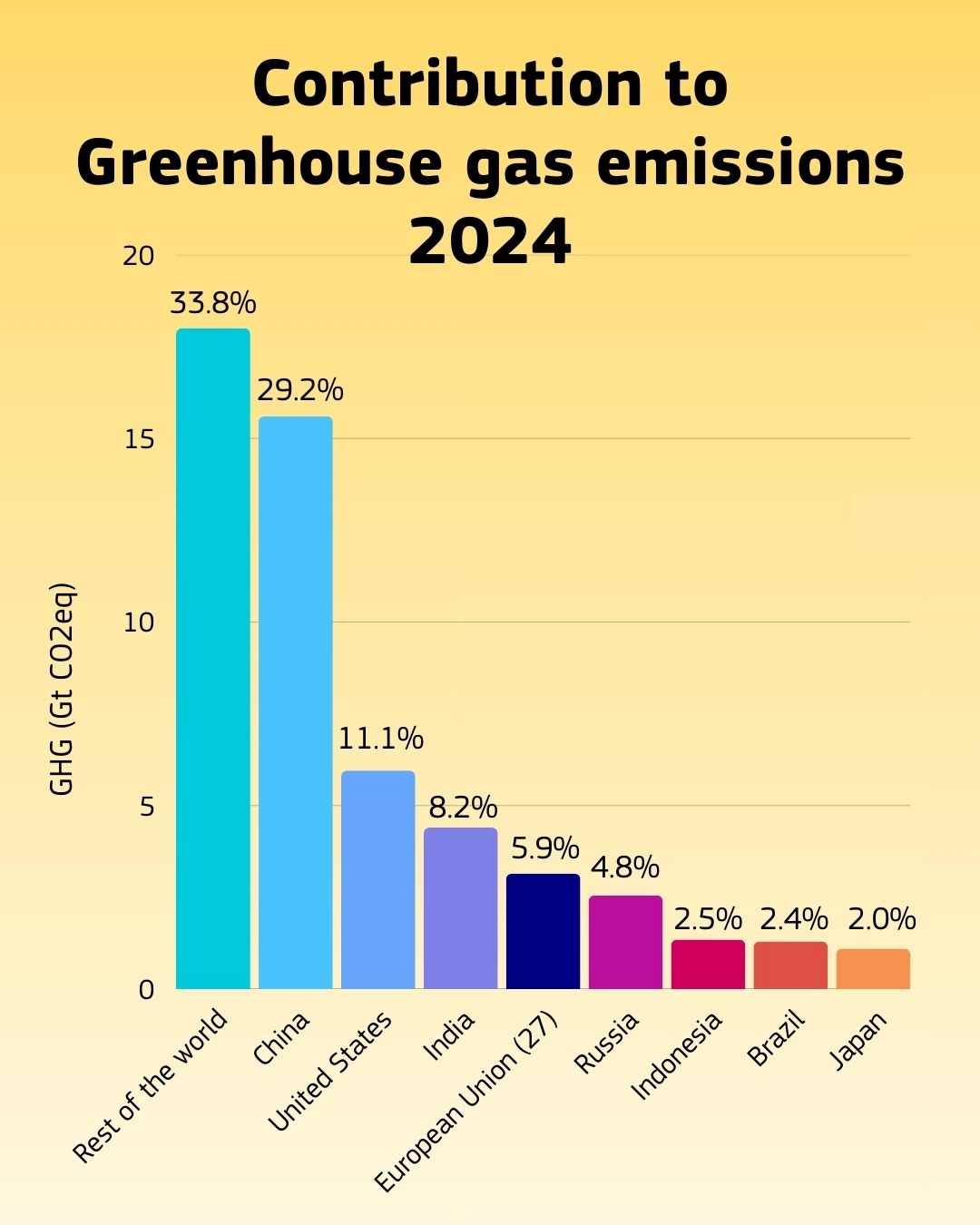
Picture Courtesy: EU Science Hub
Context:
In 2024, India saw the largest increase in greenhouse gas (GHG) emissions among all countries compared to the previous year. It became the third largest emitter globally, after China and the United States.
Key Findings:
- GHG emissions reached a record high of 57,700 million tonnes of CO2 equivalent (MtCO2e) in 2024.
- Fossil fuel use (coal, oil, and natural gas) accounted for 69% of global emissions.
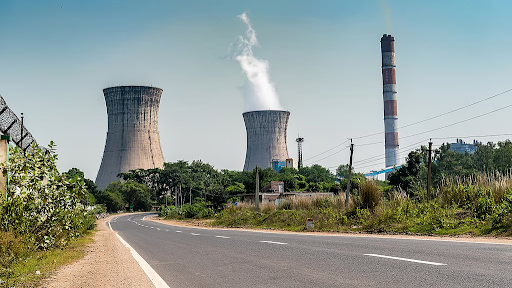
- Power generation was the largest single source, followed by industrial processes, transportation, and fuel production.
- Methane (CH4) emissions, mainly from agriculture and waste management, made up 16% of emissions.
- India’s per capita emissions were 3 tCO2e, less than half the global average of 6.4 tCO2e.
- Of the 1,500 MtCO2e global increase in 2024, India contributed 165 MtCO2e, the highest among all countries, followed by China with 126 MtCO2e.
What are reasons for the increase in Greenhouse Gas emissions?
- Rapid Economic Growth and Industrialization: As countries grow economically, industrial production, energy consumption, and urbanization tend to rise. Industries such as cement, steel, and chemicals are highly energy-intensive and rely heavily on fossil fuels. Example: India’s steel and cement production has doubled over the last decade. The industrial sector accounted for about 23% of India’s total GHG emissions in 2024.
- Energy Production from Fossil Fuels: Burning coal, oil, and natural gas remains the dominant source of energy worldwide. Fossil fuel combustion produces CO2, the most significant GHG. Globally, fossil fuel combustion contributed 69% of total GHG emissions in 2024.
- Transportation Growth: Increasing vehicles and freight transport lead to higher fuel consumption and emissions. Road, air, and shipping transport all contribute to CO2 and nitrogen oxide emissions. Example: India’s vehicle population crossed 35 crore in 2024, leading to higher fuel consumption and emissions from road transport.
- Agriculture and Livestock Emissions: Agriculture produces significant methane (CH4) and nitrous oxide (N2O) Rice paddies, livestock digestion (enteric fermentation), and manure management are key contributors. Globally, methane accounted for 16% of GHG emissions in 2024.
- Deforestation and Land Use Change: Cutting down forests reduces carbon sequestration while releasing stored carbon into the atmosphere. Land use changes include urbanization, agriculture expansion, and infrastructure projects. Example: India’s forest cover loss due to urban expansion and infrastructure development contributed 10 MtCO2e in 2024.
What are challenges in reversing the trend of increased Greenhouse gas emissions?
- High Dependence on Fossil Fuels: Coal, oil, and natural gas remain the backbone of electricity generation, transportation, and industry in most countries. Shifting to renewable energy requires massive investment, infrastructure, and technological upgrades. Example: In India, coal-fired power plants contribute over 800 MtCO2e Despite growth in solar and wind, coal still meets nearly 70% of power demand.
- Urbanization leading to transport pressure: Increasing population density and urban migration lead to higher energy and transportation demand. Cities struggle with congestion, vehicle emissions, and inadequate public transport, making rapid decarbonization hard. Example: India’s vehicle population exceeded 35 crores in 2024, causing a continuous rise in transport-related CO2 emissions.
- Agriculture and Livestock Challenges: Methane from livestock and rice cultivation and nitrous oxide from fertilizers are significant emissions sources. Reducing emissions in agriculture requires behavioural changes, technological adoption, and farmer incentives, which are complex to implement at scale. Example: Methane emissions from rice paddies and livestock in India accounted for 40 MtCO2e in 2024.
- Deforestation and Land degradation: Expanding cities, infrastructure, and agriculture encroach upon forests and wetlands. Forest conservation competes with the need for land for housing, industry, and farming, creating policy and enforcement challenges.
- Technological and Financial Barriers: Advanced renewable energy, carbon capture, and storage technologies are costly and require skilled personnel. Example: While India aims to achieve 50% renewable energy by 2030, grid integration and storage remain major hurdles.
Government mitigation strategies for Greenhouse gas emissions in India:
Reduce dependence on fossil fuels and increase clean energy capacity:
- National Solar Mission under National Action Plan on Climate Change (NAPCC).
- Target to achieve 500 GW of renewable energy by 2030.
- Incentives for rooftop solar, wind energy parks, and hybrid systems.
Lower energy consumption per unit of output, reducing emissions:
- Perform, Achieve, Trade (PAT) Scheme for industries.
- Energy Efficiency Financing Platform (EEFP) to support energy-efficient projects.
- LED bulb distribution (UJALA program) to replace inefficient lighting.
Reduce emissions from vehicles and transportation sector:
- Faster adoption of electric vehicles (EVs) via FAME India scheme.
- Expansion of metro networks, bus rapid transit, and non-motorized transport.
- Fuel efficiency standards (Bharat Stage VI emission norms).
Increase carbon sequestration to offset emissions:
- Green India Mission: planting trees and restoring degraded forests.
- Compensatory afforestation programs linked to industrial projects.
Reduce non-CO2 greenhouse gas emissions:
- Biogas plants for municipal solid waste.
- Methane recovery in landfills.
- Promoting sustainable agriculture practices like alternate wetting and drying in rice fields.
Way Forward:
Accelerate Renewable Energy Transition
- Scale up solar, wind, and other clean energy sources beyond current targets.
- Encourage decentralized energy generation, such as rooftop solar and microgrids.
Example: India aims to achieve 500 GW of renewable energy by 2030.
Enhance Energy Efficiency
- Expand energy-efficient practices in industry, buildings, and transport.
- Promote LED lighting, energy-efficient appliances, and smart grids.
Example: UJALA program and PAT scheme can reduce emissions while saving costs.
Promote Sustainable Transport
- Support electric vehicles, public transport, and non-motorized transport like cycling.
- Strengthen infrastructure for EV charging and metro networks.
Example: FAME India scheme and metro expansion projects.
Strengthen Carbon Sequestration
- Increase afforestation, green highways, and urban green spaces.
- Implement soil carbon enhancement in agriculture.
Example: Green India Mission has planted over 4.69 crore trees along highways.
Improve Waste & Methane Management
- Expand biogas plants, methane capture from landfills, and sustainable agriculture.
- Encourage circular economy approaches in industrial and municipal waste.
Conclusion:
India’s rising greenhouse gas emissions reflect rapid economic growth and energy demand, yet its per capita emissions remain below the global average. Addressing this challenge requires a balanced approach combining renewable energy expansion, energy efficiency, sustainable transport, afforestation, and strong policy measures. With coordinated action, innovation, and public participation, India can continue its development while steering toward a low-carbon and climate-resilient future.
Source: The Hindu
|
Practice Question
Q. Despite being the third-largest emitter of greenhouse gases globally, India’s per capita emissions remain below the world average. Examine. (250 words)
|
Frequently Asked Questions (FAQs)
The largest contributors are power generation (coal, oil, gas), industry, transportation, agriculture (methane), and waste management.
India’s per capita GHG emissions in 2024 were 3 tCO2e, less than half the global average of 6.4 tCO2e, showing relatively low emissions intensity despite rapid absolute growth.
The increase was driven by higher fossil fuel consumption in power generation, industrial activity, transportation, and energy production, along with methane emissions from agriculture and waste, and land-use changes like deforestation.