India’s bid for full membership in the International Energy Agency signals a shift in global energy governance. Barriers include the OECD clause and 90-day reserve norms. Geopolitical stakes span critical minerals, climate leadership, and strengthening the Global Biofuels Alliance.
Copyright infringement not intended
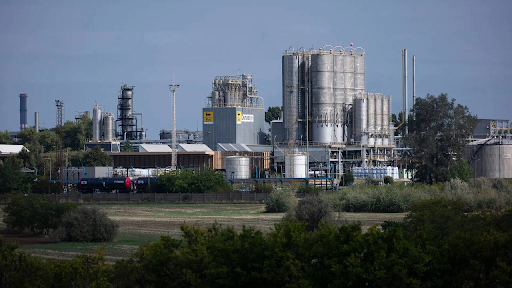
Picture Courtesy: INDIANEXPRESS
Context
The International Energy Agency (IEA) recently acknowledged progress on India's request for full membership.
What is the International Energy Agency (IEA)?
Origin: The IEA was established in 1974 by industrialized nations as a direct response to the 1973 Oil Crisis.
Objective: Ensure a stable supply of oil and coordinate responses to energy emergencies.
Core Mandate: Agency operates on a framework of "3 Es":
Key Membership Condition: All full members must maintain strategic oil reserves equivalent to at least 90 days of their net oil imports, a rule designed for collective action during supply shocks.
Why India is Pursuing Full Membership?
As the world's third-largest energy consumer, India seeks full membership due to strategic goals, as it imports over 85% of its crude oil.
Influence in Global Policy
Full membership (instead of Associate Member since 2017) would grant India voting rights, influencing global energy policies on clean energy and critical minerals.
Enhanced Energy Security
Membership provides access to the IEA’s "collective action mechanism." During the 2022 Ukraine crisis, IEA members coordinated the release of 60 million barrels of oil to stabilize global prices.
Access to Data and Expertise
India would gain access to the IEA's advanced data modeling and technical intelligence, which is vital for achieving the goal of 500 GW of non-fossil fuel capacity by 2030 (as per the Panchamrit Pledge at COP26).
Advancing Climate Leadership
It provides a powerful platform to promote India-led initiatives like the Global Biofuels Alliance (GBA), which was launched during India’s G20 Presidency.
The Primary Obstacle: The "OECD Clause"
India's IEA membership is blocked by a technical barrier: the IEA treaty mandates full members must also be OECD members.
|
|
IEA Requirement |
India's Position |
|
Membership Prerequisite |
Full members must belong to the OECD, a group of high-income, developed economies. |
India is not an OECD member and has no immediate plans to join, citing the need for policy flexibility for its developing economy. |
|
The Solution |
The IEA's founding treaty must be amended, which requires unanimous consent from all 31 existing member countries. |
India is advocating for this amendment to decouple IEA membership from the OECD. |
Why does the IEA need India?
Shift in Global Energy Demand
The center of gravity for energy consumption has shifted from the West to Asia. Without India and China, the IEA represents less than 40% of global energy demand, a sharp decline from over 60% in the 1970s. (Source: IEA)
Legitimacy and Relevance
To avoid becoming an outdated "Western club," the IEA must include the world's fastest-growing major economy to remain a legitimate global energy authority.
Achieving Climate Goals
The IEA’s "Net Zero by 2050" roadmap is unachievable without India’s active participation. Its report, "LiFE Lessons from India" (2024), acknowledges that India's LiFE (Lifestyle for Environment) initiative could save the world $440 billion by 2030. (Source: IEA)
Way Forward
The International Energy Agency (IEA) confirmed that India's full membership is in its final stages, a move that requires amending the agency's 1974 founding charter to remove the mandatory OECD membership clause, transforming the IEA into a truly global "energy guardian".
Source: INDIANEXPRESS
|
PRACTICE QUESTION Q. Consider the following statements about the International Energy Agency (IEA): 1. It was established in response to the 1973 Oil Crisis. 2. A country must be a member of the OECD to become a full member of the IEA. Which of the statements given above is/are incorrect? A) 1 only B) only C) Both 1 and 2 D) Neither 1 nor 2 Answer: D Explanation: Statement 1 is correct: The International Energy Agency (IEA) was established in 1974 in the wake of the 1973 oil crisis. Its initial mandate was to help member countries coordinate a collective response to major oil supply disruptions. Statement 2 is correct: Under the IEA's founding framework, a candidate country must be a member of the Organisation for Economic Co-operation and Development (OECD) to become a full member. |
The International Energy Agency (IEA) is a Paris-based autonomous intergovernmental organization founded in 1974 to ensure reliable, affordable, and clean energy. It acts as a policy advisor for member states, focusing on energy security, economic growth, and the global transition to net-zero emissions.
The primary obstacle is the "OECD Clause" in the IEA's founding treaty, which mandates that a country must first be a member of the Organisation for Economic Co-operation and Development (OECD) to join the IEA. India is not an OECD member.
It is a mandatory requirement for full IEA members to maintain oil reserves equivalent to at least 90 days of their net oil imports to ensure security during global supply disruptions.



© 2026 iasgyan. All right reserved