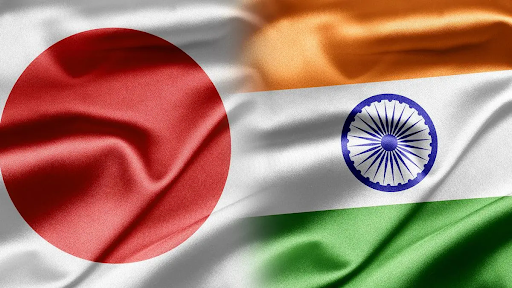
India and Japan renewed their USD 75 billion Bilateral Swap Arrangement, providing a two-way liquidity buffer to manage currency volatility and reinforce investor confidence. Beyond economic stability, it strengthens their Special Strategic and Global Partnership, signaling deep trust and supporting macroeconomic resilience amid global uncertainty.
Copyright infringement not intended
Picture Courtesy: thehindubusinessline
Context
India has renewed the Bilateral Swap Arrangement (BSA) with Japan to stabilize the Rupee and ensure forex market balance.
What is a Bilateral Swap Arrangement (BSA)?
A BSA is a financial agreement between the central banks of two countries.
It functions as a temporary line of credit, providing a country with access to foreign currency liquidity during periods of financial stress or balance of payment difficulties.
Key Features of a BSA
Two-Way Exchange: Both participating central banks have the right to swap their local currency for a foreign currency (like the USD or Japanese Yen) up to a specified limit.
Liquidity Support: It provides immediate access to foreign currency for domestic banks or to settle import bills without depleting existing national reserves.
Market Stability: By ensuring a steady supply of foreign exchange, BSAs help deter speculative attacks on a country's domestic currency and reduce exchange rate volatility.
Interest and Repayment: The borrowing country pays interest (often based on a benchmark like LIBOR) and agrees to "buy back" its local currency at the original exchange rate on a future date, eliminating exchange rate risk for the lender.
How does the BSA Compare to other Financial Safety Nets?
|
Bilateral Swap (BSA) |
Regional Arrangement (RFA) |
IMF Multilateral Aid |
|
|
Speed |
Immediate; pre-arranged and "on-call" |
Moderate; requires regional consensus |
Slower; involves intense negotiation |
|
Conditionality |
Low to None; focuses on liquidity, not reform |
Variable; often linked to IMF programs |
High; requires strict structural reforms |
|
Membership |
Two parties; often based on trade or alliances |
Regional Bloc (e.g., ASEAN+3) |
Global; near-universal (190 countries) |
|
Cost |
Market-based; interest on the drawn amount |
Pooled; shared regional risk |
Concessional; often below-market for low-income |
Key Differences
Stigma and Autonomy
Unlike IMF bailouts, which can carry political "stigma" due to forced austerity, BSAs are viewed as neutral central bank cooperation that preserves national autonomy.
Predictability vs Flexibility
BSAs are flexible but can be less predictable, as they rely on the continued consent of the lending central bank. Multilateral layers like the IMF offer more standardized, predictable access for all members.
Purpose
While the IMF and RFAs are designed for long-term Balance of Payments (BoP) support, many BSAs are strictly for short-term market liquidity to prevent global contagion.
The "Linchpin" Role
The IMF remains the ultimate "lender of last resort" because it supports countries that lack the trade or geopolitical ties required to secure a BSA.
Source: NEWSONAIR.
|
PRACTICE QUESTION Q. With reference to the Bilateral Swap Arrangement (BSA) between India and Japan, consider the following statements: 1. It allows both countries to swap local currencies directly for Euros only. 2. The current size of the arrangement is $75 billion. 3. It is designed to provide long-term development loans for infrastructure projects. Which of the statements given above is/are correct? A) 1 and 2 only B) 2 only C) 2 and 3 only D) 1, 2, and 3 Answer: B Explanation: Statement 1 is incorrect: The Bilateral Swap Arrangement (BSA) allows India and Japan to swap their local currencies (the Indian Rupee and the Japanese Yen) for US Dollars (USD), not Euros. The US Dollar acts as the intermediary currency to provide liquidity during times of financial stress. Statement 2 is correct: The current size of the BSA is $75 billion. Statement 3 is incorrect: The BSA is a short-term liquidity arrangement intended to provide a financial safety net and stabilize foreign exchange markets during economic downturns. |
It is a financial agreement between India's central bank (RBI) and Japan's central bank (Bank of Japan) that allows them to exchange their local currencies (Indian Rupee and Japanese Yen) for US Dollars up to a specified limit. It acts as a pre-approved credit line.
The BSA acts as a crucial financial safety net. It helps India manage its Balance of Payments, stabilizes the Rupee during periods of high volatility, and boosts investor confidence by signaling that India has a reliable backstop to manage financial crises without immediately depleting its own forex reserves.
In simple terms, if India faces a shortage of US dollars, the RBI can provide Indian Rupees to the Bank of Japan and get an equivalent amount of US dollars in return, up to the agreed limit. This provides immediate access to foreign currency. The transaction is later reversed at a pre-agreed exchange rate.

© 2026 iasgyan. All right reserved