Description
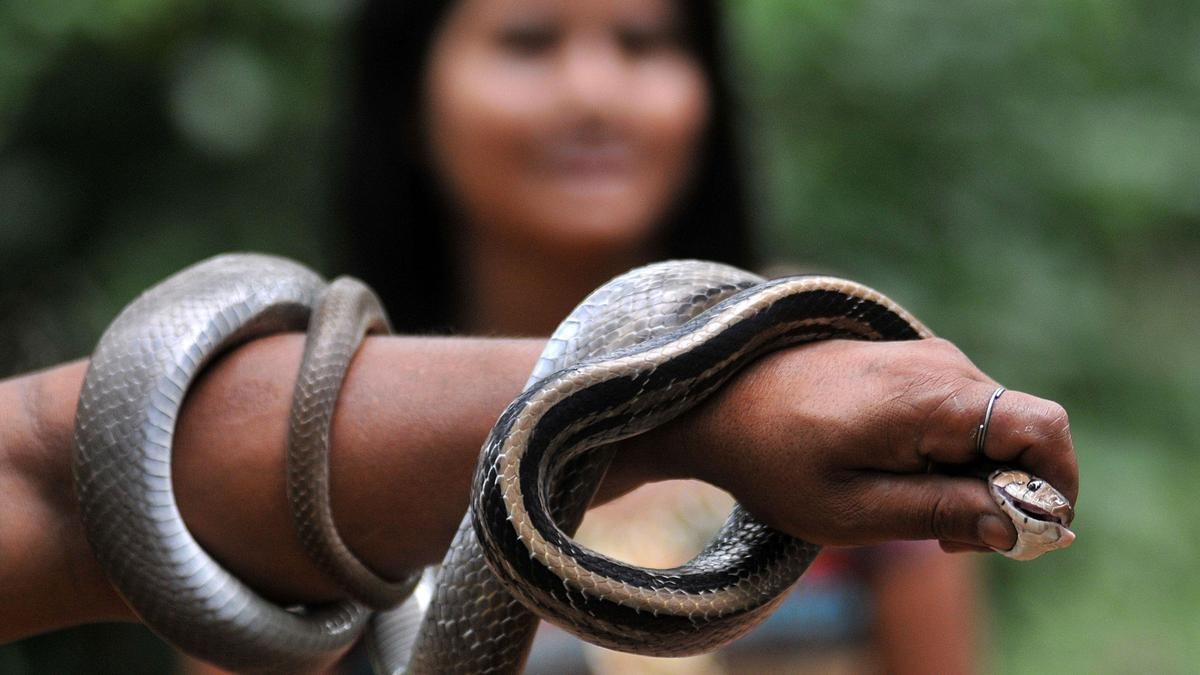
ICMR project for zero snake bites death
https://www.thehindu.com/news/national/assam/assams-demow-model-is-focus-of-icmr-project-for-zero-snakebite-deaths/article70392572.ece
Copyright infringement not intended
Picture Courtesy: The Hindu
Context:
Snakebite envenoming is a major but neglected public health issue in India. India accounts for 58,000 snakebite deaths annually, the highest globally. To address this, the Indian Council of Medical Research (ICMR) has launched a large-scale implementation research project.
Current status of Snakebite in India:
- Snakebite envenoming remains a major public health challenge in India, with the country accounting for the highest number of snakebite deaths globally, estimated at around 58,000 deaths annually.
- The burden of snakebite is unevenly distributed, with higher incidence in rural, tribal, and agrarian regions, particularly in States such as Uttar Pradesh, Bihar, Jharkhand, Odisha, Chhattisgarh, Assam, West Bengal, Andhra Pradesh, and Maharashtra.
- Despite availability of anti-snake venom (ASV), mortality remains high due to delayed reporting, poor referral systems, lack of trained healthcare personnel at peripheral facilities, inconsistent ASV availability.
- Snakebite envenoming is recognised by the World Health Organization (WHO) as a Neglected Tropical Disease (NTD), and India has begun responding through ICMR-led research initiatives, inclusion of snakebite management in national treatment guidelines
About the ICMR Project: Zero Snakebite Death Initiative;
- A four-year national implementation research project sanctioned by the Indian Council of Medical Research (ICMR) to address snakebite envenoming as a major public health challenge.
- Scheduled to begin in January 2026, with a total financial outlay of ₹13.5 crore.
- Lead institution: Amrita Institute, Kerala, responsible for overall coordination and research design.
- Geographical coverage: Seven States — Assam, Himachal Pradesh, Jharkhand, Kerala, Maharashtra, Odisha, and West Bengal.
- Primary objective: To develop a unified, evidence-based, and replicable national model for snakebite prevention, early response, and effective clinical management.
- Focuses on generating high-quality implementation evidence that can inform national policy and scale-up.
What is Demow Model of Assam?
- Originated in the Demow block of Sivasagar district, eastern Assam, an area with a high incidence of snakebite.
- Recognised by ICMR as a successful, field-tested, community-based model for reducing snakebite deaths and complications.
- Demonstrates how local participation and decentralised health responses can significantly improve outcomes in rural settings.
- Serves as a scalable template for other high-burden regions in India.
Core feature of Demow model:
- Emphasises strong community engagement as the foundation of snakebite prevention and response.
- Involves training local volunteers in basic first response and safe practices following snakebite incidents.
- Promotes awareness generation and myth-busting, reducing dependence on unsafe traditional practices.
- Establishes efficient referral and communication networks linking villages with primary and higher health facilities.
- Ensures early transport of victims to hospitals, minimising delays during the critical golden hour.
- Shifts the approach from purely hospital-based treatment to community-led prevention and rapid response mechanisms.
Other regional models integrated in the Project:
- Assam: Community engagement and referral-based approach through the Demow Model.
- Maharashtra: Distribution and promotion of protective equipment to reduce occupational exposure to snakebites.
- Himachal Pradesh: Administration of anti-snake venom (ASV) during patient transport, reducing treatment delays.
- Kerala: Use of digital tools for better coordination, real-time surveillance, and data-driven decision-making.
Importance of the Zero Snakebite Death Initiative:
- Addresses a Major Public Health Burden: India accounts for nearly 50% of global snakebite deaths, with an estimated 58,000 deaths annually and over 4 lakh amputations or long-term disabilities (ICMR–Million Death Study), making snakebite envenoming one of the most lethal yet neglected health challenges.
- Targets Preventable Mortality: Most snakebite deaths occur due to delay in treatment rather than lack of cure, as timely administration of anti-snake venom (ASV) within the golden hour can drastically reduce fatality, highlighting the relevance of a “zero death”
- Promotes Community-Centric Healthcare: The initiative shifts focus from hospital-only care to community empowerment, early response, and referral networks, which is critical since over 70% of snakebite deaths occur in rural areas with limited access to tertiary care.
- Evidence-Based Policy Making: By scientifically evaluating successful regional models (e.g., Demow Model, Kerala digital surveillance), the initiative generates implementation evidence, enabling scale-up of interventions proven effective on the ground.
- Alignment with Global and National Goals: Supports WHO’s target to halve snakebite deaths and disabilities by 2030 and strengthens India’s commitment to SDG 3 (Good Health and Well-being) and universal health coverage.
Challenges in achieving Zero Snakebite Deaths:
- Delayed Healthcare Access: In many rural and tribal areas, travel time to hospitals exceeds 2–4 hours, far beyond the golden hour, as seen in high-burden districts of Odisha, Jharkhand, Assam, and Chhattisgarh.
- Dependence on Traditional Healers: Studies show that 30–50% of victims first approach faith healers, leading to fatal delays; for example, pre-intervention assessments in Assam’s Sivasagar district highlighted widespread reliance on non-medical remedies.
- Uneven Availability of Anti-Snake Venom (ASV): ASV shortages, poor cold-chain management, and lack of trained staff at Primary Health Centres (PHCs) limit effective treatment, especially in remote regions.
- Regional Variation in Snake Species: India’s ASV is primarily polyvalent against the “big four” snakes, while region-specific species (e.g., hump-nosed pit viper in the Western Ghats) complicate diagnosis and treatment outcomes.
- Weak Surveillance and Underreporting: Snakebite cases are significantly underreported; official hospital data capture only a fraction of actual incidents, weakening planning and resource allocation.
Conclusion:
The Zero Snakebite Death Initiative represents a decisive shift from reactive, hospital-centric care to preventive, community-driven, and evidence-based public health action against one of India’s most neglected yet preventable causes of death. While challenges such as delayed access, behavioural barriers, and health system gaps persist, the integration of proven local models like Assam’s Demow Model demonstrates that zero snakebite deaths is an achievable goal with sustained community engagement, timely treatment, and strong institutional support.
Source: The Hindu
|
Practice Question
“Snakebite envenoming is a preventable public health challenge rather than an unavoidable rural risk.” In this context, examine the significance of the Zero Snakebite Death Initiative in India. (250 words)
|
Frequently Asked Questions (FAQs)
It is an ICMR-led national research and implementation initiative aimed at eliminating preventable deaths due to snakebite envenoming through community empowerment, early response, and evidence-based health system strengthening.
India records the highest number of snakebite deaths globally (~58,000 annually), mainly affecting rural and tribal populations due to delayed treatment, poor awareness, and limited healthcare access.
The Demow Model from Assam has proven that community engagement, trained volunteers, and strong referral networks can substantially reduce snakebite mortality, making it suitable for national replication.