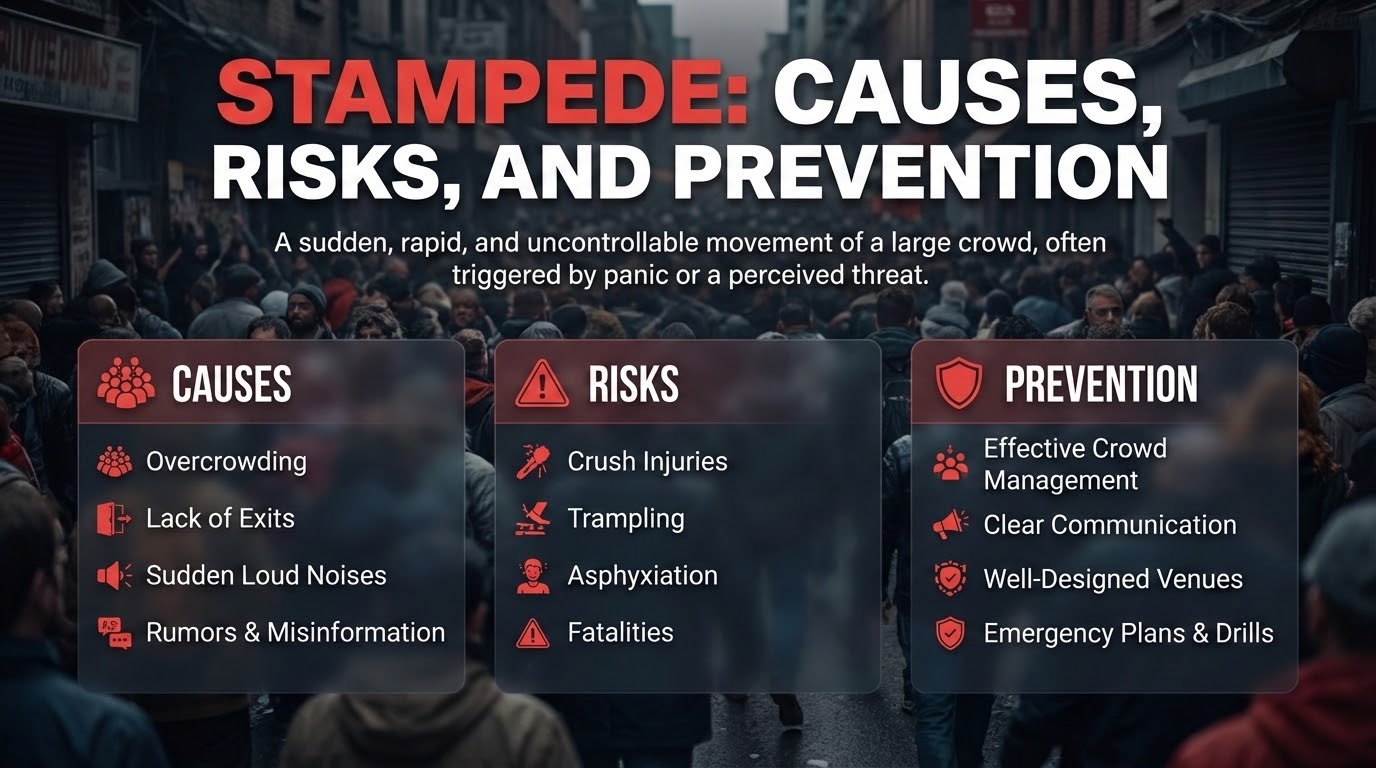
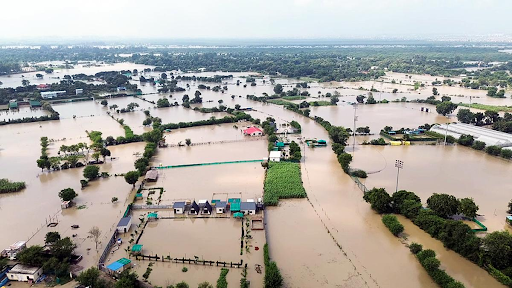
The Union Government launched a ₹507 crore project to strengthen community-based disaster risk reduction by empowering PRIs in 81 vulnerable districts. It institutionalises bottom-up planning through GPDP integration. Success depends on fixing PRI gaps in funds, functions, and functionaries while aligning with national law and the Sendai Framework.
Copyright infringement not intended
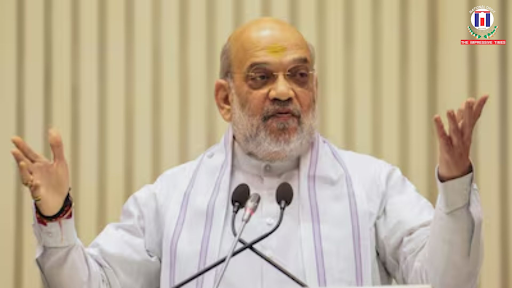
Picture Courtesy: impressivetimes
A High-Level Committee (HLC) chaired by the Union Home Minister approved Rs. 507.37 crore for a national project aimed at strengthening community-based Disaster Risk Reduction (DRR) in Panchayati Raj Institutions (PRIs).
|
Read all about: DISASTER RESILIENCE IN INDIA: CHALLENGES AND WAY FORWARD l DISASTER MANAGEMENT IN THE HIMALAYA l NATIONAL DISASTER RESPONSE FORCE (NDRF) |
Project Scope and Implementation
Key Objectives
Finance
The total outlay of Rs. 507.37 crore is funded through a combination of central and state contributions:
India's disaster management has shifted from a reactive, relief-focused model to a proactive, holistic, and technology-driven strategy, prioritizing prevention, mitigation, and preparedness.
The strategy is legally based on the Disaster Management Act of 2005 and aligns with international commitments, specifically the Sendai Framework for Disaster Risk Reduction.
Institutional Framework for Disaster Management
The Disaster Management Act, 2005, created a three-tier structure to ensure coordinated and effective disaster management across the country.
|
Level |
Apex Body |
Chairperson |
Key Responsibilities |
|
National |
National Disaster Management Authority (NDMA) |
Prime Minister of India |
Formulates policies, plans, and guidelines for disaster management. Supported by the National Executive Committee (NEC). |
|
State |
State Disaster Management Authority (SDMA) |
Chief Minister of the State |
Lays down state-specific policies and plans, coordinating with the NDMA. |
|
District |
District Disaster Management Authority (DDMA) |
District Magistrate/Collector |
Acts as the primary body for planning, coordinating, and implementing DRR at the grassroots level. |
National Disaster Management Plan (NDMP): Released in 2016 and updated in 2019, it is a comprehensive plan aligned with the Sendai Framework, guiding all phases of disaster management.
National Disaster Mitigation Fund (NDMF): Established in 2021, this fund finances mitigation (e.g., seismic micro-zonation and capacity building), emphasizing proactive risk reduction over mere response.
Prime Minister's 10-Point Agenda on DRR: This integrates DRR across development sectors, leveraging technology, funding risk mapping, and promoting social inclusion by empowering women's leadership.
Coalition for Disaster Resilient Infrastructure (CDRI): Launched by India in 2019, the CDRI is a global partnership to promote the resilience of infrastructure systems to climate and disaster risks.
Strengthening Community and Local-Level Resilience
Institutional & Structural Issues
Infrastructure & Planning Failures
Technological & Strategic Gaps
Socio-Economic Vulnerability
Mainstreaming DRR into Development: All development projects, especially in infrastructure, must incorporate disaster resilience standards.
Strengthening Local Governance: Empowering Panchayati Raj Institutions (PRIs) with dedicated funds, functions, and functionaries for disaster management is crucial.
Nature-Based Solutions: Increasing focus on "blue-green infrastructure," such as restoring mangroves and wetlands to serve as natural buffers against floods and storm surges.
Enhancing Disaster Financing: Scaling up innovative financial mechanisms, such as disaster risk insurance, to protect vulnerable households, farmers, and small businesses.
Hyper-Local Warnings: Transitioning to Impact-Based Forecasting using AI/ML and IoT sensors to provide site-specific alerts through the Common Alerting Protocol (CAP) directly to mobile phones.
National Disaster Database: Mandating a comprehensive national and state-level database to track fund allocation, risk assessments, and preparedness in real-time.
India builds a resilient and secure future by intrinsically integrating disaster risk reduction into its development process, using strengthened local governance, advanced technology, and international collaboration.
Source: NEWSONAIR
|
PRACTICE QUESTION Q. The National Disaster Management Plan (NDMP), first released in 2016, is aligned with which of the following international frameworks? A) The Paris Agreement B) The Hyogo Framework for Action C) The Sendai Framework for Disaster Risk Reduction D) The Sustainable Development Goals (SDGs) Answer: C Explanation: The National Disaster Management Plan (NDMP), first released in 2016, is the first-ever national plan in India for disaster management and is aligned with the Sendai Framework for Disaster Risk Reduction (SFDRR) 2015-2030. |
The NDRF is a specialized multi-disciplinary force trained for rapid response to natural and man-made disasters. It consists of battalions from various paramilitary forces and is renowned for its search and rescue operations during floods and earthquakes.
The Sachet Portal is a centralized platform launched by the NDMA to provide real-time, geo-targeted alerts to citizens across India via SMS, mobile apps, and radio, ensuring early warnings for cyclones, heatwaves, and floods.
The NDMP is India’s first-ever national plan (updated periodically) that aligns domestic policy with the global Sendai Framework for Disaster Risk Reduction. It focuses on making India disaster-resilient by 2030.


© 2026 iasgyan. All right reserved