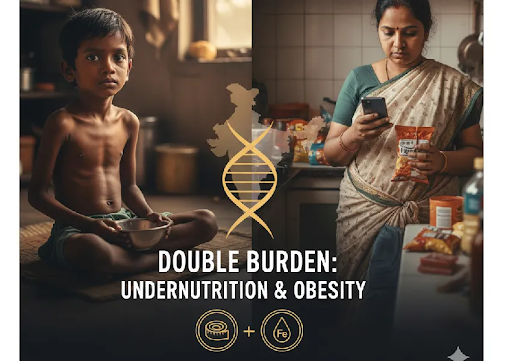
India faces a serious childhood obesity crisis, ranking second globally while still battling undernutrition. Rapid urbanization, ultra-processed foods, and sedentary lifestyles drive the problem. Rising obesity increases non-communicable diseases, psychological stress, and economic costs, demanding stronger policies, awareness, and healthier food environments.
Copyright infringement not intended
Picture Courtesy: bwhealthcareworld
Context
According to the World Obesity Atlas 2026, released by the World Obesity Federation, India is facing a public health challenge with the second-highest number of children affected by obesity globally, after China.
Key Highlights of the World Obesity Atlas 2026
Global Trends and Projections
Widespread Prevalence: More than one in five (20.7%) children aged 5–19 globally are now overweight or obese, up from 14.6% in 2010.
Concentrated Burden: Over 200 million school-age children with high BMI (Body Mass Index) are concentrated in just 10 countries.
Future Outlook: Projections suggest that by 2040, 507 million children worldwide will be overweight or obese.
Health Warning: By 2040, an estimated 120 million children will show early signs of chronic diseases like hypertension and cardiovascular disease.
India Specific Findings
India has emerged as a central focus of the 2026 report, ranking second globally for the absolute number of children with high BMI.
Current Scale: As of 2025, approximately 41 million children (ages 5–19) in India have a high BMI, with 14 million classified as obese
Rapid Growth: India's childhood obesity rates are rising at an average of 5% annually, one of the fastest growth patterns in the world.
Disease Projections (by 2040):
Key Drivers of Childhood Obesity in India
Nutritional Transition
Traditional diets are being replaced by cheap, calorie-dense, and nutrient-poor ultra-processed foods and sugar-sweetened beverages (SSBs). These High-Fat, Sugar, and Salt (HFSS) products are a primary cause.
Urban Obesogenic Environment
Rapid urbanization has led to shrinking open spaces for play and increased reliance on transport, promoting a sedentary lifestyle.
Rise of Sedentary Lifestyles
Increased screen time due to digital devices displaces time for physical activity. A CBSE fact sheet (2007) noted only 30% of adolescents engaged in regular physical activity.
Socio-economic Factors
Obesity is spreading beyond the wealthy to lower-income urban families due to reliance on cheaper, energy-dense processed foods.
Consequences of childhood obesity
Health Consequences
It is a major risk factor for Non-Communicable Diseases (NCDs) like Type 2 diabetes, hypertension, and cardiovascular diseases later in life. Immediate issues include sleep apnea and joint problems.
Psychological and Social Impact
Affected children often face bullying and social stigma, leading to low self-esteem, anxiety, and depression.
Economic Burden
Obesity-related disease treatment is costly, estimated at nearly $29 billion (1% of India's GDP) in 2019 (Source: World Obesity Federation). This impacts future workforce productivity and risks the demographic dividend.
Government Initiatives to Address the Crisis
|
Initiative |
Key Objective |
|
To transform the food system to ensure safe, healthy, and sustainable food. Promotes reduced consumption of salt, sugar, and fat. |
|
|
FSSAI Regulations on Junk Food |
Bans the sale and advertisement of HFSS foods in school canteens and within 50 meters of school premises. |
|
Fit India Movement |
A nationwide movement to encourage physical activity and sports in daily life, especially within schools. |
|
POSHAN Abhiyaan 2.0 |
An integrated nutrition mission that addresses malnutrition in all forms, including obesity, through awareness and dietary diversity. |
Way Forward
Strengthen Regulatory Frameworks
Implement clear and simple Front-of-Pack Labelling (FOPL) and consider fiscal measures like higher taxes on unhealthy foods and beverages.
Promote Nutritional Literacy
Launch large-scale public awareness campaigns to educate parents, teachers, and children on healthy diets and the risks of obesity.
Re-engineer Urban Spaces
Prioritize the creation of safe and accessible public parks, playgrounds, and cycling tracks in urban planning. Mandate adequate time for physical education in schools.
Integrate Health Policies
Incorporate strategies to tackle overnutrition within broader schemes like POSHAN Abhiyaan, adopting a life-cycle approach from maternal health to adolescent nutrition.
Learn Lessons from Global Best Practices
Chile's Comprehensive Food Policy: Implemented mandatory front-of-package warning labels (black octagons) on unhealthy foods, restricted marketing to children, and banned their sale in schools.
Conclusion
To ensure a healthy future and realize demographic dividend, India must address the dual challenge of undernutrition and overnutrition through immediate, evidence-based regulation, public education, and community participation.
Source: INDIANEXPRESS
|
PRACTICE QUESTION Q. India is experiencing a unique 'double burden of malnutrition' where undernutrition and obesity coexist." Analyze. 150 words |
India has the second-highest number of children affected by obesity in the world, after China. According to the World Obesity Atlas 2026, an estimated 41.32 million Indian children and adolescents are overweight or obese, with the rate growing by about 5% annually.
This is a public health paradox where undernutrition (stunting, wasting) and overnutrition (obesity, overweight) coexist within the same country, community, or even the same family. It arises from an uneven nutritional transition, where many have access to calorie-dense but nutrient-poor processed foods while others still lack sufficient calories.
Childhood obesity carries severe and multi-faceted consequences, including increased risk of non-communicable diseases, psychological distress like bullying and low self-esteem, and a heavy economic burden on the healthcare system, threatening the future workforce's productivity.

© 2026 iasgyan. All right reserved