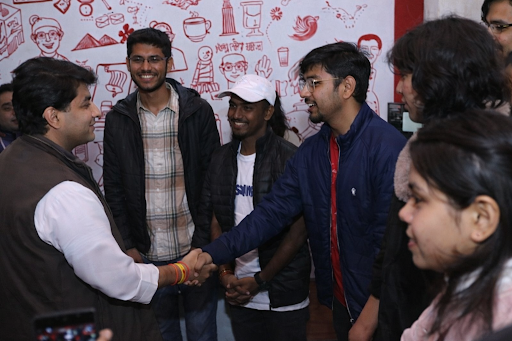
The BHARAT SAMPARK initiative aims to connect youth with nation-building by modernizing India Post through IT 2.0 and N-Gen Campus Post Offices. It promotes e-commerce logistics, financial inclusion, and deep-tech adoption like the Tactile Internet, creating participative governance powered by youth for future-ready institutions.
Copyright infringement not intended
Picture Courtesy: PIB
Context
BHARAT SAMPARK is a strategic government outreach initiative designed to establish a direct dialogue with youth, especially students in premier educational institutions.
What is BHARAT SAMPARK?
It is an initiative launched by the Union Minister of Communications to promote direct interaction between top leadership and the country's youth.
Core Objectives of the Initiative
Promote Participation: To encourage students to engage with government bodies through internships, live projects, and innovation-driven partnerships.
Bridge Gaps: To demystify the functioning of public sector institutions and highlight opportunities for youth to contribute to their transformation.
Promote Policy Dialogue: To create a platform for students to interact with policymakers, offer feedback, and gain insights into the national developmental agenda.
What is N-Gen Initiative?
The N-Gen (Next Generation) Initiative is a modernization program by the Department of Posts designed to transform traditional campus post offices into vibrant, youth-centric, and digitally enabled service hubs.
Features of N-Gen Post Offices
Student-Centric Model: Features student-designed interiors, free Wi-Fi, dedicated service counters, QR-based digital payments, and discounted postal services.
Hands-on Learning: A student engagement model provides practical exposure to postal operations, turning the post office into a live learning lab.
National Rollout: The government plans to revamp 100 campus post offices under this initiative by March 31, 2026.
Deep-Tech Innovation: The initiative highlights the importance of promoting an ecosystem for deep-tech innovation, aligning academic research with national goals.
|
Tactile Internet
|
Source: PIB
|
PRACTICE QUESTION Q. The term 'Tactile Internet', recently seen in the news, refers to: (a) A global satellite-based internet service for remote areas. (b) A technology that enables the real-time transmission of touch and haptic sensations over a network. (c) An AI-powered system for automating postal sorting and delivery. (d) A secure communication network used exclusively for government and defence purposes. Answer: B Explanation: The Tactile Internet is a term defined by the International Telecommunication Union (ITU) to describe an internet network that combines ultra-low latency with extremely high availability, reliability, and security. It is specifically designed to transmit information—including touch and haptic sensations—as fast as human tactile sense. |
BHARAT SAMPARK is a strategic government outreach program designed to connect directly with India's youth, especially in premier educational institutions, to foster dialogue on policy, innovation, and encourage their participation in nation-building.
The N-Gen (Next Generation) initiative revamps campus post offices into modern, digitally enabled, youth-centric hubs. It features student-centric designs, digital payment options, and a student engagement model for hands-on learning, leveraging 'Yuva Shakti' for public sector reform.
Tactile Internet is an advanced technology that allows for the real-time transmission of the sense of touch (haptic feedback) over ultra-low latency networks. Its potential applications include remote medical surgery, skill-based training, and industrial automation, creating an "Internet of Skills".


© 2026 iasgyan. All right reserved