Description
 Disclaimer: Copyright infringement not intended.
Context
Recent protests lodged by Japan against South Korea regarding military drills conducted by the latter on disputed islands.
Details
- Japan has lodged protests with South Korea over military drills conducted by the latter on disputed islands.
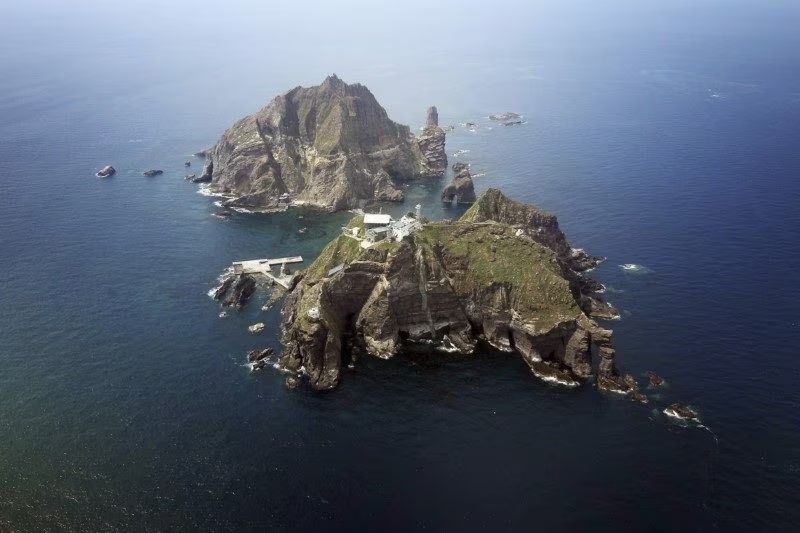
- The disputed islands, known as Takeshima in Japan and Dokdo in Korea, lie in the Sea of Japan.
Japanese Protest and Summoning
- Japan's foreign ministry issued a statement calling the military drills "unacceptable and extremely regrettable."
- A senior diplomat from the South Korean embassy in Tokyo was summoned by Japan's foreign ministry.
- Similarly, a senior South Korean official was summoned by the Japanese embassy in Seoul to protest.
Historical Background
- The disputed islands have a complex history with various claims by both Japan and South Korea.
- Japan controlled the islands during its colonization of Korea in the early 20th century.
- After World War II, South Korea gained control of the islands, which were later claimed by Japan.
Sovereignty Dispute over the Islands
- Both Japan and South Korea claim sovereignty over the group of islets, creating longstanding tensions.
- Japan refers to the islands as Takeshima, while South Korea calls them Dokdo.
- Japan asserts that Takeshima is an inherent territory based on historical facts and international law.
Legal and Diplomatic Disputes
- Both Japan and South Korea have engaged in legal and diplomatic battles to assert their claims over the islands.
- The issue has been brought to international forums, including the United Nations and the International Court of Justice.
Context of Bilateral Relations
- Despite the ongoing dispute, recent bilateral frictions between Japan and South Korea have eased.
- Shared concerns about China's growing influence and U.S. encouragement of closer collaboration among allies have played a role.
- S., Japanese, and South Korean leaders are expected to hold a trilateral summit in the United States.
U.S. Response and Trilateral Relationship
- The U.S. State Department commented that the question of sovereignty is for South Korea and Japan to resolve.
- Emphasized the importance of a robust and effective trilateral relationship for shared security and common interests.
South Korean Perspective and Justification
- A South Korean military official stated that the drills were routine exercises conducted every year.
- Described the drills as a means to protect their territory, people, and property in the East Sea.

About Japan South Korea Relations
- Japan and South Korea are neighboring countries in East Asia with complex historical and contemporary relations.
- The two countries have had periods of cooperation, economic ties, cultural exchange, but also significant challenges and tensions.
Historical Background
- Historical tensions stem from Japan's colonial rule over the Korean Peninsula from 1910 to 1945.
- The issue of comfort women, forced labor during World War II, and unresolved historical disputes continue to strain relations.
Political and Diplomatic Challenges
- Diplomatic relations have been strained at times due to disagreements over historical issues and territorial disputes.
- Political leaders from both countries have made statements and taken actions that have further exacerbated tensions.
Economic Interdependence
- Despite political tensions, Japan and South Korea maintain significant economic ties.
- Both countries are major trade partners and have substantial investments in each other's economies.
Cultural Exchanges
- Cultural exchanges have played a role in promoting mutual understanding and cooperation between Japan and South Korea.
- The popularity of Korean pop culture (K-pop) and Japanese pop culture (J-pop) has contributed to cultural exchange and soft power diplomacy.
Territorial Disputes
- The territorial disputes over Takeshima/Dokdo and the East China Sea islands (known as Senkaku/Diaoyu) have been sources of tension.
- The disputes involve conflicting sovereignty claims, leading to periodic escalations and strained relations.
Impact of Security Dynamics
- The security dynamics in the region, particularly the North Korean nuclear threat and China's growing influence, have influenced Japan-South Korea relations.
- The United States, as a key ally to both countries, plays a role in shaping their security cooperation.
Challenges in Historical Reconciliation
- Historical issues, such as comfort women and forced labor, have been sources of contention.
- The lack of consensus and differing interpretations of history between Japan and South Korea hinder efforts for reconciliation.
Importance of Regional Cooperation
- Despite the challenges, regional cooperation is seen as crucial for peace, stability, and economic prosperity in East Asia.
- Various regional forums and initiatives provide platforms for Japan and South Korea to engage in multilateral cooperation.
|
PRACTICE QUESTION
Q)Analyze the challenges, including historical disputes and territorial conflicts, that have strained the bilateral ties. (150 words)
|

https://www.reuters.com/world/asia-pacific/japan-protests-skorea-over-military-drill-disputed-islands-2023-07-07/