The Panzath Nag festival in Kashmir is a centuries-old, community-led spring cleaning tradition. Locals remove weeds and silt using wicker baskets while catching fish, ensuring sustainable water supply for dozens of villages and agricultural lands.
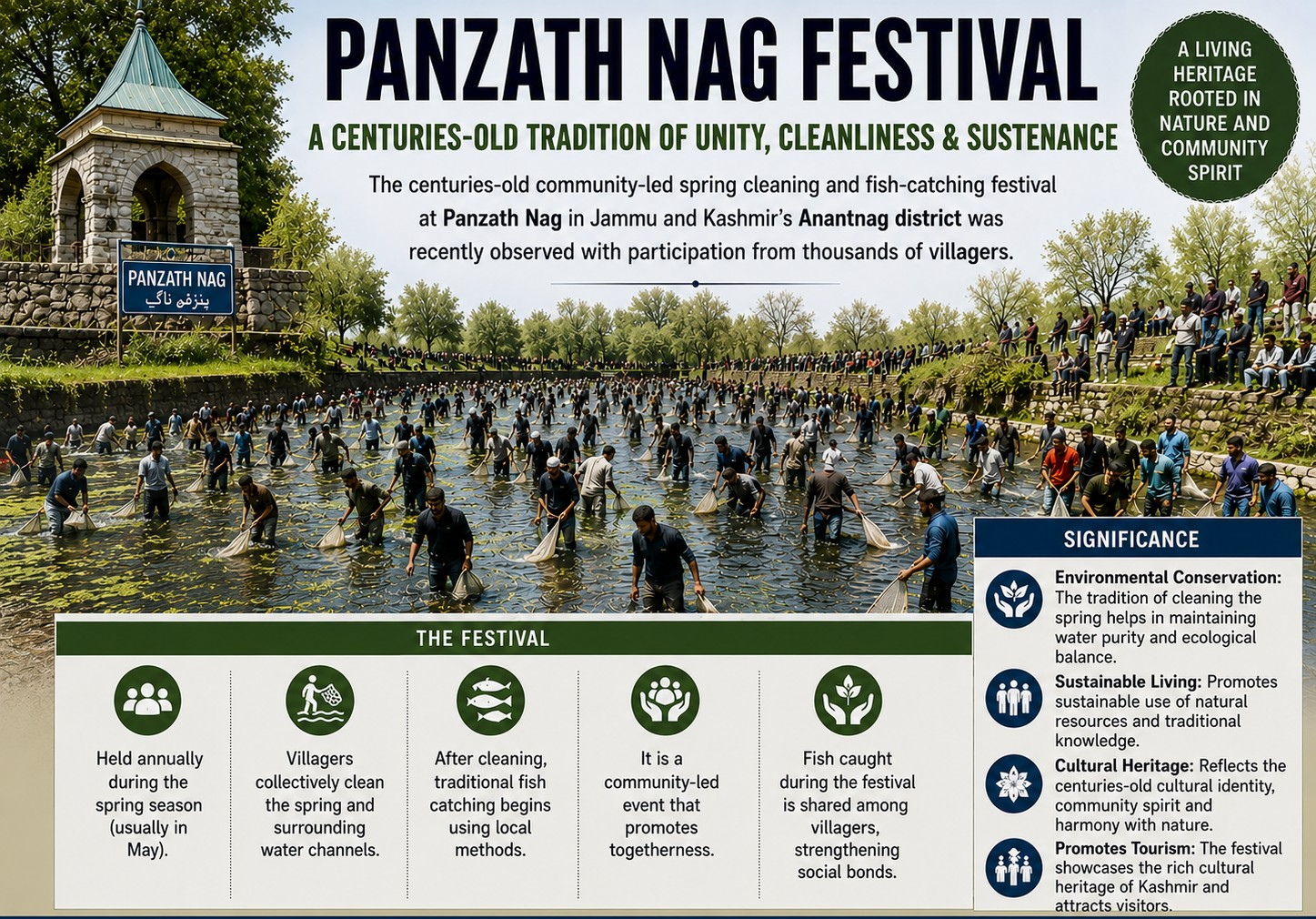
The annual spring cleaning and fishing festival at Panzath Nag recently drew thousands of participating villagers in Anantnag.
Location & Background
The festival takes place at Panzath Nag, a cluster of freshwater springs in the Qazigund area of Anantnag district, South Kashmir.
Locals derive the name "Panzath" from the Kashmiri words "Paanch Hath" (Five Hundred), which references the 500 smaller water sources the main spring originally fed.
Historical Significance
Historians and residents trace this community practice back 400 to 900 years.
Kalhana's 12th-century chronicle of Kashmiri kings, the Rajatarangini, mentions this ancient water conservation tradition.
Experts suggest the structural layout of these interconnected springs indicates roots dating back to the Mughal era or even the pre-Dogra period.
Festival Activities & Cultural Traditions
Communities hold the festival annually every May.
Thousands of people from nearly 45 surrounding villages wade into the waters to collectively clean the spring by removing silt, dense aquatic weeds, and debris.
Villagers incentivize traditional fish-catching festival.
Families conclude the day by performing Roohan Poush, where they visit local graveyards at dusk to scatter flowers and offer prayers for their ancestors.
Ecological & Economic Impact
The de-weeding and de-silting efforts restore water levels, improve flow, and revive the spring's natural clarity.
The rejuvenated spring ensures a steady supply of drinking water and irrigation for paddy fields across more than 35 to 45 downstream villages.
This indigenous model shows highly effective sustainable water management and climate resilience driven entirely by local citizens rather than government agencies.
National Recognition
Prime Minister Narendra Modi brought national attention to the festival during his Mann Ki Baat radio broadcast.
The Prime Minister lauded the villagers for demonstrating Jan Bhagidari (public participation) and taking collective responsibility to protect and restore their vital natural resources.
Source: NEWINDIANEXPRESS
|
PRACTICE QUESTION Q. The Panzath Nag spring conservation festival, which involves community-led cleaning and traditional fish-catching, is observed in which region? A) The Anantnag district of Jammu and Kashmir B) The coastal backwaters of southern Kerala C) The high-altitude plateau of central Ladakh D) The tribal belts of the Chhotanagpur plateau Answer: A Explanation: The centuries-old Panzath Nag festival takes place in the Qazigund area of the Anantnag district in south Kashmir. The community-driven tradition involves thousands of villagers gathering to clean the historic spring of silt and weeds, followed by traditional, eco-friendly fish catching. |
It is an annual community-led spring cleaning and fish-catching festival held in Panzath village, Anantnag district, Jammu and Kashmir, aimed at conserving the local water ecosystem.
It is a cluster of freshwater springs situated in the Qazigund area of South Kashmir, at the foothills of the Pir Panjal mountain range.
The water-conservation tradition dates back about 900 years and is historically documented in Kalhana's 12th-century chronicle of Kashmir's kings, the Rajatarangini.


© 2026 iasgyan. All right reserved