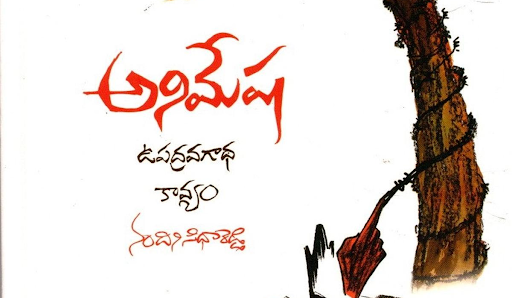
The 2025 Sahitya Akademi Awards reflect India’s diversity despite a three-month delay from Ministry restructuring. To protect creative freedom from state censorship, India must balance government accountability with institutional autonomy, adopting "arm’s length" principles to champion vernacular literature and digital archiving.
Copyright infringement not intended
Picture Courtesy: thehindu
Why In News?
The Sahitya Akademi announced the prestigious Annual Sahitya Akademi Awards for the year 2025.
It is India’s National Academy of Letters, inaugurated in 1954, as an autonomous organization under the Ministry of Culture.
Objective: To promote Indian literature, promote high literary standards, and coordinate literary activities in all Indian languages.
Headquarters: Rabindra Bhavan, New Delhi.
Key Features of the Award
Languages Covered: The award is given to books of outstanding literary merit published in 24 languages. These include:
The Prize: The award consists of a casket containing an engraved copper plaque, a shawl, and an amount of ₹1,00,000.
Selection Process: It involves a three-tier process: a confidential preliminary panel, a selection committee (Jury) for each language, and final approval by the Executive Board of the Akademi.
Sahitya Akademi Awards 2025: Major Highlights
While 24 awards are given annually across various genres (Poetry, Novel, Short Stories, Essays, and Drama), most notable winners for the year:
|
Language |
Author |
Work (Title) |
Genre |
|
English |
Jeet Thayil |
The Book of Chocolate Saints |
Novel |
|
Hindi |
Badri Narayan |
Tumadi Ke Shabd |
Poetry |
|
Sanskrit |
Janardan Prasad Pandey 'Mani' |
Deepmanikyam |
Poetry |
|
Tamil |
M. Rajendran |
Kala Pani |
Historical Novel |
|
Bengali |
Tapan Bandyopadhyay |
Birbal |
Novel |
|
Urdu |
Anis Ashfaq |
Khwab Sarab |
Novel |
Sahitya Akademi Fellowship: The highest honor conferred by the Akademi, reserved for "immortals of literature." Limited to only 21 living fellows at any time.
Bhasha Samman: Awarded to writers/scholars for significant contribution to languages not formally recognized by the Akademi (e.g., tribal or minor dialects).
Yuva Puraskar: To encourage young writers under the age of 35.
Bal Sahitya Puraskar: For excellence in children’s literature.
Translation Prize: Given to the best translation of a work between any of the 24 recognized languages.
Source: PIB
|
PRACTICE QUESTION Q. With reference to the Sahitya Akademi, consider the following statements: 1. It is an autonomous organization under the Ministry of Education. 2. It was established in 1954 to promote literature in languages only mentioned in the Eighth Schedule of the Constitution. Which of the statements given above is/are correct? A) 1 only B) 2 only C) Both 1 and 2 D) Neither 1 nor 2 Answer: D Explanation: Statement 1 is incorrect: The Sahitya Akademi is an autonomous organization under the Ministry of Culture, not the Ministry of Education. Statement 2 is incorrect: While it was established in 1954, it does not limit itself to the 22 languages of the Eighth Schedule. It recognizes 24 languages, which include the 22 Scheduled languages plus English and Rajasthani. |
The Sahitya Akademi Award is a prestigious literary honor in India conferred annually on writers of outstanding works in 24 Indian languages, including the 22 Eighth Schedule languages, English, and Rajasthani.
The Sahitya Akademi recognizes and promotes literature in 24 languages. This includes the 22 languages listed in the Eighth Schedule of the Constitution, along with English and Rajasthani.
The "arm's length principle" is a global best practice (e.g., the UK's Arts Council England) where government funds are distributed to artists and cultural institutions based on merit by an independent body. This prevents direct political control or bias while ensuring financial accountability.







© 2026 iasgyan. All right reserved