Mahatma Gandhi was the central figure who transformed India’s freedom struggle into a mass movement based on truth and non-violence. After returning from South Africa, he led early local struggles like Champaran, Kheda, and the Ahmedabad Mill Strike, which established Satyagraha as an effective method of resistance. He later spearheaded nationwide movements such as Non-Cooperation, Civil Disobedience, and Quit India, mobilizing millions against British rule. Beyond political freedom, Gandhi promoted social reform, self-reliance through Swadeshi and Khadi, communal harmony, and upliftment of the weakest sections. His principles of Ahimsa, Sarvodaya, and Trusteeship continue to influence ideas of ethical governance, social justice, and peaceful conflict resolution worldwide.
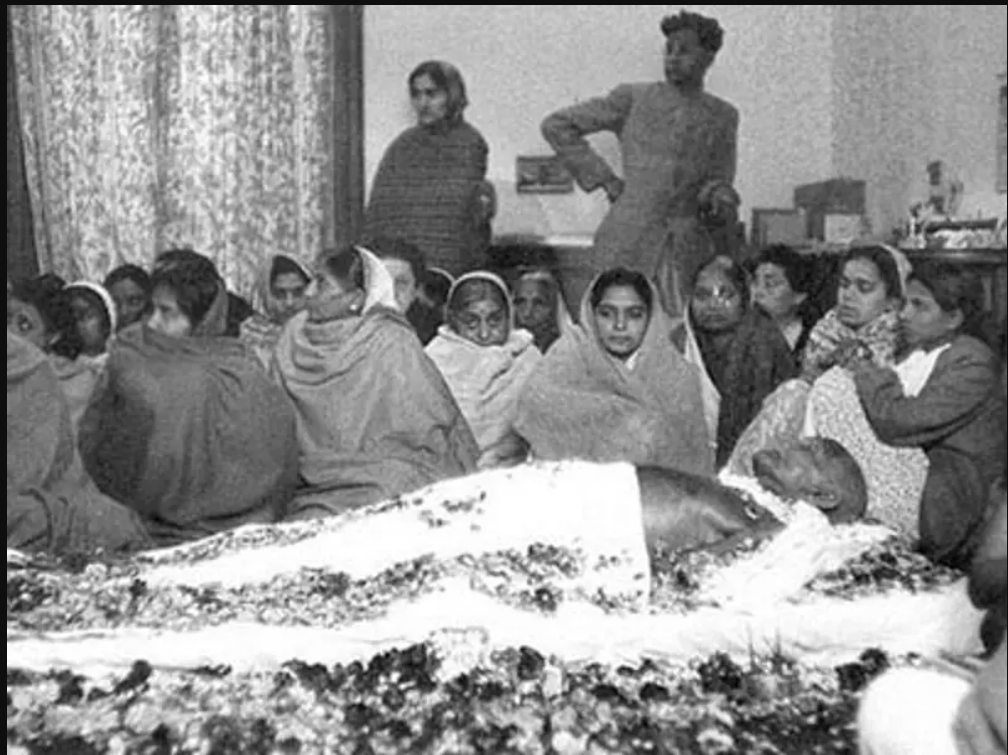
Copyright infringement not intended
Picture Courtesy: WION
Context:
The death of Mahatma Gandhi is a significant moment in Indian history, which symbolically initiated a fundamentalist and extremist movement. Following his death, violence erupted in India, particularly targeting the Brahmin community in Maharashtra.
|
Must Read: MAHATMA GANDHI | |
Early life of Gandhi ji:
Mahatma Gandhi, born as Mohandas Karamchand Gandhi on 2 October 1869 in Porbandar, Gujarat, emerged as one of the most influential leaders of the twentieth century. Trained as a lawyer in London, his early professional life took him to South Africa, where he spent over two decades fighting racial discrimination against the Indian community. These experiences shaped his political philosophy and laid the foundation for his method of non-violent resistance. He later became widely known as Bapu and the Father of the Nation for his leadership in India’s struggle for independence.
Gandhi’s entry into India’s freedom movement: After returning to India, Gandhi adopted a grassroots approach, connecting with peasants, workers, and marginalized groups. He transformed the freedom struggle from an elite political movement into a mass-based national movement grounded in ethics and non-violence.
Major movements led by Gandhi ji:
Champaran Satyagraha (1917)
Ahmedabad Mill Strike (1918)
Kheda Satyagraha (1918)
Non-Cooperation Movement (1920–22)
Civil Disobedience Movement (1930)
Quit India Movement (1942)
Gandhian ideologies:
Truth (Satya) and Non-Violence (Ahimsa): Gandhi regarded truth as the ultimate principle and non-violence as its practical application. Moral strength, he believed, was superior to physical force.
Satyagraha
A method of resisting injustice through:
The aim was to awaken the conscience of the oppressor rather than defeat them violently.
Trusteeship
Gandhi proposed that wealth holders should act as trustees of social resources, using surplus wealth for the welfare of society.
Sarvodaya (Welfare of All)
Development should benefit every section of society, especially the most vulnerable.
Swadeshi and Self-Reliance
Promotion of Khadi, village industries, and local production to ensure economic independence and dignity of labour.
Gandhi’s contribution to Nation-building:
Contemporary relevance of Gandhi:
Conflict resolution: Non-violence remains a powerful tool in peace-building and civil rights movements.
Ethical governance: His emphasis on truth and accountability aligns with demands for transparent administration.
Sustainable living: Gandhi’s advocacy of minimal consumption and local production resonates with modern sustainability goals.
Inclusive growth: Sarvodaya and trusteeship echo present-day ideas of social justice and corporate responsibility.
Way Forward:
Reviving Gandhian values in modern governance involves:
Gandhi’s life demonstrates that moral courage, truth, and non-violence can be powerful instruments of political and social transformation.
Conclusion:
Mahatma Gandhi transformed India’s freedom struggle into a mass movement grounded in truth, non-violence, and moral courage. His methods of Satyagraha, emphasis on social justice, and vision of inclusive development continue to offer guidance for democratic values, ethical governance, and peaceful conflict resolution in the modern world.
Source: WION
|
Practice Question Q. Which of the following movements led by Mahatma Gandhi came in the correct chronological order? 1. Champaran Satyagraha 2. Non-Cooperation Movement 3. Civil Disobedience Movement 4. Kheda Satyagraha Select the correct answer using the code below: Answer: A Champaran Satyagraha (1917) – Bihar This was Gandhi’s first major Satyagraha in India. It was launched to address the grievances of indigo cultivators who were forced by European planters to grow indigo under the exploitative Tinkathia system. Gandhi used investigation, mass mobilisation, and non-violent pressure. The government appointed a committee and introduced reforms. Kheda Satyagraha (1918) – Gujarat After crop failure in Kheda district, peasants were unable to pay land revenue. The colonial government refused tax remission. Gandhi, along with Sardar Patel and others, organised peasants to peacefully refuse payment until relief was granted. Eventually, revenue collection was suspended. Non-Cooperation Movement (1920–22) – Nationwide This was Gandhi’s first all-India mass movement. It was launched in response to:
People boycotted British schools, courts, goods, and titles. The movement was withdrawn after the Chauri Chaura incident (1922) due to violence. Civil Disobedience Movement (1930–34) This movement began with the Dandi March (March 1930), where Gandhi broke the salt law. It involved open violation of colonial laws, including refusal to pay taxes and boycott of foreign cloth. Champaran (1917) → Kheda (1918) → Non-Cooperation (1920) → Civil Disobedience (1930) |
Mahatma Gandhi earned this title because he transformed India’s freedom struggle into a mass movement rooted in truth, non-violence, and moral courage. His leadership united people across regions, religions, castes, and classes in the fight against British rule.
Satyagraha meant “holding firmly to truth.” It was Gandhi’s method of non-violent resistance based on civil disobedience, moral persuasion, and willingness to suffer rather than inflict harm. Its goal was to change the opponent’s heart, not to defeat them physically.
Gandhi’s non-violence was an active form of resistance. It required courage, discipline, and readiness to endure suffering. He believed only the brave could practice true non-violence, as it demanded moral strength rather than physical force.






© 2026 iasgyan. All right reserved