Description
 Disclaimer: Copyright infringement not intended.
Context
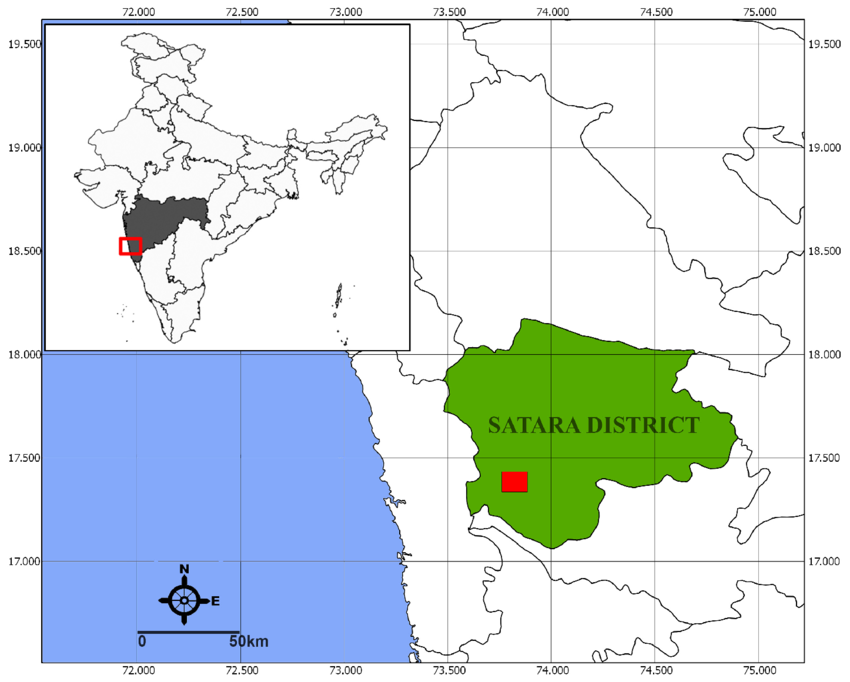
A study conducted on the sediments of a seasonal lake in the Kaas Plateau, located in the Satara district of Maharashtra.
Details
- Kaas Plateau, located in the Satara district of Maharashtra, is a UNESCO World Natural Heritage Site.
- A study conducted by Agharkar Research Institute (ARI) and the National Centre for Earth Sciences examined sediments from a seasonal lake in the plateau to decode past climate.
- Sediment profiles dating back to 8,000 years BP provided insights into climatic signatures and ecosystem modifications.
Kaas Plateau and its Significance
- Kaas Plateau, also known as Kaas Pathar, is a biodiversity hotspot known for its seasonal flower carpet during August and September.
- Situated approximately 140 km from Pune, the Kaas Plateau is nestled in the Western Ghats.
- Designated as a UNESCO World Natural Heritage Site in 2012.
- The plateau's name is derived from the Kaasa tree, scientifically known as Elaeocarpus glandulosus.
- The plateau showcases a diverse range of endemic and rare plant species.
Geological Features and Landscape
- The Kaas Plateau is characterized by its lateritic crust, formed by weathering of basaltic rocks over time.
- Shallow depressions and pediments (rock debris) contribute to the unique topography of the plateau.
- These geological features play a crucial role in the water retention and hydrological processes of the region.

Study Methodology and Sediment Analysis
- ARI and the National Centre for Earth Sciences conducted the study on sediments from a seasonal lake in Kaas Plateau.
- Sediment profiles dating back to 8,000 years BP were analyzed using carbon dating (AMS) to decode climatic signatures.
- Diatoms, mites, thecamoebians, and sediment characteristics provided insights into hydrological processes and lake modifications.
Early-Mid Holocene Climate Shift
- Sediment analysis indicated a major shift in the Indian Summer Monsoons towards dry and stressed conditions with low rainfall around 8,664 years BP.
- Pollen and diatom data suggested a change in climate from freshwater to drier conditions, accompanied by intermittent humid periods.
Late Holocene Climate Changes
- During the late Holocene, approximately 2,827 years BP, a decrease in rainfall and a weakened southwest monsoon were observed.
- Pollen analysis and the presence of pollution-tolerant diatoms indicated lake eutrophication, possibly due to human impact and livestock farming in the catchment area.
Longevity and Conservation of Kaas Plateau
- The seasonal lake on Kaas Plateau has existed for nearly 8,000 years and possibly dried up after 2,000 years BP.
- The observations highlight the plateau's ancient origins, preserved over a long time, and emphasize the need for conservation measures to protect its natural and cultural heritage.
|
PRACTICE QUESTION
Q) Discuss the key findings of the recent study on Kaas Plateau and their implications for sustainable management of the Kaas Plateau ecosystem. (150 words)
|
https://pib.gov.in/PressReleasePage.aspx?PRID=1939276