The Indus River Green Corridor aims to increase Ladakh’s forest cover to 5% using solar drip-irrigation. By planting Sea buckthorn, this community-led project fights desertification, supports the "Ladakh Gold" economy, and helps meet India’s 2030 UNCCD land restoration goals.
Why In News?
The Lieutenant Governor of Ladakh launched the Indus River Green Corridor Eco-Restoration Project at Spituk Pharka, Leh.
What is the Indus River Green Corridor Project?
It is a first-of-its-kind Cold Desert River Bank Restoration Project in India.
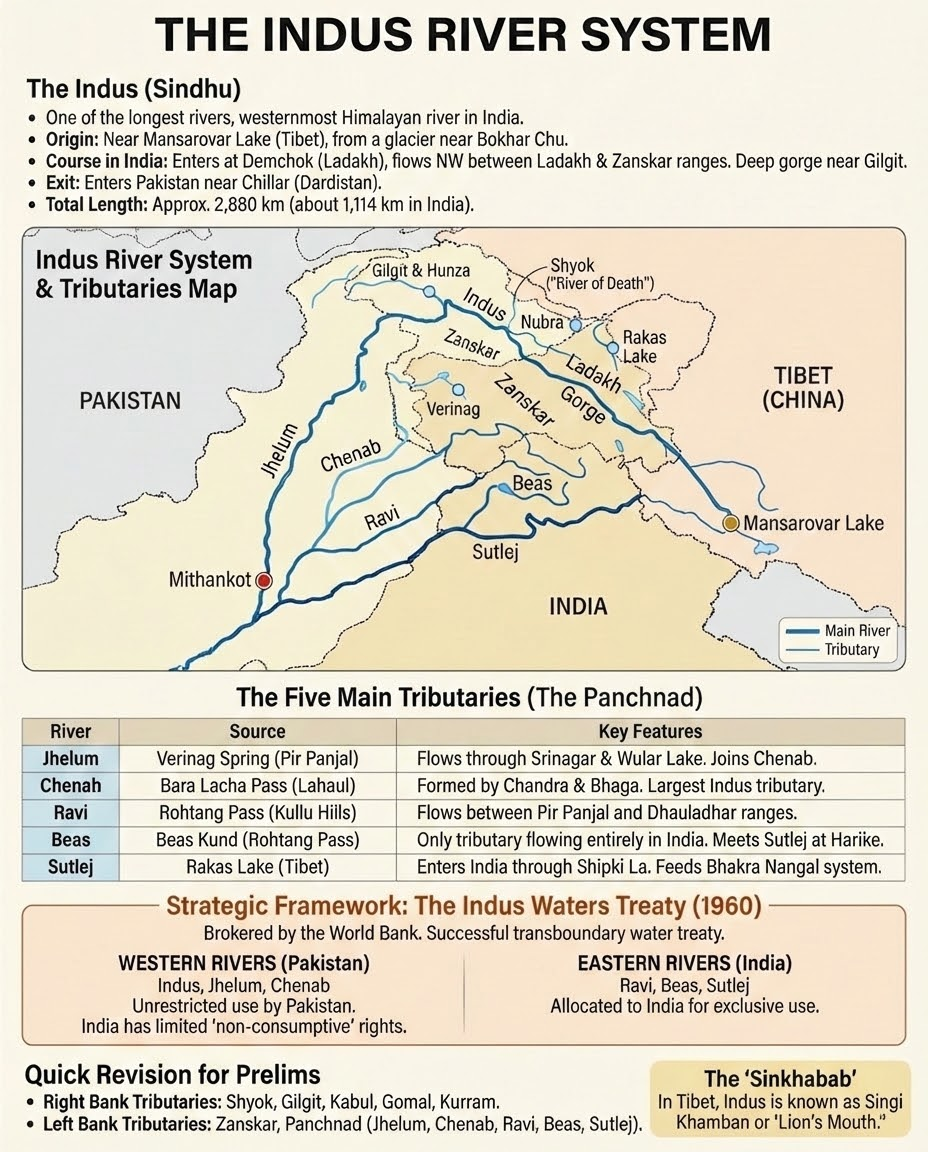
Key Features of the Project
The project avoids monoculture and focuses on indigenous species suited for the harsh cold arid climate (-30°C winters).
Given the water scarcity in Ladakh, the project does not rely on flood irrigation.
Significance
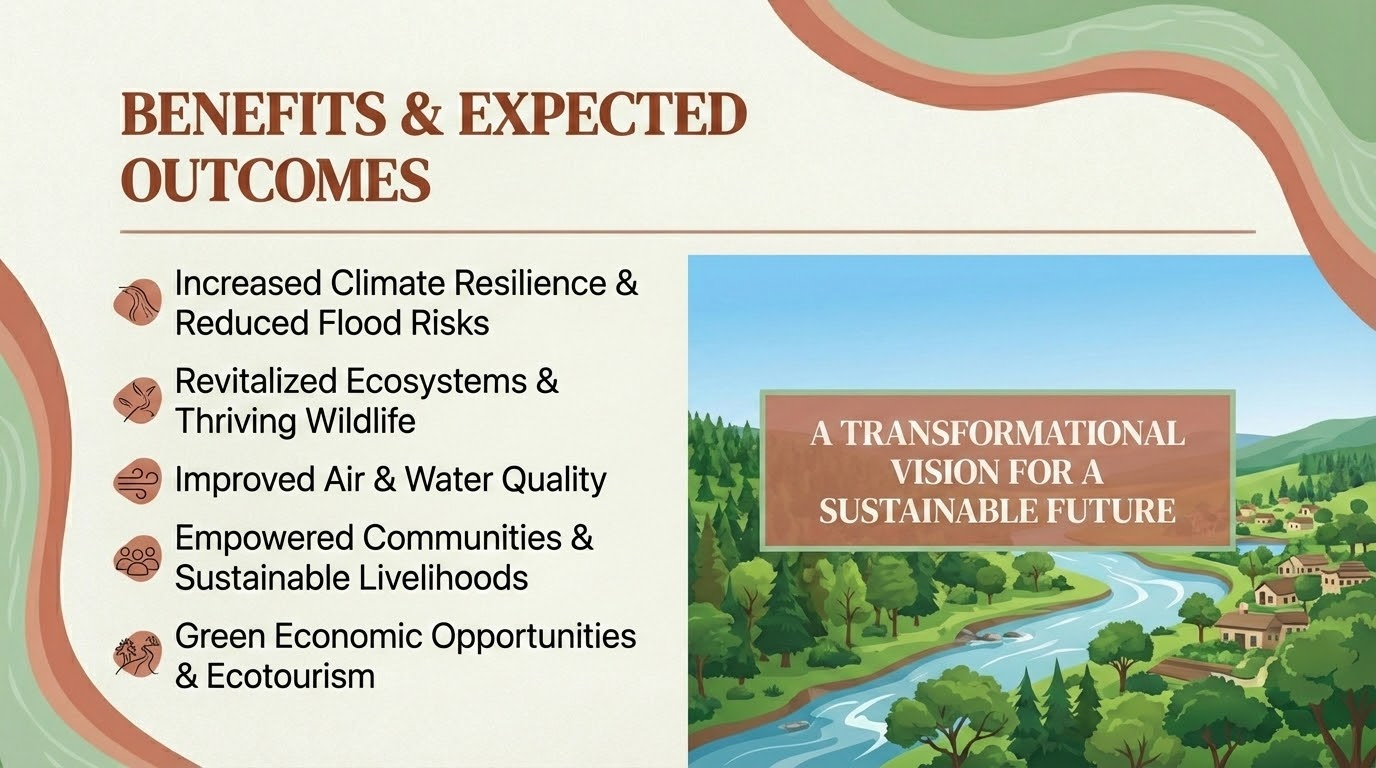
Combating Desertification: Aligns with India's commitment to restore 2.6 crore hectares of degraded land by 2030 (Bonn Challenge).
Climate Resilience: The "Green Wall" acts as a shelterbelt, reducing wind speeds and preventing the siltation of the Indus River caused by loose soil.
Carbon Sequestration: Expanding forest cover in the Himalayas is critical for managing the region's "Micro-climate" and offsetting carbon emissions from growing tourism.
Source: NEWSONAIR
|
PRACTICE QUESTION Q. "Community-led environmental governance is crucial for the success of eco-restoration". Analyze. 150 words |



© 2026 iasgyan. All right reserved