Description
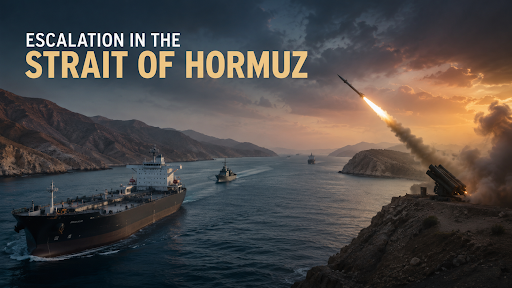
Iran’s militarisation of the strait is aimed at exercising strategic leverage and at generating funds to rebuild damaged infrastructure. With a peace deal, the need for leverage would disappear.
Why In News?
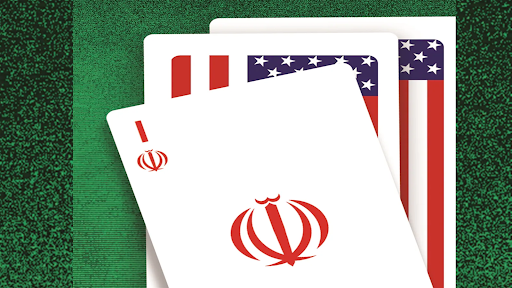
Despite the apparent failure of recent US-Iran talks held in Islamabad, high-level delegations from both sides indicate that substantial progress has been made and a comprehensive peace deal remains within reach.
Three Crucial Issues
- Iran’s Highly Enriched Uranium (HEU) and Nuclear Future: Iran currently possesses around 400 kg of HEU enriched to 60%, enough to potentially produce 10-12 nuclear bombs if further enriched.
- Reopening and Securing the Strait of Hormuz: Iran has militarised the strait to exert leverage and generate funds for rebuilding war-damaged infrastructure.
- Israel’s War in Lebanon and Hezbollah’s Role: Israeli Prime Minister Benjamin Netanyahu recently offered direct peace talks conditional on Hezbollah’s disarmament
Why These Issues Can Be Resolved
- On HEU: Iran could hand over its stockpile in exchange for the lifting of all US nuclear-related sanctions and American assistance in rebuilding its electricity generation capacity.
- On the Strait of Hormuz: With a peace deal in place, Iran would no longer need militarisation for leverage or revenue.
- On Lebanon: Iran and the US could jointly commit in the peace agreement to press their respective allies to enter negotiations within a specified timeframe.
Implications for Regional and Global Stability
- Energy Security: Secure and unimpeded flow through the Strait of Hormuz would stabilise global oil prices and benefit major importers like India, China, Japan, and South Korea.
- Nuclear Non-Proliferation: Removing Iran’s HEU stockpile would significantly reduce proliferation risks in West Asia.
- Broader De-escalation: Resolution in Lebanon could pave the way for wider regional stability, reducing proxy conflicts.
- Global Economy: It would mitigate downside risks highlighted in the recent IMF World Economic Outlook, supporting growth in emerging markets.
Way Forward
- Prioritise verifiable HEU handover coupled with sanctions relief and reconstruction aid, supported by robust inspection mechanisms.
- Replace toll-based proposals for the Hormuz Strait with sanctions relief and asset unfreezing to ensure freedom of navigation under UNCLOS principles.
- Include binding commitments for Iran-US-facilitated talks between Israel and Hezbollah within a defined timeline.
- Engage multilateral stakeholders (including European powers and regional actors) to broaden support and provide guarantees.
Conclusion
The ongoing West Asian crisis, marked by US-Iran tensions, presents enormous risks but also a narrow window for resolution. The three crucial issues are complex yet solvable through pragmatic trade-offs.
Source: Indian Express
|
PRACTICE QUESTION
Q. “Despite the failure of recent talks, a US-Iran peace deal remains possible as the three core issues dividing them can be resolved.” Examine these issues and suggest a framework for resolution in the context of the West Asian crisis. (250 words)
|