India invoked the Essential Commodities Act, 1955 to secure LPG supply during a global oil crisis. Despite the 2020 amendment aimed at market liberalization, the Act remains crucial for consumer protection, highlighting the ongoing policy challenge of balancing market freedom with supply regulation.
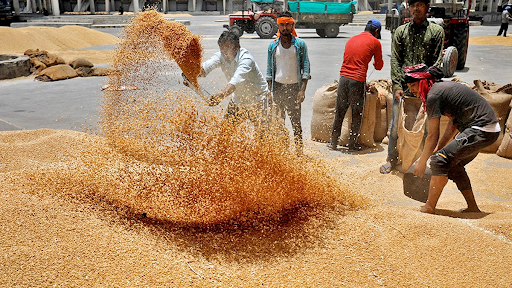
Copyright infringement not intended
Picture Courtesy: THE HINDU
Context
The Centre invoked the Essential Commodities Act 1955 to ensure uninterrupted domestic LPG supply amid West Asia tensions threatening energy imports.
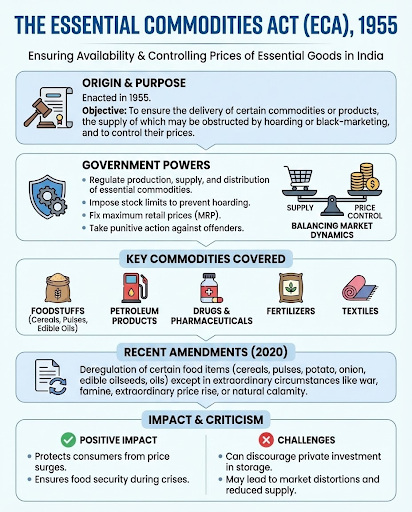
What is the Essential Commodities Act (ECA)?
The act empowers the Central Government to control the production, supply, and distribution of certain commodities to ensure they are available to consumers at fair prices.
Its primary objective is to prevent practices like hoarding and black marketing that can disrupt normal life.
Core Powers of the Central Government under ECA
Declaration of Essential Commodities
The Ministry of Consumer Affairs, Food and Public Distribution can declare any commodity, such as foodstuff, drugs, or fuel, as an 'essential commodity'.
Imposing Stock Limits
It can set a maximum quantity (stock limit) that a trader or entity can hold. This is a primary tool to prevent hoarding and artificial scarcity.
Price Control
The government is empowered to regulate the prices of essential items to protect consumers from price gouging.
Regulating Production and Distribution
The Act allows the government to issue directives to manage the entire supply chain of an essential commodity, from production to final distribution.
Penalties
Violations, such as hoarding or black marketing, can lead to imprisonment (from three months to seven years), fines, and the confiscation of illegally held stocks and transport vehicles.

Applications and Case Studies
Sugar Export Curbs (2022)
To ensure domestic availability and price stability after record exports, the Directorate General of Foreign Trade (DGFT) used the ECA to cap sugar exports at 10 million tonnes in May 2022.
Wheat Stock Management (2023)
To combat rising wheat prices and hoarding, the Centre imposed and progressively tightened stock limits on traders, wholesalers, and processors in September 2023.
LPG Production (Crisis)
Due to the Geopolitical conflict in the Middle East (e.g., March 2026), the Centre invoked the ECA to direct Oil Marketing Companies (OMCs) to maximize LPG production from Propane and Butane streams.
What are the potential implications of the ECA?
The frequent use of the ECA involves a trade-off between consumer protection and market freedom. The implications are complex and affect various stakeholders differently.
|
Stakeholder Group |
Positive Implications |
Negative Implications |
|
Consumers & Food Security |
Provides temporary relief from sudden price surges and combats unethical speculation and hoarding. |
The Economic Survey 2019-20 noted that stock limits are often ineffective in controlling long-term price volatility. It can also trigger panic buying. |
|
Farmers & Agricultural Market |
Indirectly supports price stability, which can benefit small farmers who are also consumers. |
Depresses Farmers' Income: Stock limits and export curbs reduce demand, forcing farmers to sell at lower prices. Discourages Private Investment: Unpredictable government intervention creates market uncertainty, deterring investment in storage and processing infrastructure, as highlighted by the N.K. Singh Committee. |
Way Forward
Strategic and Limited Use
The Act should be reserved for genuine crises (like war or natural calamities) as intended by the 2020 amendment, not as a routine tool for inflation management.
Focus on Market-Based Solutions
The government should prioritize strengthening supply chains, promoting transparent trade via platforms like e-NAM (National Agriculture Market), and developing a robust market intelligence system.
Boost Infrastructure Investment
Creating a stable and predictable policy environment is crucial to attract private investment in warehousing, cold chains, and food processing. This is the long-term solution to post-harvest losses and price volatility.
Adopt Best Practices
India should adopt strategic buffer stocks and open market operations to manage price stability by influencing market prices rather than using direct stock controls.
Conclusion
The Essential Commodities Act, 1955, is a double-edged sword: prudent for energy security like LPG supplies during crises, but its agricultural application needs a rethink towards a resilient and efficient market balancing consumer and farmer interests through strategic market enablement rather than control.
Source: THE HINDU
|
PRACTICE QUESTION Q. Consider the following statements regarding the Essential Commodities Act (ECA), 1955: 1. The Act provides a comprehensive definition of "essential commodities" in its schedule. 2. Only the Central Government has the authority to add or remove commodities from the schedule of the Act. 3. The Act empowers the government to regulate the production, supply, and distribution of only agricultural products. Which of the statements given above is/are correct? A. 1 only B. 2 only C. 1 and 3 only D. 1, 2 and 3 Answer: B Explanation: Statement 1 is incorrect: The Essential Commodities Act (ECA), 1955, does not provide a specific or comprehensive definition of "essential commodities". Instead, Section 2(A) states that an "essential commodity" means any commodity specified in the Schedule to the Act. Statement 2 is correct: Under Section 2A of the Act, the Central Government has the exclusive authority to amend the Schedule to add or remove any commodity if it is satisfied that it is necessary to do so in the public interest. While it may do so in consultation with State Governments, the legal power to modify the list rests with the Centre. Statement 3 is incorrect: The Act empowers the government to regulate a wide range of commodities, not just agricultural products. The current schedule includes items such as drugs, fertilizers, petroleum and petroleum products, and hank yarn made of cotton, in addition to foodstuffs and seeds. |
The ECA, 1955 is a law that empowers the central government to control the production, supply, distribution, and pricing of commodities it declares 'essential' to ensure they are available to consumers at fair prices.
The government invoked the ECA in March 2026 to direct oil companies to maximize LPG production for domestic use. This was a precautionary measure to safeguard India's energy security amid a global oil crisis and supply chain disruptions caused by geopolitical tensions in West Asia.
The 2020 amendment deregulated food items like cereals, pulses, potatoes, and onions under normal circumstances. It stipulated that the government could impose stock limits only under extraordinary conditions (like war or famine) or if there was a steep price rise (a 100% increase for horticultural produce and a 50% increase for non-perishable food items).


© 2026 iasgyan. All right reserved