Description
Why In News?
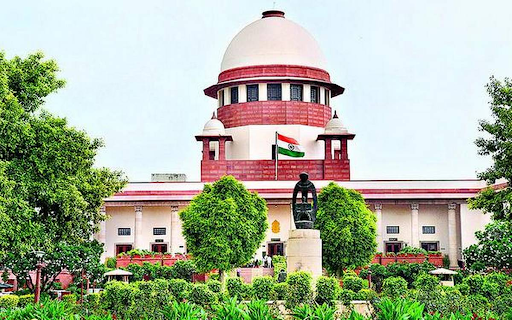
The Supreme Court on April 13, 2026, refused to grant interim relief to over 34 lakh voters in West Bengal whose names were deleted from electoral rolls during the Election Commission of India’s (ECI) Special Intensive Revision (SIR) exercise.
The Dispute
- Mass Deletions: Over 34 lakh appeals remained pending before 19 appellate tribunals. Many voters claimed they were not given adequate notice or that deletions occurred due to logical discrepancies without proper verification.
- Impact on Candidates: A specific concern arose for candidates whose names were deleted. Once deleted, they lost elector status, which is a prerequisite for contesting under the Representation of the People Act, 1951.
- Procedural Issues: Rules require notice and hearing before deletion. Rule 23(3) does not allow interim suspension of exclusions during appeals, and post-nomination inclusions need tribunal approval for supplementary lists.
Supreme Court Ruling
On April 13, 2026, a bench headed by Chief Justice Surya Kant and Justice Joymalya Bagchi rejected the plea for interim relief. Key observations:
- Allowing deleted voters to vote pending appeals would open the floodgates and encourage similar demands from those challenging inclusions.
- The right to vote is a statutory right under the Representation of the People Act, not a fundamental right.
Reasons Given by the Court
- Statutory Nature of Rights: Neither the right to vote nor the right to contest is fundamental. Both are statutory and subject to eligibility conditions.
- Procedural Integrity: Allowing blanket interim voting would disrupt the electoral process and burden tribunals. Rule 23 does not permit interim suspension of exclusions.
- Balance of Convenience: Granting relief to deleted voters could undermine the SIR’s objective of cleaning rolls and lead to demands from the other side.
- No Permanent Deprivation: The Court clarified that exclusion does not wash away voting rights forever.
Implications
- For Voters: Over 34 lakh people (and potentially more) will be unable to vote in the 2026 West Bengal Assembly elections if their appeals remain unresolved before polling dates.
- For Candidates: Deletion after nomination filing can disqualify a candidate from contesting, as enrollment in the constituency’s electoral roll is mandatory.
- On Electoral Process: The decision upholds the finality of the frozen electoral rolls but highlights vulnerabilities in large-scale revision exercises.
- Broader Significance: The ruling reinforces that electoral rights are regulated by law and that interim judicial intervention in ongoing elections should be minimal to avoid chaos.
Way Forward
- Strengthen the appellate tribunal mechanism with faster adjudication, adequate notice, and transparent verification processes.
- Ensure future SIR exercises strictly adhere to Rules 19, 20, and 23, with mandatory individual notices and hearings.
- The ECI should consider technology-driven solutions (biometric/Aadhaar linkage) for more accurate and less contested revisions.
- Political parties and civil society should focus on voter awareness and assistance in filing claims/objections well in advance.
Conclusion
The Supreme Court’s refusal to grant interim voting rights to deleted voters in West Bengal underscores the delicate balance between maintaining clean electoral rolls and protecting the democratic right to vote.
Source: Indian Express
|
PRACTICE QUESTION
Q. Which article of the Indian Constitution provides for the Universal Adult Suffrage?
a) Article 324
b) Article 326
c) Article 325
d) Article 327
Answer: B
Explanation:
Article 326 of the Indian Constitution provides the basis for universal adult suffrage, stating that elections to the House of the People and the Legislative Assemblies of every State shall be on the basis of adult suffrage. This means that every person who is a citizen of India and who is not less than 18 years of age is entitled to be registered as a voter, provided they are not otherwise disqualified under the Constitution or any law on grounds of non-residence, unsoundness of mind, crime, or corrupt or illegal practice. Originally, the voting age was 21 years, but it was reduced to 18 years by the 61st Constitutional Amendment Act of 1988 to encourage greater youth participation in the democratic process.
|
Frequently Asked Questions (FAQs)