NASA's DART mission successfully proved the viability of the "kinetic impactor" technique for planetary defense by altering the orbit of the asteroid Dimorphos. Beyond its primary goal, post-impact analysis of DART's images revealed groundbreaking evidence of material exchange—"cosmic snowballs"—between Dimorphos and its parent asteroid, Didymos. This discovery confirms the YORP effect and shows that asteroids are dynamic "rubble piles," a critical finding that refines deflection models. The mission underscores the necessity of international collaboration, exemplified by ESA's follow-up Hera mission, to safeguard Earth from near-Earth object threats.
Copyright infringement not intended
Picture Courtesy: SCITECHDAILY
Context
New research from NASA’s Double Asteroid Redirection Test (DART) mission revealed unexpected asteroid behavior after impact.
What is the DART Mission?
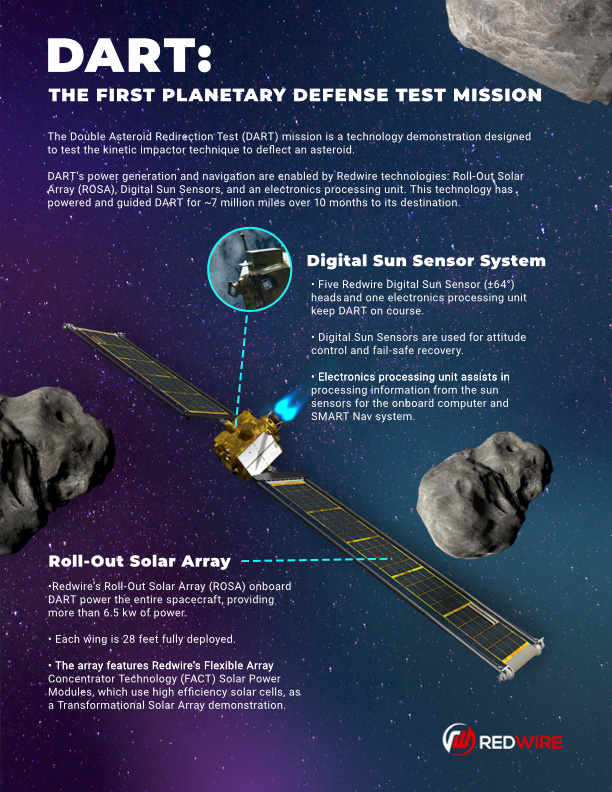
The Double Asteroid Redirection Test (DART) was NASA’s first-ever planetary defence test mission designed to demonstrate the kinetic impactor technique—smashing a spacecraft into an asteroid to change its orbital path.
It was launched in 2021, the mission successfully impacted its target, the asteroid moonlet Dimorphos, in September 2022.
Mission Details
Outcomes & Significance
Orbital Shift: The impact shortened Dimorphos’s 11-hour 55-minute orbit around Didymos by approximately 32–33 minutes, far exceeding the pre-defined success threshold of 73 seconds.
First of its Kind: It marked the first time humanity intentionally changed the motion of a celestial body.
Scientific Discovery: Recent findings suggest the impact was so powerful it may have also slightly shifted the entire binary system’s orbit around the Sun.
Follow-up Mission: The European Space Agency's Hera mission (launched October 2024) will arrive at the system in 2026 to perform a detailed "crash scene investigation" of the crater and asteroid mass.
Recent Scientific Insights from DART
Source: SCITECHDAILY
|
PRACTICE QUESTION Q. The DART mission was primarily designed to test which of the following techniques for planetary defence? A) Nuclear blast deflection B) Gravity tractor method C) Kinetic impactor technique D) Solar sail redirection Answer: C Explanation: The Double Asteroid Redirection Test (DART) was a first-of-its-kind mission designed to test the kinetic impactor method for planetary defense. This technique involves deliberately crashing a spacecraft into an asteroid at high speed to transfer momentum and nudge the object into a slightly different trajectory. |
The main objective was to test and demonstrate the "kinetic impactor" technique as a viable method for planetary defense by intentionally crashing a spacecraft into an asteroid to change its orbit.
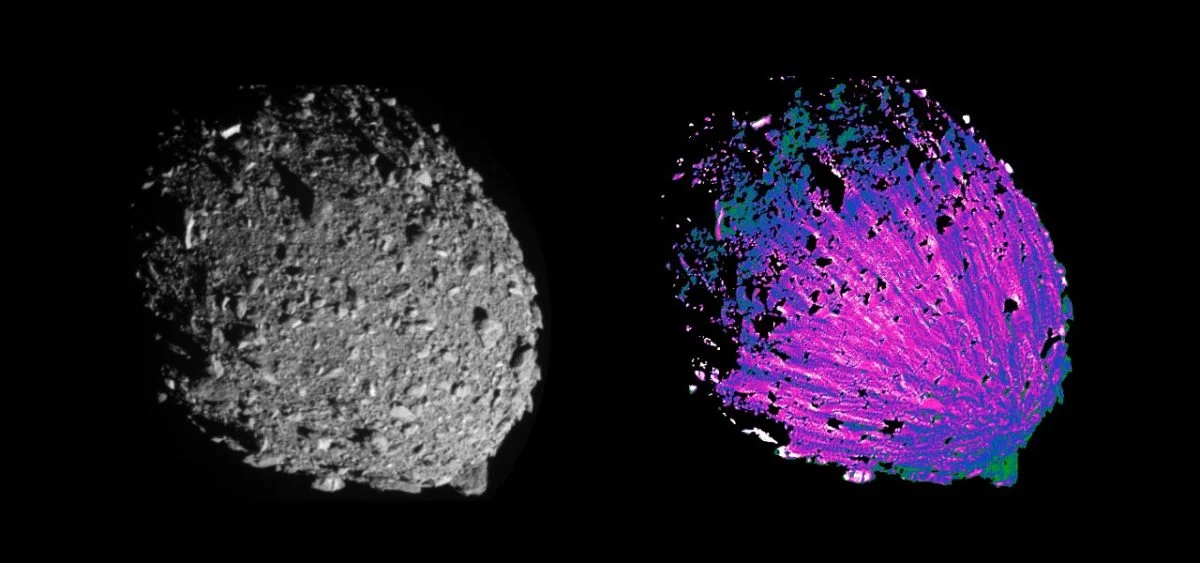
Scientists discovered the first direct evidence of material exchange between two asteroids in a binary system. They observed streaks on Dimorphos caused by "cosmic snowballs"—debris shed from the larger asteroid, Didymos.
The YORP effect is a process where sunlight exerts a tiny but constant pressure on an asteroid, causing it to spin faster over millions of years. This increased spin can fling loose material from its surface. DART's images provided the first visual proof of this effect.



© 2026 iasgyan. All right reserved