Description
Why in News?
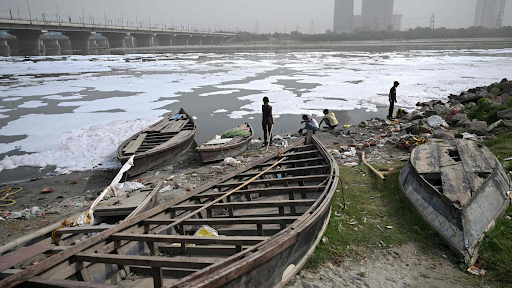
A controversial ritual at the Pataleshwar Mahadev Temple in Sehore district, Madhya Pradesh, where 11,000 liters of milk were poured into the Narmada River as a “sacred offering” on April 8, 2026, has reignited the debate on balancing religious traditions with environmental protection.
Environmental Impact on Rivers
Ritual practices contribute to pollution in multiple ways:
- Plaster of Paris Idols: Take months to dissolve, release high levels of suspended solids, sulphates, and heavy metals.
- Chemical Paints and Decorations: Toxic colours leach harmful substances into water, affecting aquatic life and water quality.
- Organic Offerings: Milk, flowers, and food items increase Biochemical Oxygen Demand (BOD), accelerating microbial activity and depleting dissolved oxygen.
- Cumulative Effect: Post-festival spikes in pollution parameters are commonly observed in the Yamuna (Delhi), Ganga, and other rivers.
Legal and Regulatory Framework
India has a robust but unevenly enforced framework to address this:
- CPCB Guidelines (Revised 2020): Promote eco-friendly clay idols, natural colours, and ban single-use plastics.
- National Green Tribunal (NGT): Has issued repeated directives to State Pollution Control Boards (SPCBs) and local bodies for strict compliance.
- Supreme Court and High Courts: Have intervened in cases from Mumbai, Allahabad, Chennai, etc. Directions include bans on immersion in main rivers like Ganga and Yamuna in certain stretches, restrictions on PoP idols, and requirements for eco-friendly alternatives.
- Other Laws: Water (Prevention and Control of Pollution) Act, 1974; Environment Protection Act, 1986; and provisions under the National Mission for Clean Ganga (NMCG)
Challenges in Balancing Faith and Ecology
- Cultural Resistance: Many view restrictions as interference in religious freedom (Article 25 of the Constitution). Traditions are seen as sacred, making strict enforcement politically and socially difficult.
- Scale vs. Tradition: Practices evolved for smaller populations now occur at massive scales, turning minor rituals into major pollution sources.
- Enforcement Issues: Lack of upstream checks (at manufacturing and transport stages), inadequate artificial ponds, and selective outrage that ignores year-round industrial/sewage pollution.
- Federal and Local Variations: States differ in compliance; some allow PoP idols while others push for stricter norms.
- Judicial vs. Practical Reality: Court orders exist, but post-event clean-ups are often prioritised over prevention.
Way Forward
- Promote Eco-Friendly Alternatives: Mandate and incentivise clay idols, natural colours, and biodegradable materials through subsidies and awareness campaigns.
- Infrastructure Development: Create sufficient artificial ponds/tanks in every major city and town, with proper post-immersion waste management and recycling systems.
- Strict Gate-Level Enforcement: Implement checkpoints to screen idols before immersion; divert non-compliant ones to designated ponds.
- Strengthen Monitoring: Use technology (water quality sensors) and empower SPCBs/NGT with better resources for real-time enforcement and penalties.
Conclusion
Through a combination of eco-friendly innovations, robust infrastructure, community participation, and consistent enforcement of CPCB/NGT guidelines, India can strike a meaningful balance — ensuring that reverence for rivers translates into their actual protection.
Source: The Hindu
|
PRACTICE QUESTION
Q. “Religious practices and environmental protection often collide in the context of river pollution from idol immersions and ritual offerings.” Discuss the challenges involved and suggest a balanced way forward for India. (250 words)
|
Frequently Asked Questions (FAQs)