India’s breakthrough in commercial bio-bitumen production turns agricultural waste into sustainable roads using CSIR technology. This "Waste-to-Wealth" model slashes costly petroleum imports, curbs winter stubble burning pollution, and boosts rural incomes, marking a carbon-negative leap toward Viksit Bharat 2047.
Why In News?
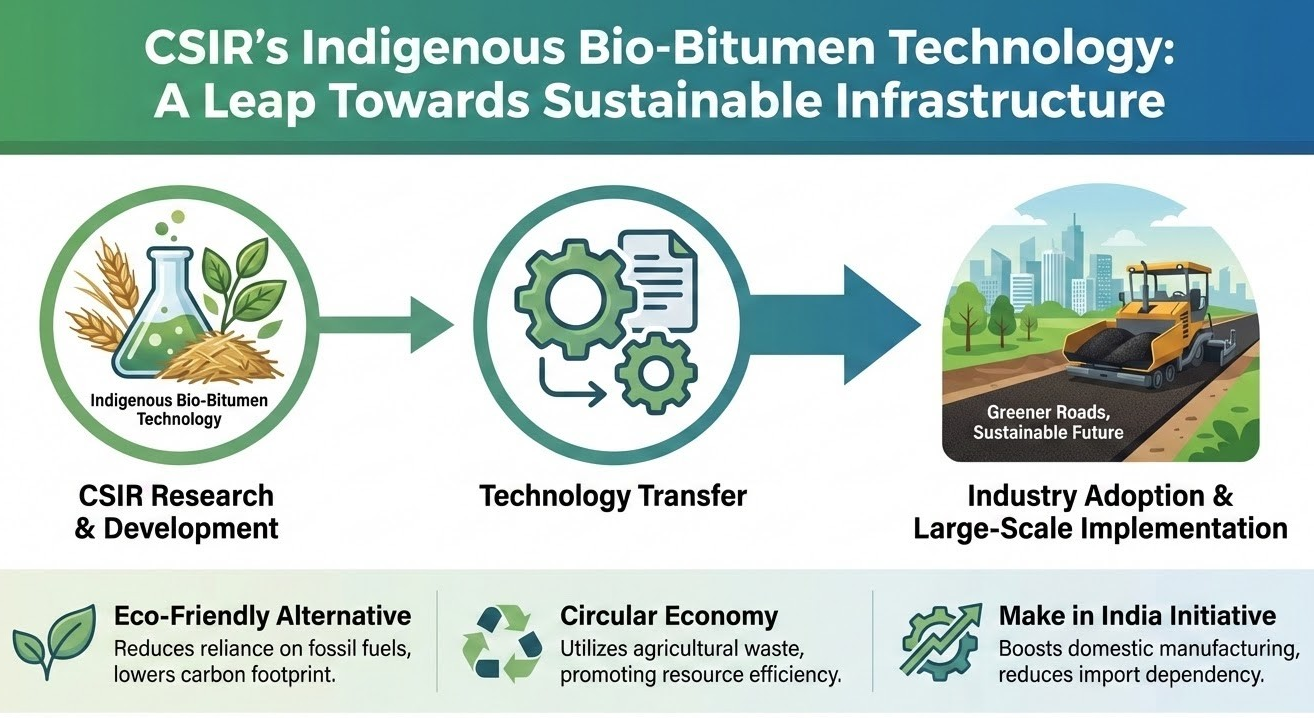
The Council of Scientific and Industrial Research (CSIR) recently transferred its indigenous Bio-Bitumen technology to the industry for large-scale adoption.
What is Bio-Bitumen?
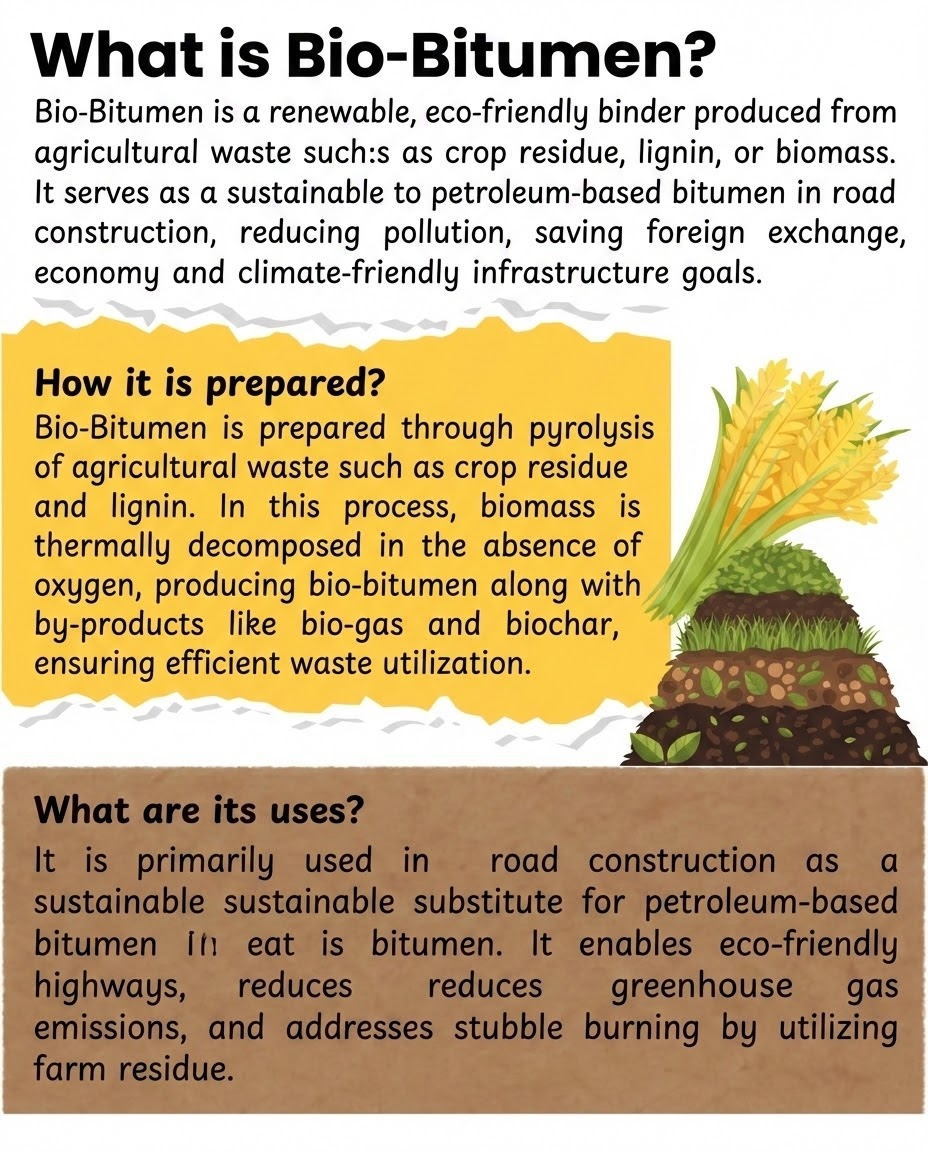
Bio-bitumen is a bio-based viscous binder derived from renewable organic materials, specifically agricultural waste (biomass) like rice straw (parali).
It serves as an eco-friendly alternative or modifier to conventional petroleum-based bitumen used in road construction.
The Process: The technology utilizes a thermo-chemical conversion process called Pyrolysis.
Key Benefits
Challenges & The Way Forward
While promising, the technology faces hurdles that need policy intervention:
Conclusion
The transfer of Bio-Bitumen technology is a classic example of "Science for Society." By turning a choking hazard (stubble smoke) into the literal foundation of the nation's growth (roads), India is paving the way for a greener, self-reliant future.
Source: PIB
|
PRACTICE QUESTION Q. Evaluate the potential of bio-bitumen technology in mitigating the chronic issue of stubble burning in Northern India. Discuss. 150 words |
Bio-bitumen is a sustainable, eco-friendly binder used in road construction. Unlike conventional bitumen, which is a fossil-fuel byproduct, bio-bitumen is derived from renewable lignocellulosic biomass (such as agricultural waste) and acts as a direct substitute or modifier in asphalt paving.
By creating an industrial demand for agricultural residue like rice straw (parali), bio-bitumen technology incentivizes farmers to sell their waste to aggregators rather than burning it. This prevents the release of toxic smog and significantly reduces winter air pollution (PM2.5) in regions like Delhi-NCR.
Bio-bitumen is produced using a highly efficient thermo-chemical conversion process called 'Fast Pyrolysis.' Agricultural pellets are heated to 400-600°C in the complete absence of oxygen. This thermal decomposition produces bio-oil, which is then refined and blended with polymers to create road-grade bio-binder.



© 2026 iasgyan. All right reserved