Description
The Bill amends the heading of Article 82 from “Readjustment after each Census” to “Readjustment of constituencies”, and removes the requirement of readjusting the number of Lok Sabha seats in states after every Census.
Why In News?
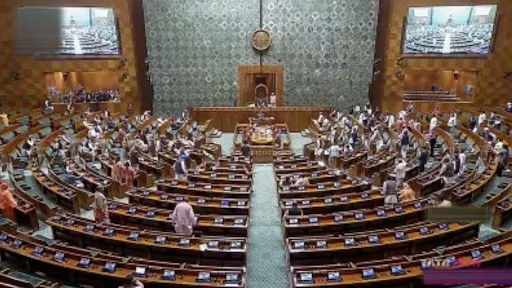
The Union Government has circulated three key bills—the Constitution (One Hundred and Thirty-First Amendment) Bill, 2026; the Delimitation Bill, 2026; and the Union Territories Laws (Amendment) Bill, 2026—to fast-track the implementation of one-third reservation for women in the Lok Sabha and State Legislative Assemblies.
Key Provisions of the Proposed Bills
- Increase in Lok Sabha Strength: The Constitution (131st Amendment) Bill, 2026, amends Article 81 to raise the maximum strength of the Lok Sabha to 850 from 550.
- Delimitation on the 2011 Census: Delimitation will be based on such a census as Parliament may by law determine. This is interpreted as the 2011 census figures.
- Delimitation Commission: A new delimitation commission, headed by a Supreme Court judge with the Chief Election Commissioner and state election commissioners as members, will redraw constituencies.
- Women’s Quota Implementation: One-third of total seats will be reserved for women, with the quota valid for 15 years.
Impact and Challenges
Positive Impacts:
- Enhanced Women’s Representation: Could lead to nearly 283 women MPs in an 850-member Lok Sabha, significantly boosting gender diversity in law-making.
- Faster Implementation: Brings the long-pending reform into effect much earlier than anticipated.
- Better Representation of Population Changes: Fresh delimitation accounts for demographic realities post-1971.
Potential Concerns:
- North-South Divide: Southern states, which successfully controlled population growth, fear loss of relative political weight if seats are redistributed purely on current population.
- OBC Women Quota: Opposition parties are demanding a sub-quota for women belonging to Other Backward Classes (OBCs), which is absent in the current framework.
- Increased House Size: Raising seats to 850 will raise the majority threshold, potentially affecting coalition politics and increasing parliamentary costs and logistical challenges.
- Use of 2011 Data: Critics argue that 2011 figures are outdated given migration, urbanisation, and post-pandemic changes; a fresh Census would have been ideal.
Way Forward
- The Delimitation Commission must adopt a transparent, consultative process that balances population equity with federal concerns.
- Address demands for sub-quotas (e.g., for OBC women) through broader consensus if politically feasible.
- Strengthen capacity-building and training programmes for women representatives to maximise the impact of increased participation.
- Ensure the delimitation exercise adheres to principles of compact constituencies, administrative convenience, and public convenience while minimising gerrymandering concerns.
Conclusion
The government’s decision to expand the Lok Sabha to 850 seats and conduct delimitation based on 2011 Census data marks a decisive step towards actualising one-third women’s reservation in India’s legislatures.
Source: Indian Express
|
PRACTICE QUESTION
Q. According to the provisions of the Nari Shakti Vandan Adhiniyam, what is the duration of the reservation provided for women?
a) 5 years
b) 10 years
c) 15 years
d) 20 years
Answer: C
Explanation:
The Nari Shakti Vandan Adhiniyam, formally known as the Constitution One Hundred and Sixth Amendment Act, 2023, mandates a reservation of one-third of the total seats for women in the Lok Sabha, State Legislative Assemblies, and the Legislative Assembly of the National Capital Territory of Delhi for an initial period of 15 years.
|