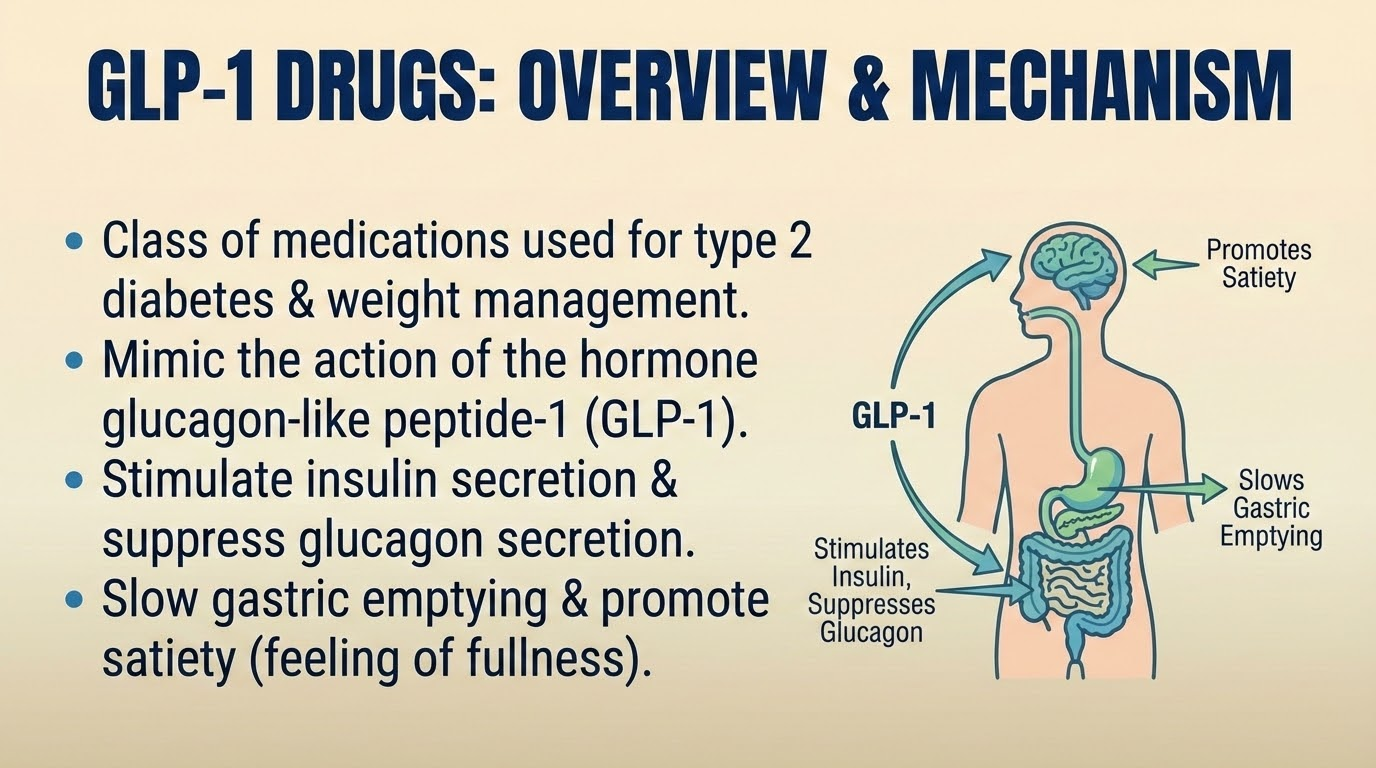
GLP-1 drugs (like Ozempic) mimic a natural hormone to stimulate insulin, slow digestion, and signal fullness to the brain. Originally for Type 2 diabetes, they are now widely used for weight loss and reducing cardiovascular risks in at-risk patients.
Why In News?
The Union government has launched a nationwide regulatory crackdown on GLP-1 drugs.
What are GLP-1 Drugs?
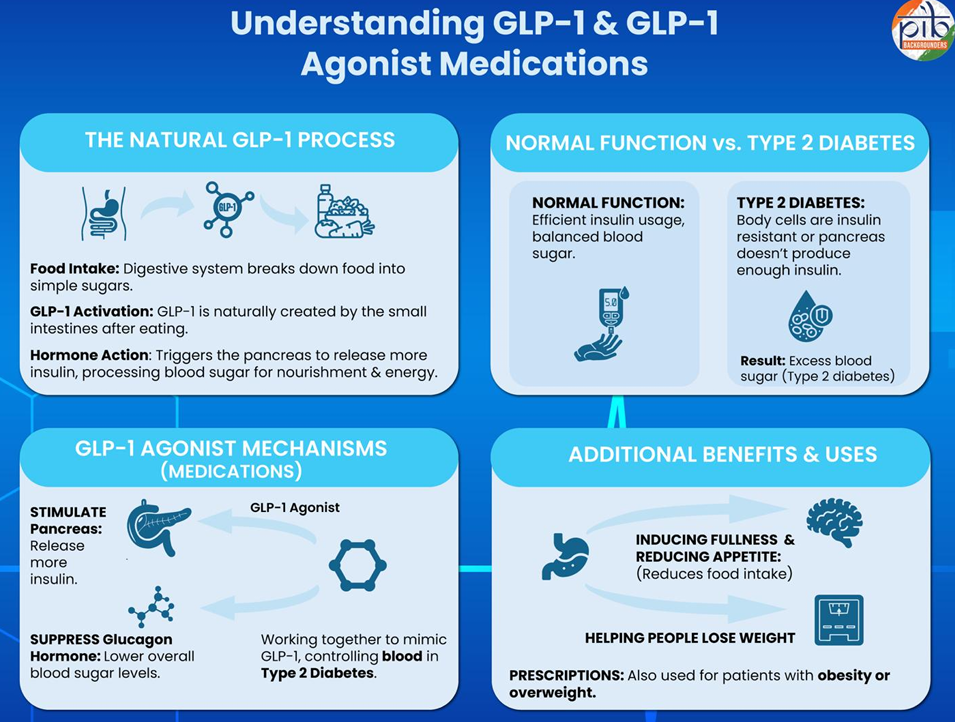
GLP-1 (Glucagon-like peptide-1) receptor agonists are a modern class of drugs used to manage chronic conditions like Type 2 diabetes and clinical obesity. They function by mimicking a natural gut hormone.
Mechanism of Action
Hormone Mimicry: These drugs imitate the natural GLP-1 hormone, targeting brain receptors to regulate appetite and reduce food intake.
Blood Sugar Control: They stimulate the pancreas to release insulin when blood sugar is high and block the release of glucagon, thereby stabilizing glucose levels.
Weight Loss: They slow down the rate at which the stomach empties, making a person feel full for longer. This leads to reduced calorie intake and significant weight loss.
Formulations: Initially available as weekly injections (e.g., Ozempic), they are now also available as oral tablets (e.g., Rybelsus), which improves patient convenience.
Misuse and Regulatory Gaps
The sudden boom in affordability has fueled a dangerous trend of unsupervised, off-label use for cosmetic purposes, creating a public health risk.
Cosmetic Abuse: Non-obese individuals are using these drugs for quick, cosmetic weight loss, a trend driven by social media and surrogate advertising from wellness clinics.
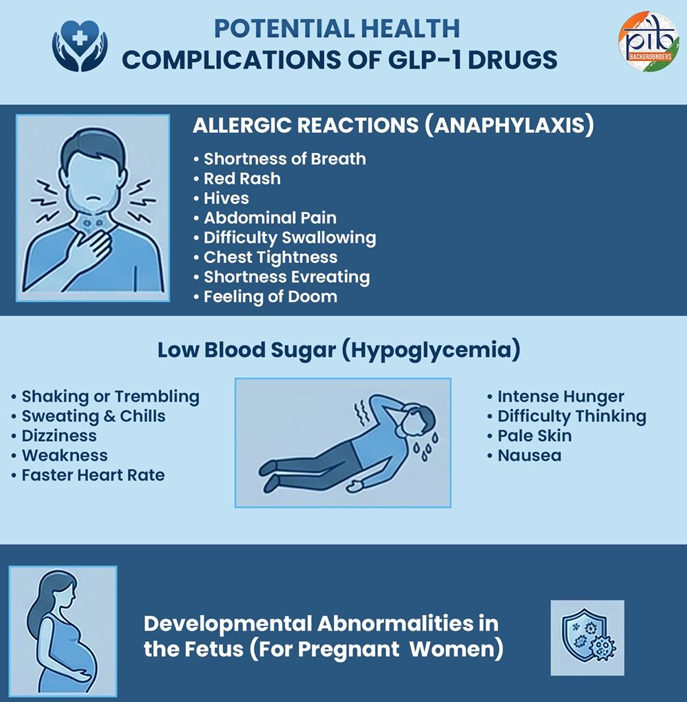
Unmonitored Side Effects: Without clinical supervision, users face a high risk of severe side effects like acute pancreatitis, kidney injury, bowel obstruction, and potential thyroid tumors
Prescription Violations: These are Schedule-H drugs that must be prescribed only by specialists like endocrinologists. However, they are widely sold over the counter without valid prescriptions.
The E-Pharmacy Governance Vacuum
The illegal supply chain is primarily enabled by a lack of regulation for online pharmacies.
Way Forward
Immediate Regulatory Action: Strictly Enforce the Draft E-Pharmacy Rules (2018) to regulate the online sale of medicines.
Strengthened Enforcement: The Central Drugs Standard Control Organisation(CDSCO) must move from reactive raids to a proactive system for tracking Schedule-H drugs, possibly using blockchain or a centralized digital prescription registry.
Public Awareness Campaigns: Educate the public that GLP-1 drugs are potent medical treatments for serious diseases, not cosmetic lifestyle products.
Holistic Healthcare Integration: These drugs are most effective when combined with lifestyle modifications and require continuous clinical supervision.
Conclusion
India must combine strict regulatory control to prevent misuse with a structured public health rollout that ensures clinical supervision and equitable access for those most in need.
Source: PIB
|
PRACTICE QUESTION Q. Consider the following statements regarding Glucagon-Like Peptide-1 (GLP-1): 1. It is an enzyme secreted by the liver that breaks down glucose. 2. GLP-1 receptor agonists are used to treat both Type-2 Diabetes and Obesity. 3. Tirzepatide is a "dual agonist" that mimics both GLP-1 and GIP hormones. Which of the statements given above is/are correct? A. 1 only B. 2 and 3 only C. 3 only D. 1, 2, and 3 Answer: B Explanation: Statement 1 is incorrect: GLP-1 is a peptide hormone, not an enzyme. It is primarily secreted by the L-cells of the small intestine (and certain neurons in the brain), not the liver. Its primary function is to stimulate insulin release and inhibit glucagon, rather than directly breaking down glucose itself. Statement 2 is correct: GLP-1 receptor agonists (GLP-1RAs) are FDA-approved medications used to manage Type-2 Diabetes (by enhancing insulin secretion) and Obesity (by promoting satiety and slowing gastric emptying). Statement 3 is correct: Tirzepatide is a first-in-class dual agonist that targets both the Glucagon-Like Peptide-1 (GLP-1) and the Glucose-dependent Insulinotropic Polypeptide (GIP) receptors. |
GLP-1 (Glucagon-like peptide-1) drugs are a revolutionary class of medications that mimic natural intestinal hormones to regulate blood sugar and appetite. They are primarily prescribed for managing chronic metabolic conditions like Type 2 diabetes and clinical obesity.
Unsupervised "off-label" use, particularly for quick cosmetic weight loss, bypassing specialist oversight, can lead to severe and life-threatening side effects. These include acute pancreatitis, acute kidney injury, severe gastrointestinal bowel obstruction, and potential medullary thyroid tumors.
India currently lacks a dedicated regulatory framework for online pharmacies. The sector operates in a grey area under the outdated Drugs and Cosmetics Act, 1940. The Draft E-Pharmacy Rules, introduced in 2018 to ensure prescription validation and ban direct drug advertisements, remain unnotified by the government to date.



© 2026 iasgyan. All right reserved