The discovery of Neoloboptera peninsularis in Maharashtra highlights integrative taxonomy, combining DNA barcoding with morphological analysis. This non-pest species plays a vital ecological role in nutrient recycling, showcasing how technological interventions can bridge gaps in biodiversity mapping and conservation.
Copyright infringement not intended
Picture Courtesy: TIMESOFINDIA
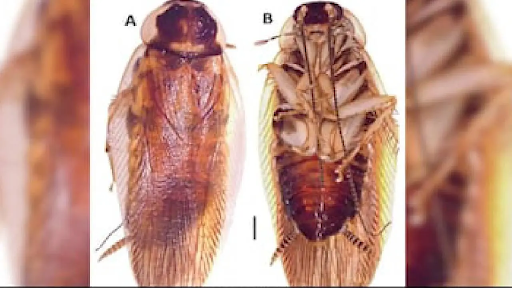
Scientists from the Zoological Survey of India (ZSI) discovered a new species of cockroach, Neoloboptera peninsularis.
Neoloboptera peninsularis is a newly discovered species of wild cockroach. Unlike common household pests, this species is an essential component of the natural ecosystem in the Deccan region.
Location
Physical Characteristics
Scientific Significance
Integrative Taxonomy: First time in Indian cockroach taxonomy DNA Barcoding was combined with traditional morphological (physical) study to confirm a new species.
Genus Context: This is only the third species of the genus Neoloboptera ever recorded in India. The previous species were recorded in 1865 (N. indica) and 1995 (N. chakrabortyi).
Biodiversity Data: With this addition, India now hosts 190 documented species of cockroaches, of which nearly 50% are endemic (found only in India).
Ecological Role
Nutrient Recycling: Wild cockroaches like N. peninsularis act as decomposers, feeding on decaying organic matter and returning nutrients to the soil.
Food Chain: They serve as a vital food source for local birds, reptiles, and amphibians in the Deccan Plateau ecosystem.
Source: TIMESOFINDIA
|
PRACTICE QUESTION Q. Neoloboptera peninsularis, recently seen in the news, is a new species of which organism? A) Gecko B) Spider C) Cockroach D) Freshwater Crab Answer: C Explanation: Neoloboptera peninsularis is a new species of cockroach identified by researchers from the Zoological Survey of India (ZSI) in Pune, Maharashtra. |
It is a newly discovered, wild, non-pest cockroach species found in the agricultural landscapes of the Deccan Plateau (near Pune, Maharashtra) by scientists from the Zoological Survey of India (ZSI).
Integrative Taxonomy is a modern scientific approach that identifies and classifies species by combining traditional morphological analysis (physical visual appearance) with DNA barcoding (molecular fingerprinting) and evolutionary data.
The Linnaean Shortfall refers to the massive knowledge gap between the total number of species that actually exist on Earth and the fraction of those species that have been formally discovered and described by science.




© 2026 iasgyan. All right reserved