

Copyright infringement not intended
Picture Courtesy: INDIAN EXPRESS
AI's rapid evolution risks a North-South tech divide; the Global South, led by India through G20 and GPAI, must prioritize becoming agenda-setters to democratize AI and ensure equitable access, not merely data providers.
|
Read all about: ARTIFICIAL INTELLIGENCE IN INDIA EXPLAINED l BASICS OF ARTIFICIAL INTELLIGENCE l ARTIFICIAL GENERAL INTELLIGENCE (AGI) l INDIAN GOVT AI ROADMAP |
Preventing Digital Colonization
US and Chinese dominance in AI, training models on data from the Global South, creates a dependency where developing nations export raw data but must import expensive AI products, risking digital colonization due to a lack of sovereign AI capabilities.
Driving Economic Leapfrogging
AI offers a unique opportunity to tackle challenges in healthcare, agriculture, and education. Generative AI is projected to increase global GDP by 7% over a decade, and for India, to add up to $1 trillion to its economy by 2035. Local leadership is crucial to creating and retaining this economic value. (Source: NASSCOM Report)
Countering Algorithmic Bias
AI models trained on Western data often misunderstand the Global South's context, leading to biased results. Training Sovereign AI on local data is crucial for fairness and relevance.
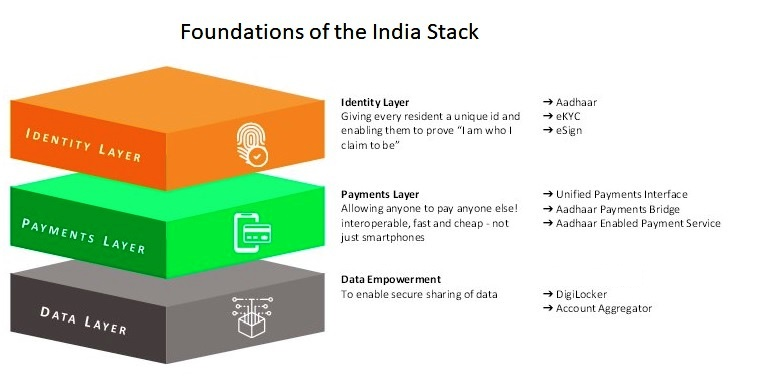
India is using its successful Digital Public Infrastructure (DPI) model as a blueprint for a democratized and inclusive AI ecosystem.
The ₹10,372 crore IndiaAI Mission, launched in 2024, aims to build a robust AI ecosystem. It will provide Indian startups, researchers, and students with high-performance computing (GPUs) to promote self-reliance in AI hardware and software.
The Bhashini National Language Translation Mission uses AI to make digital services accessible across diverse languages. For example, the 'Kisan e-Mitra' chatbot delivers essential information to farmers in their local dialects.
Exporting the 'Stack' Model: India advocates for treating AI as a public good. The success of the Modular Open Source Identity Platform (MOSIP), an open-source platform inspired by Aadhaar, serves as a model.
 Structural Challenges Facing the Global South
The 'Compute' Divide
Advanced AI training requires massive, expensive computational power (GPUs), monopolized by a few companies, making high-end AI chips expensive for most low-income nations.
Talent Migration (Brain Drain)
AI researchers from the Global South, particularly India, often move to the US and Europe because of better infrastructure, salaries, and research opportunities overseas.
Regulatory Fragmentation
The Global South lacks a unified AI regulatory framework, unlike the EU AI Act. This absence of a collective voice weakens developing nations' bargaining power against Big Tech on issues like data privacy, ethics, and taxation.
Job Displacement
Economies in the Global South with large service sectors, such as Business Process Outsourcing (BPO), are highly vulnerable to automation. The International Labour Organization (ILO) warns that clerical and administrative roles face the highest exposure to displacement by Generative AI.
Disinformation and Democratic Stability
AI-generated deepfakes and misinformation are a severe global risk, threatening democratic processes, as highlighted by the World Economic Forum's Global Risks Report 2026.
To transition from being rule-takers to rule-makers, the Global South must adopt a collaborative and strategic approach.
Democratize Compute Capacity: Nations must pool resources to create regional "Compute Clouds" to provide affordable access to high-performance computing, as proposed by India within the Global South framework.
Establish a 'Global South AI Alliance': A unified bloc, like OPEC (Organization of the Petroleum Exporting Countries), is required to set collective standards on data governance, AI ethics, and taxation, aligning with the G20 New Delhi Leaders’ Declaration's call for international cooperation.
Focus on "Small Language Models" (SLMs): Instead of massive, energy-intensive models, the South should develop efficient SLMs trained on high-quality, local-language data to solve specific regional problems.
Push for Global AI Governance: Advocate for an international agency under the UN, similar to the IAEA for nuclear energy, to ensure AI governance is inclusive and not dictated by a few powerful nations.
Learn Lessons from Global Best Practices
|
Country/Region |
Approach |
|
|
European Union |
The EU AI Act (2024) uses a risk-based approach, categorizing AI applications from unacceptable to minimal risk. Adopt a similar "risk-based" regulation to tackle high-risk areas like deepfakes and algorithmic bias without stifling innovation in low-risk sectors. |
|
|
Singapore |
The National AI Strategy 2.0 focuses on developing "Centers of Excellence" (CoEs) for specific sectors to drive targeted innovation. India is replicating this model by establishing three AI CoEs for Health, Agriculture, and Sustainable Cities. |
|
The AI revolution is reshaping global power. For the Global South, AI leadership is vital for economic sovereignty and stability. By leveraging Digital Public Infrastructure, building sovereign capabilities, and advocating for fair governance, developing nations can ensure AI promotes shared prosperity and avoids digital feudalism.
Source: INDIAN EXPRESS
|
PRACTICE QUESTION Q. Critically examine the ethical and social risks associated with the rapid adoption of Artificial Intelligence in labor-intensive economies like India. 150 words |
The 'Compute Divide' refers to the gap between developed and developing nations regarding access to the immense computing power (GPUs) required to train advanced AI models. This infrastructure is expensive and currently controlled by a near-monopoly in the Global North.
The IndiaAI Mission aims to create a comprehensive AI ecosystem in India. Its primary focus is building "sovereign compute capacity" (hardware/GPUs) to support Indian startups, ensuring India is self-reliant and not just a consumer of foreign AI technology.
Bhashini is India's National Language Translation Mission. It uses AI to bridge the digital divide by making digital services accessible in various Indian languages, exemplified by tools like the 'Kisan e-Mitra' chatbot for farmers.
© 2026 iasgyan. All right reserved