Description
Disclaimer: Copyright infringement not intended.
Context
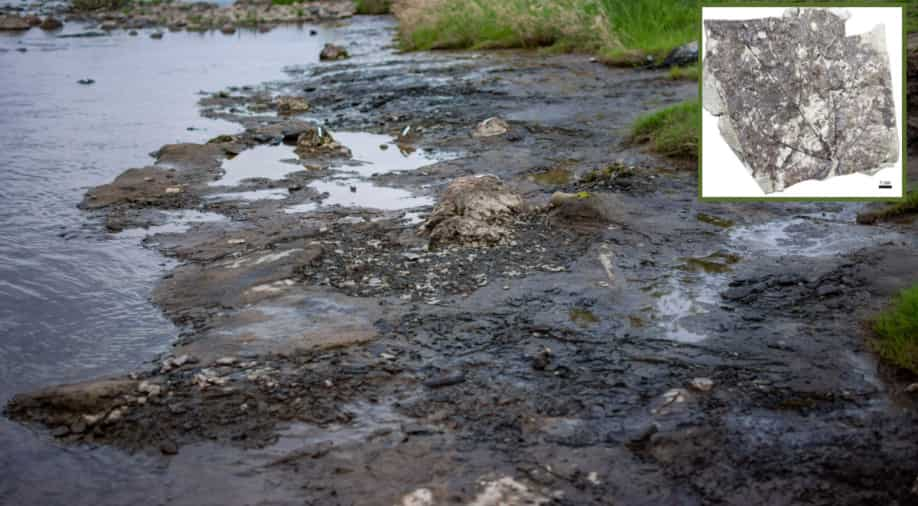
The discovery of an exceptionally well-preserved fossil forest in Japan that dates back to the late Miocene epoch, a period that existed around 10.4 to 5 million years ago.
Details
- Researchers in Japan uncovered a well-preserved fossil forest from the late Miocene epoch.
- The fossil forest belongs to the Wataria parvipora species.
- The forest was first discovered during a severe drought in 1994.
Characteristics of Wataria parvipora
- Wataria parvipora is a wood-fossil with distinctive growth rings, abundant parenchyma rays, and no resin canals.
- 95% of the tree remains in the 2000 square meter fossil site belong to Wataria parvipora.
- Largest fossilized trunk found during the excavation process was around 137 centimeters in diameter.
Rarity of Complete Plant Fossils
- Complete plant fossils are seldom found in one piece due to detachment of different parts.
- Reconstructing plants is essential for establishing their taxonomic identity.
Findings and Taxonomic Identity
- The majority of surrounding leaves belonged to Byttneriophyllum tiliifolium, associated with the Malvaceae family.
- Byttneriophyllum tiliifolium is related to modern plants like cotton, cacao, and okra.
- Fossils of Byttneriophyllum tiliifolium have been found across Eurasia from the Miocene and Pliocene epochs.
- 98% of the fossil leaves found at the site belonged to Byttneriophyllum, indicating they were shed from the parent trees.
Significance of the Discovery
- The fossil forest provides valuable information to understand the missing links of the late Miocene epoch.
- It aids in reconstructing a "whole Eurasia plant" from that period.

About Late Miocene Epoch
- The Late Miocene is a sub-epoch within the Miocene Epoch, following the Middle Miocene and preceding the Early Pliocene.
- It spans a duration of about 5.4 million years, from approximately 10.4 million years ago to around 5 million years ago.
Climate
- During the Late Miocene, the Earth experienced a general trend of cooling and drying, transitioning from the warm and wet conditions of the Early Miocene.
- The Late Miocene Climate Transition (LMCT) marked the shift towards a more seasonal climate, with increased variability in temperature and precipitation.
Vegetation
- The vegetation during the Late Miocene exhibited significant changes due to the shifting climate.
- Tropical rainforests began to decline, giving way to more open woodlands and grasslands.
- The spread of grasslands was facilitated by the evolution of grazing animals like the ancestors of modern horses and elephants.
Fauna
- The Late Miocene witnessed the evolution of various mammalian species, including early hominids. Apes and hominids were present during this epoch, with some early human ancestors appearing around 7 million years ago.
- Large mammals like mastodons, rhinoceroses, and various species of carnivores roamed the continents.
Sea Level Changes
- During the Late Miocene, global sea levels fluctuate, leading to changes in marine environments and the formation of new land connections between continents.
- The isolation of water bodies and the creation of land bridges influenced the dispersal of species across different regions.
Tectonic Activity
- The Late Miocene was characterized by active tectonic movements, including the collision of the Indian subcontinent with the Asian plate, resulting in the formation of the Himalayan mountain range.
- Volcanic activity was also prevalent during this epoch, contributing to the shaping of landscapes and the release of greenhouse gases that affected the global climate.
Fossil Record
- The Late Miocene is well-documented in the fossil record, providing valuable insights into the evolutionary history of various plant and animal species.
- Fossilized remains of mammals, plants, and marine life from this period have been found in different parts of the world, helping scientists understand past ecosystems and environmental changes.
|
PRACTICE QUESTION
Q) Consider the following statements about the Late Miocene:
- The Late Miocene Climate Transition (LMCT) led to a cooling and drying trend, transitioning from warm and wet conditions of the Early Miocene.
- The Late Miocene saw the expansion of tropical rainforests and a decrease in open woodlands and grasslands.
Select the correct statements using the codes below:
(a) 1 only
(b) 2 only
(c) Both 1 and 2
(d) Neither 1 nor 2
Answer: C
|

https://www.wionews.com/science/exquisitely-preserved-fossil-forest-from-late-miocene-epoch-found-in-japan-619245