

Copyright infringement not intended
Picture Courtesy: INDIAN EXPRESS
Context
India's successful large-scale technology implementation, like Aadhaar and UPI, using Digital Public Infrastructure (DPI) suggests it can adapt these principles to create an inclusive, sovereign, and innovative AI ecosystem
|
Read all about: DIGITAL SOVEREIGNTY STRATEGY & CHALLENGE l DIGITAL PUBLIC INFRASTRUCTURE l DIGITAL INDIA MODEL FOR GLOBAL SOUTH |
India's DPI Model: A Blueprint for Inclusive AI
India's success in building Digital Public Infrastructure (DPI) like Aadhaar and the Unified Payments Interface (UPI) offers a unique and powerful blueprint for developing trustworthy, inclusive, and population-scale Artificial Intelligence (AI).
This model, focused on creating open, interoperable, and low-cost digital "rails," provides a strategic alternative to the current global AI landscape dominated by a few private tech giants.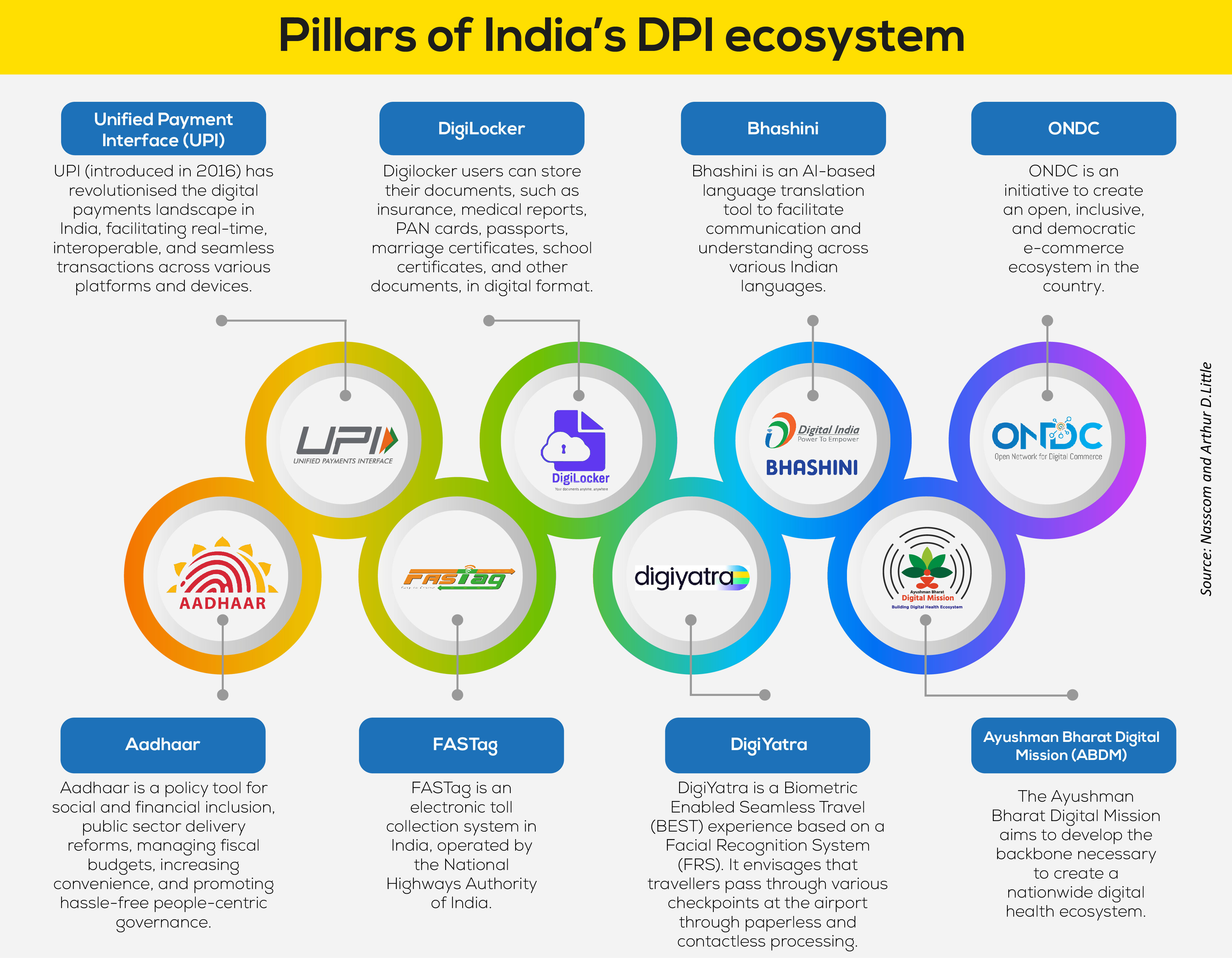
India's layered DPI, the India Stack, enables system connection and innovation—a key ecosystem approach for public-benefit AI.
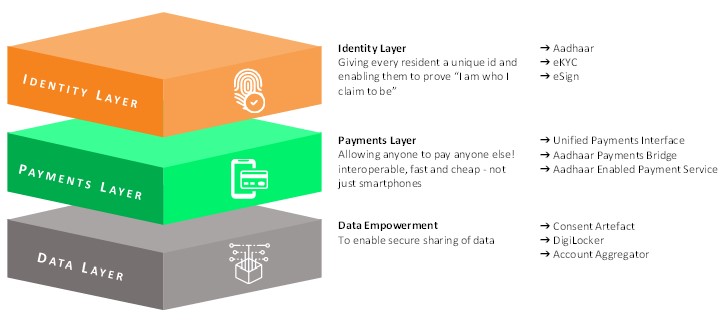
Aadhaar: Solving the Identity Barrier
Population-Scale Identity: Aadhaar provided a unique digital identity to over 1.4 billion residents, creating a foundational layer for digital services.
Plugging Welfare Leakages: Aadhaar-enabled Direct Benefit Transfer (DBT) has saved the government over ₹3.48 lakh crore by March 2025 by eliminating fake and duplicate beneficiaries. (Source: PIB).
Authentication Layer: It provides a simple, low-cost mechanism for online authentication (e-KYC), which has been crucial for financial inclusion and telecom penetration.
UPI: Revolutionizing Financial Transactions
Open and Interoperable: UPI allows any certified entity (banks, fintech apps) to build payment services on top of it. This prevents a monopoly and promotes competition.
Large Scale: UPI constitutes 85% of India's digital transactions and drives almost 50% of global real-time digital payments. (Source: PIB).
Private Innovation on Public Rails: This model shows how a public platform promotes massive private innovation, a key to the AI ecosystem.
Openness and Interoperability: Using open standards and protocols to ensure universal access to AI tools for startups and researchers.
Collaborative Public-Private Partnership (PPP): Government to create foundational infrastructure, datasets, and platforms, while private companies build customer-facing applications and specialized solutions.
Inclusion and Affordability: Systems must be low-cost, accessible, and designed to serve the entire population, including multilingual users and marginalized communities.
The global AI ecosystem offers India challenges and a unique opportunity.
India can use its DPI success to create a unique, open, democratic, and public-benefit AI model, distinct from the market-driven US and state-controlled Chinese approaches.
India's IndiaAI Mission, with an approved budget of ₹10,372 crore, prioritizes developing "AI rails" or public digital platforms over massive, compute-intensive foundational models.
Key Components of the "AI Rails"
Establishing Trust, Safety, and Accountability in AI
Drawing from the governance challenges of the Aadhaar rollout—where initial privacy concerns necessitated corrective action via Supreme Court rulings—India must proactively develop a robust regulatory framework for AI.
Guiding Principles for AI Regulation
|
Principle |
Description |
|
Accountability |
Defining clear responsibility when an AI system produces a harmful or incorrect outcome. |
|
Consent and Transparency |
Ensuring citizens are informed when engaging with an AI system and that their data usage complies with the DPDP Act's consent requirements. |
|
Independent Audits |
Implementing mechanisms for third-party evaluation of algorithms to identify and mitigate biases related to gender, caste, or religion. |
|
Grievance Redressal |
Providing strong, accessible avenues for citizens to appeal AI-driven decisions that impact their rights or access to services. |
AI Applications for Public Welfare and Governance
Building on DPI foundation, India is positioned to deploy AI to transform public service delivery and administration:
However, the risks associated with over-automation, exclusion of the digitally illiterate, and algorithmic bias must be actively managed through strong oversight and citizen-centric design.
Source: INDIAN EXPRESS
|
PRACTICE QUESTION Q. Critically analyse the potential and challenges of leveraging India's Digital Public Infrastructure (DPI) model to build a sovereign and inclusive Artificial Intelligence ecosystem. 250 words |
The core idea is to replicate the success of the Aadhaar-UPI model by creating publicly owned foundational "AI Stacks" (for data, compute, and applications). This allows private companies and researchers to build innovative AI solutions on top, democratizing access and fostering an inclusive AI ecosystem.
The IndiaAI Mission is a government-approved program with an outlay of over ₹10,300 crore. Its goal is to build a comprehensive AI ecosystem by providing access to high-end computing infrastructure (over 10,000 GPUs), curated datasets, and fostering indigenous AI development through robust public-private partnerships.
The Bhashini Project is an AI-powered language translation platform that supports 22 scheduled Indian languages. It is a key part of the application stack, aiming to break language barriers and enable the creation of voice-first, multilingual AI solutions for all Indians.
© 2026 iasgyan. All right reserved