Description
Disclaimer: Copyright infringement not intended.
Context
The pressing issue of drying springs in the Hindu Kush Himalayas (HKH)
Details
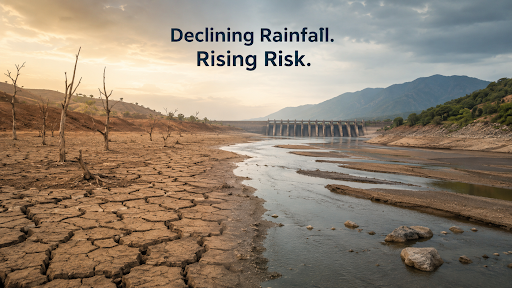
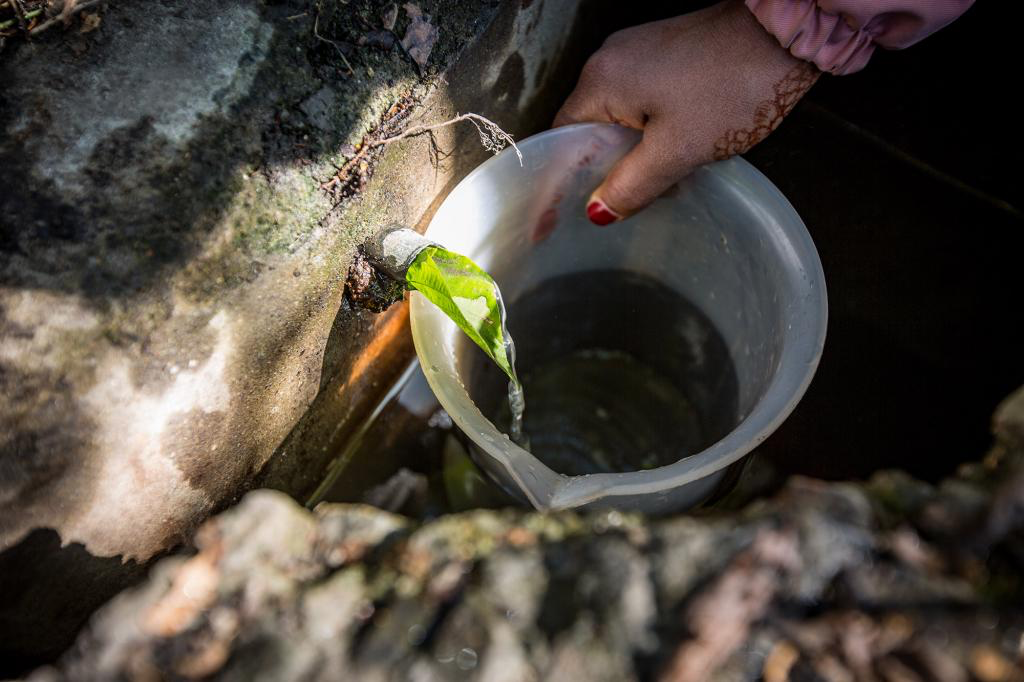
- Springs are drying up across the Hindu Kush Himalayas (HKH), posing a significant threat to mountain communities that rely on spring water for their livelihoods.
- In 2018, NITI Aayog reported that half of the estimated three million springs in the Indian Himalayan region had either dried up or experienced reduced flows.
- Similar trends were observed in Bhutan and Nepal, where spring water scarcity affects millions of people.
Water Insecurity and Hard Engineering
- Standard approach: Tapping nearby water sources and delivering water to users through hard-engineering methods.
- Concern: Unsustainable approach as water sources continue to dry up.
- Issues: Increasing costs and engineering efforts as projects struggle to meet demand, leading to "rings of dryness" around urban centers.
- Solution: A shift towards springshed management focusing on resource sustainability and community stewardship.
Springshed Management: A Holistic Approach
- Springshed management involves managing springs, recharge areas, and aquifers to ensure sustainable water supply.
- Benefits: Promotes resource sustainability, anticipates future disputes, and focuses on community needs.
- Challenges: Not all areas can rely solely on spring revival, large urban centers may require inter-basin transfers.
- Kathmandu's dependence on inter-basin transfers vs. self-sufficiency of areas along the valley rim.
Demographic Change and Viability
- Context: Outmigration from mountain settlements affects the scale and viability of engineering projects.
- Solution: Appropriately scaled nature-based solutions like spring revival are more sustainable investments.
- Benefits: Efficient restoration of water access, reduction of effort for communities, and potential cost savings.
Investing in Spring Revival: Multiple Benefits
- Benefits: Improved water security, landscape restoration, biodiversity conservation, streamflow contributions, and more.
- Opportunity: Combine spring revival with existing infrastructure to restore degraded sources and save on costs.
- Guarding Against Maladaptation: Community-based approach prevents unsustainable practices driven by water availability.
- Collective Action: Springshed management fosters community cooperation, forging landscape-level conservation partnerships.
Building Community Agency
- Six-step protocol: Combining hydrogeology and social science to empower communities.
- Knowledge Co-Creation: Interdisciplinary teams collaborate with communities to design Village Water Security Plans.
- Para-Hydrologists: Community members trained in monitoring spring flows and leading restoration activities.
- Water User Groups: Inclusive approach ensures participation of marginalized groups in spring revival and water use.
Results and Upscaling
- Success: Bhutan, India, and Nepal demonstrate improved spring flow through community-based springshed management.
- Benefits: Inclusive and sustainable model that enhances water security and social cohesion.
- Contrast: Community-based approach vs. narrow interests and elite capture in hard engineering solutions.
Investing in Anticipatory Adaptation
- Importance: Spring revival enhances water access, livelihoods, and contributes to Sustainable Development Goals.
- Shift Needed: Focus should shift from source management to resource management with nature-based solutions.
- Urgency: Many springs are drying up, indicating imminent water stress; long-term nature-based solutions are essential.

About World Water Week
- World Water Week is an annual event that serves as a platform for experts, practitioners, policymakers, and organizations to convene, share knowledge, and address water-related challenges.
- Organized by the Stockholm International Water Institute (SIWI), this event aims to promote collaboration, innovation, and the exchange of ideas for sustainable water management and development.
- The theme of this year’s World Water Week is ‘Seeds of Change: Innovative Solutions for a Water-Wise World.’
Purpose and Focus
- World Water Week focuses on addressing pressing global water challenges, such as water scarcity, pollution, climate change impacts, and access to clean and safe water.
- The event emphasizes the importance of interdisciplinary collaboration by bringing together professionals from various sectors, including water management, environment, agriculture, industry, and policy.
Key Components
- Seminars and workshops cover a wide range of water-related topics, including water governance, sanitation, water-related disasters, ecosystem restoration, and sustainable development.
- Each year, World Water Week revolves around a specific theme, fostering in-depth discussions and solution-oriented dialogues. Themes have included "Water for Sustainable Growth," "Water and Waste: Reduce and Reuse," and "Water, Ecosystems, and Human Development."
- Scientific Presentations: Researchers, experts, and practitioners present scientific findings, case studies, and best practices that contribute to evidence-based water management strategies.
- Innovative Solutions: The event showcases innovative technologies, approaches, and projects aimed at addressing water challenges and achieving sustainable development goals.
Participants and Engagement
- World Water Week attracts participants from across the world, including government officials, researchers, NGOs, businesses, and international organizations.
- The event includes plenary sessions, panel discussions, interactive workshops, and networking opportunities, promoting dynamic engagement and knowledge sharing.
Policy Influence
- High-level policy dialogues facilitate discussions on water-related policies, strategies, and frameworks, leading to the formulation of informed recommendations.
- World Water Week results in the creation of policy briefs and reports that provide actionable insights for policymakers and practitioners worldwide.
Outcome and Impact
- World Water Week disseminates new research findings, innovations, and strategies to a global audience, contributing to improved water management practices.
- The event encourages collaboration among diverse stakeholders, fostering partnerships that drive collective action for sustainable water management.
- Insights and recommendations generated during the event influence the development of water-related policies and strategies at the local, national, and international levels.
|
PRACTICE QUESTION
Q) Discuss the challenges posed by the drying of springs in the Hindu Kush Himalayas (HKH) region and the potential for community-based springshed management as a sustainable solution. (150 words)
|
https://www.downtoearth.org.in/blog/water/world-water-week-2023-we-must-invest-in-natural-solutions-like-spring-revival-for-water-security-91267