🔔Join APTI PLUS Prelims Mirror 2026 | All India Open Mock Test Series on 12th April, 26th April & 3rd May 2026 |Register Now!

THE DEBATE OVER OBC SUB-RESERVATION IN WOMEN’S QUOTA

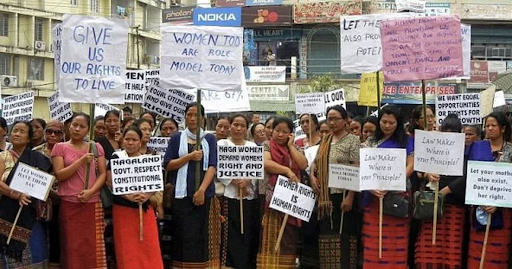
The implementation of the Nari Shakti Vandan Adhiniyam has reignited a long-standing political and constitutional debate regarding the inclusion of a sub-quota for women from Other Backward Classes. While the 106th Constitutional Amendment Act provides for a 33 percent reservation for women in the Lok Sabha and State Assemblies, it currently only includes specific sub-reservations for Scheduled Castes and Scheduled Tribes. 
Description

As the government prepares for the upcoming census and subsequent delimitation, several political parties and social organizations have intensified their demand for an amendment to the Women’s Reservation Act. 

Why in News?

As the government prepares for the upcoming census and subsequent delimitation, several political parties and social organizations have intensified their demand for an amendment to the Women’s Reservation Act. 

The Local Body Precedent

  • 73rd and 74th Amendments: These amendments mandated one-third reservation for women in Panchayats and Municipalities. Crucially, they allowed state legislatures the discretion to provide reservations for OBCs in these bodies.
  • State-Level Implementation: Taking advantage of this discretionary power, nearly all major states in India have implemented OBC reservations in local governance, often including a specific quota for OBC women.
  • Empirical Success: Advocates for the sub-quota point to the success of local bodies, where women from backward classes have emerged as effective leaders, arguing that this model should be replicated at the parliamentary level to ensure substantive equality.

Arguments for OBC Inclusion

  • Diversity of Representation: Supporters argue that the OBC category comprises a vast and diverse section of the Indian population. Excluding them from the reservation framework may lead to a lack of descriptive representation for these communities in high-level policy-making.
  • The Intersectional Challenge: Women from backward classes face a double disadvantage of gender and caste. A generic reservation might favor those with higher social and educational capital, reinforcing the dominance of certain sections.
  • Data-Driven Policy: There is a strong demand for a Caste Census to accurately determine the population of OBCs, which would provide a scientific basis for determining the size of the sub-quota.

Arguments Against the Sub-Quota

  • Constitutional Constraints: Unlike SCs and STs, the Constitution did not originally provide for political reservation for OBCs in the Lok Sabha. Opponents argue that creating such a sub-quota would require a larger constitutional overhaul regarding the definition and identification of backwardness.
  • Risk of Delay: Some political experts suggest that introducing a sub-quota at this stage could complicate the delimitation process and potentially lead to further delays in the actual implementation of the 33 percent reservation.
  • Homogeneity of Gender: A section of the leadership believes that women should be viewed as a unified category for the purpose of this reservation to ensure that gender-specific issues are prioritized over identity politics.

Way Forward

  • To resolve this deadlock, the government could consider a comprehensive review of the representation data from states where local body OBC quotas are active. 
  • A transparent and data-backed discussion during the upcoming delimitation exercise would help in assessing the feasibility of a sub-quota. 
  • Furthermore, political parties can bridge this gap voluntarily by ensuring that a significant portion of their own tickets for the 33 percent reserved seats are given to women from the OBC. 

Conclusion

The demand for an OBC sub-quota within the Women’s Reservation Act highlights the evolving nature of Indian democracy and the push for "quota within quota." While the Nari Shakti Vandan Adhiniyam is a historic leap for gender parity, the debate over its inclusivity reflects the complex intersection of caste and gender in Indian society. 

Source: Indian Express

PRACTICE QUESTION

Q. Examine the constitutional validity of providing reservation for Other Backward Classes (OBCs) in legislative bodies. How does it differ from the reservation provided to Scheduled Castes (SCs) and Scheduled Tribes (STs)? (150 words) 

Key Insigts

The Other Backward Classes reservation system in India provides a twenty-seven percent quota in government jobs and educational institutions to socially and educationally backward communities. This policy was implemented in 1990 following the recommendations of the Mandal Commission and was later upheld by the Supreme Court in the landmark Indra Sawhney case of 1992. To ensure the benefits reach the most marginalized, the government applies a creamy layer ceiling which excludes individuals from the reservation if their family income or professional status exceeds specific thresholds. The system is fundamentally rooted in Articles 15(4) and 16(4) of the Constitution which empower the state to make special provisions for the advancement of any backward class of citizens. 

Free access to e-paper and WhatsApp updates

Let's Get In Touch!